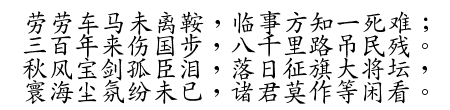
For twenty years, this webmaster had been telling the world that
Alan Greenspan, possibly the smartest American but bedazzled by the "conundrum" of long term interest rates, does not know that this webmaster's countryside cousins, mostly women, had been going to Guam, Samoa and other Pacific islands for a decade as the export of labor: what is coming to the U.S. market is merely a tag stating something not "made-in-China" but made-by-the-Chinese in nature.
The smartest American turned out to be Professor Peter Navarro, and it might not be some coincidence that his books "The Coming China Wars" and "Death by China" are similar to what this website wrote about for the last 20 years.
What this webmaster does not know is that the Chinese were going to Italy as well, where they worked as coolies and slaves for the "Made in Italy [by Chinese]" brands, and spread the coronavirus in Italy today.
What a farce Communist China gave the world, and what a disaster Communist China caused to the world!
Don't forget that France (Alain Merieux of bioMerieux - sarcastically-related to Moderna, the other side of a coin) and the United States (Anthony Fauci of CDC & Peter Daszak of EcoHealth) acted as the 'enablers' in designing and constructing the P4 virus research center in Wuhan, as well as in providing the funds.
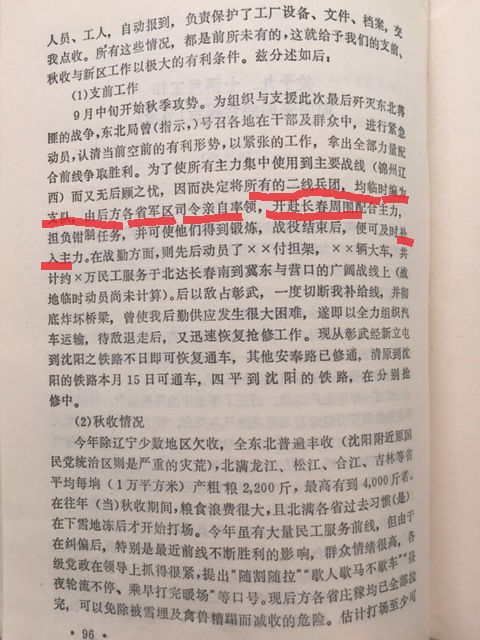
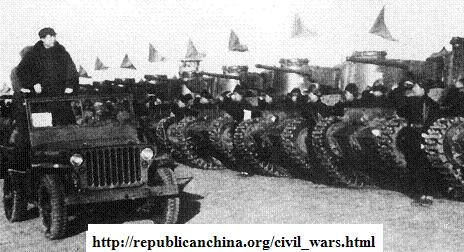
And don't forget what happened today was because the Americans served as the midwife who delivered China into the communist hands as i) Roosevelt, in collusion with Churchill and Stalin, sold out China at Tehran and Yalta; and ii) George Marshall forced three truces [Jan-10-1946, June-6-1946, & Nov-8-1946] onto the Republic of China and further imposed the 1946-47[48] arms embargo while the commies were equipped by the Stalin-supplied American August Storm weapons and augmented by the mercenaries including the Mongol cavalry, the Japanese 8th Route Army troops, the Soviet railway army corps, and the 250,000-strong [Kwantung Army-converted] Korean diehards.
(Refer to
"The Italian fashion capital being led by the Chinese";
"Coronavirus Hits Heart of Italy's Famous Cheese, Wine, Fashion Makers" for further reading.
Military Documents About Gain of Function Contradict Fauci Testimony Under Oath:
EcoHealth Alliance approached DARPA in March 2018 seeking funding to conduct gain of function research of bat borne coronaviruses...
According to the documents, NAIAD, under the direction of Dr. Fauci, went ahead with the research in Wuhan, China and at several sites across the U.S.)
Many years passed since this webpage was last updated.
The last major updates were on June 8, 2006, more than ten years ago:
http://www.communistchina.org/enclosure06082006.html (updated: enclosure.html).
In the last 2-3 decades, the ludicrous and idiotic communist nation enslaved one billion humble Chinese peasants as coolies for the multinational corporations and international banksters (synarchists of the 20th century and globalists of the 21st century), and moved the mountains of China to the United States in the form of rare earths (REE), marble and granite stones, at the cost of death of innumerable Chinese men from silicosis, and imported megatons of the American wastes to China, the beautiful and divine country, for recycling, burning or pure landfill, while resettling their wives, concubines, mistresses, and children [and bastards] to the U.S., Canada, Australia, and Europe.
At the same time, they began the process of Africanizing the Chinese continent with the import of Africans by hundreds of thousands and up to a million, under the idiotic "one road and one belt" program (i.e., a replica of Han China's bribery for the Huns), and made China the land of "Aids Danger Zone No. 1".
Mind you all 77 Belt & Road countries: Your ripping USD 1 trillion from Communist China, i.e., one third of China's 3T foreign exchange reserves [on paper], is equivalent to ripping the life and blood of one billion poverty-stricken Chinese people with monthly income of no greater than 2000RMB or US$300.
(Communist premier Li Keqiang claimed that 0.6 billion Chinese, i.e., this webmaster's humble peasant Chinese, had a monthly income of less than 1000RMB or $150, or de facto zero income.)
*** ARE YOU STILL GOING TO COMMUNIST CHINA TO "STUDY" WITH SCHOLARSHIPS [AND FREE MEDICARE/WOMEN] BUT WITHOUT ADMISSION TESTS, WITHOUT ENTRANCE EXAMS, WITHOUT QUIZZES, WITHOUT MIDTERM TESTS, WITHOUT EXAMS, WITHOUT SEMI-FINALS & WITHOUT FINALS ? ***
Note Barack Hussein Obama's half brother 'adopted' China or was adopted by communist China, setting an example for numerous Africans who came to China and worked as coyotes engaged in the operation of smuggling the illegal Africans to China --not knowing that China was prone to dynastic cycles of violence that could lead to death of 60-90% of the population, such as eradication of the Arab-Persian paramilitary regime and settlement in Canton in the 9th century
and
in Quanzhou in the 14th century.
(South Korea, Japan, Vietnam, Thailand, and the rest of Asian countries: Don't take this lightly.
The mingled Chinese-Africans, in less than 50 years, will spill over and sweep into your countries.
First, you need to guard against the "African Swine Fever" virus that is killing all the hogs and wild boars in mainland China now --an import from Russia again and a collateral casualty of Trump's trade war.)
The sinisterness of communist China lied in its bribing the world leaders, including the U.S. vice president Joe Biden (i.e., Lunch Bucket Joe -who ate free lunches on both the American people and the humble Chinese peasants), and in bribing the United Nations leaders.
For details, check out
Robert J. Wicks' video
Riding the Dragon: 10 Lessons for Inner Strength in Challenging Times; and
Google book.
Communist China, in addition to the work on the Obamas and the Bidens, set up illicit affairs for Neil Bush in Bangkok and Hongkong, that could have led to the latter's divorce.
(The Americans apparently forgot how the Chinese communists murdered the American missionaries in the 1920s and 1930s, such as John and Betty Stam.)
The Chicoms turned filthy rich, and became more barbaric towards their own people.
The capitalists (synarchists) of the West are now horrified that the Chi-coms [and the lewd female Chicoms] accumulated the same amount of wealth or more within the last 20-30 years, that took the capitalists (synarchists) of the West 300-500 years of Black slaves' trade, opium trade and the Chinese coolie trade, etc., to achieve; and that the Chi-com, who killed off the landlords, had unlimited land to sell to make more money and could easily surpass the wealth accumulated by the capitalists (synarchists) of the West in no time.
Even worse, the Chi-com dared to challenge the only superpower in this world with the building of more aircraft carriers and financially challenge the U.S. Dollar settlement system.
The consequence of the Chi-com's reckless behavior could cause even more disasters to the Chinese people who were bound to the communist war chariots.
(There is no "profound mystery [in Chinese]" ECON 101 as to the Chi-com's filthy richness and the "Crazy Rich Asians" but immiserizing growth and a replay of the Chicom's Soviet Bank scheme: The Chicoms enslaved one billion peasants as the slave labor of the world factories, the slave labor in the mines, and the slave labor in the construction of skyscrapers and ghost towns/cities across the country;
the Chicoms then forced the exporters to convert the "foreign exchange" trade gain into the worthless RMB, i.e., "people's dollars" that were printed on the astronomical scale;
then the Chicoms laundered the "foreign exchange" to the banks in HK, the U.S., Canada, Europe, and the Caribbeans, escaping the hell they created in the expectation that the billion slaves one day will rise up and smash the communist apparatus, i.e., the historical cycle of China's dynastic violence that saw 60-90% of the population killed;
and to absorb the overprinted "people's dollars", the Chicoms conducted the violent land acquisition and enclosure movements, reaped enormous profit in the land sale, and sold the real estate bubble to the city "accomplice" citizens [whose I.D. actually carried the print of residents with no jus soli rights].)
In light of the Chicoms' barbarity and brutality towards their own people, this webmaster has no choice but to continue the work of one person against one nation, i.e., what this webmaster had been striving since 1998, an axiom from late Taiwan publisher Liu Shaotang.
Liu Shaotang, a student who followed the communist army south from Peking in the 1949 Soviet-Chicom conquest of China, fled the mainland to become an editor in Taiwan, responsible for preserving history with the compilation of dozens of biographies and autobiographies on the R.O.C. military and political figures.
America, i.e., the United States, was and is still shortsighted today, not knowing that Korea, at one time paradise of the American Evangelicals, was delivered into the hands of the Japanese imperialists as a result of the Anglo-American confrontation against Czar Russia, and in this geopolitical process, China, the land of the Great Sinitic Civilization (Barnes & Noble,
Amazon,
Google Play|Books
and
Nook Book), was made into a piggy-backed sacrificial/funereal object --the land ruled by the most evil cult called 'communism' that was an 'import' or an 'export' of Soviet Russia.
America would not learn the lesson that the geopolitical actions it is taking today would yield the 'bad fruit' 50 years or 100 years down the road.
America, and their British cousins, must have forgot the twenty-year Anglo-Japanese military alliance that allowed Japan to develop the warplanes and aircraft carriers to invade mainland China, not to mention the post-WWI ten-year arms embargo against Republic China and George Marshall's post-WWII arms embargo against Republic China 1946-1948.
They forgot that in 1931, President Herbert Hoover gave Japan a free hand in the invasion of Manchuria on the pretext that Japan could not tolerate a half-Bolshevik China.
Earlier, in the 1920s, President Hoover, who personally nipped the post-WWI communist uprisings in Germany and Hungary with the grains embargo, fed Lenin the ingenuity, i.e., the [worldwide communist revolution] road to Paris lay through Peking.
They of course forgot that
after the eruption of the 1937 Sino-Japanese War, the Americans, biased towards Japan and against China, adopted a policy of "neutrality" (what Utley called by "unpositive neutrality") against the 'belligerent' countries, namely, Japan and China, which was free and unrestrained arms sale to Japan and de facto arms embargo against China.
Note that the Japanese navy had a full blockade of China's coastline.
Note that the blockade would choke China since China did not have an industrial base to produce the basic weapons while Japan's factories could roll out the warships and airplanes on a wholesale scale.
Also note that in contrast with the Americans, the European powers, being constrained by the mediation role of the League of Nations, dared not openly sell arms to Japan.
Through 1940-1941, prior to the U.S. revocation of the 1911 U.S.-Japan Commerce Treaty, the Americans were the biggest supplier of raw material, oil, aviation oil, and weapons, to the extent that some U.S. senator called by Scott making a claim that out of every one million Chinese killed by the Japanese, 544,000 Chinese were killed by the Americans.
Thirty-one U.S. congressional members made a joint declaration to the effect that the U.S., not NAZI Germany, nor Italy, was the best ally of Japan.
America, the 'stars' that engendered or heralded the rise of the [Japan] 'sun', long ago had the blueprint to make Japan into a stalwart against China the source of the Yellow Peril and Russia the source of the Half-Tartars, respectively, --whom the Americans could not assimilate according to George Kennan.
William Christian Bullitt Jr. (1891-1967) disclosed that the Americans' national policy or strategic aim was to see the Russians and Japanese' holding a balance of power against each other in China rather than seeing either the Russians or the Japanese overpowering the other party in taking control of China.
In making this geopolitical decision, you have victimized the 1 billion humble Chinese peasants.
(Note President Wilson's doctrine that the intactness of China was vital to the white civilization -- in the sense that the nation of China should be managed delicately, that is, should not be allowed to grow too powerful to pose a threat to the white civilization, nor should it be allowed to be hijacked by a non-U.S. power since China's immense human labor could be turned against the white civilization.
The theme of China to the white civilization, morphing superficially into a ***hypocritical*** American national policy of engagement with Communist China for changing the Chinese communists' behavior, rested on the same underlying logic:
"The
China Exception: Russian Communism being wicked, the
Chinese are good communists", which is an inherent fear
of the Yellow Peril,
i.e., billion Chinese would actually enjoy real
democracy, go to college and develop their intelligence.
Now, President Biden, a stooge of Communist China, explicitly abandoned the
hypocritical American policy of engagement to change communist China to his imbecilic communist buddy and dictator Xi Jinping.
Other than the stooge Bidens who ripped communist China's financial coffer (Tony Bobulinski FULL INTERVIEW Tucker Carlson), don't forget that President Roosevelt boasted of his family's ripping the China trade money in the 19th century, i.e., the opium trade;
and President Hoover certainly got the first bin of gold from the Kai-luan coal mine in collusion with the British during the 1900-1901 boxers' incident-related invasion.)
Now you, as the midwife who delivered China into the communist hands, are morally obligated to take China [and North Korea {and Vietnam}] out of communism.
This time, you may feel your hands forced as North Korea, with its nuclear weapons, could become Communist China's cecal appendix in a repeat of history.
(The Chicoms don't understand the urgency of Trump's trade war having the roots in nuclear North Korea, nor the domino effect on North Korea and Russia after the knock-out of communist China.
Putin thought he would reap profits by sitting on the fence of the U.S.-China trade war, i.e., the Zheltorossiya dream - revitalized by Aleksandr Gelyevich Dugin
[, and India would not be satisfied with grabbing South Tibet, Bhutan and Sikkim alone].
Previously, this webmaster thought that the Americans could be hoodwinked by the Chicoms who might just sign any agreement just for sake of getting a red carpet at the White House in lieu of a visit to Mar-a-Lago.
With Trump's war with Communist China flaring up, this webmaster believed that China's dictator would continue to commit blunders and became the tomb digger for the Chinese communist regime.
The thuggery communists, who would not allow the millions of the Hongkong people to have autonomy, could have caused the demise of the regime over the inevitable crackdown, not knowing that the communist ascension to power had its very roots in Churchill's collusion with Roosevelt in selling out the Republic of China for sake of retaining crown jewel Hongkong after hoodwinking Wellington Koo and Chiang Kai-shek that Britain would return Hongkong to China after Japan was to surrender so as not to damage the British wartime morale. --What happened was that Putin first jumped off the fence ahead of communist China in launching an invasion of Ukraine.)
President Trump
understood the China situation and the China problem.
Should the American politicians follow the footsteps of Anson Burlingame (1820-1870),
Paul Samuel Reinsch (1869-1923)
and
Patrick Jay Hurley (1883-1963), i.e., three most prominent U.S. statemen who loved China and the Chinese people,
then the Chinese people could have a chance of salvation from the communist tyranny.
Note the historic recurrence and the repetition of similar events:
Anson Burlingame, in opposition to the anti-Chinese discriminatory whirlwinds rampant in the U.S. in the 19th century, authored the Burlingame Treaty for China and
died for China in 1870 in St. Petersburg
while still on the Manchu China's mission to the U.S. and Europe;
Paul Samuel Reinsch, who was disillusioned by President Wilson's betrayal of China over the division of WWI spoils at the Paris Peace Conference, quit the minister-to-China job to work for China and died for China in Shanghai in 1923;
and
Patrick Jay Hurley, who convinced President Roosevelt of the American moral blunders in selling out the Republic of China at Tehran and Yalta, personally travelled to Moscow and London for sake of averting and reverting China's fate of becoming a victim of WWII war spoils (i.e., the loss of Port Arthur and Hong Kong, etc.), but failed to make remedy to the secret Tehran and Yalta agreements in the aftermath of President Roosevelt's death in April 1945.
This snippet is for sons and daughters of China:
Heed the sons & ministers' agony and sorrow of our ancestors who died or lived through the Mongol,Manchu andSoviet-Chicom conquestand
theYongjia,Jingkang andJiashen cataclysms !
Jeanne d'Arc of China:
Teenager girl Xun Guan breaking out of the Wancheng city to borrow the relief troops in the late Western Jinn dynasty;
Liu-Shao-shi riding into the barbarian army to rescue her husband in the late Western Jinn dynasty;
teenager girl Shen Yunying breaking into Zhang Xianzhong's rebels on the horseback to avenge on father's death in the late Ming dynasty.
China's Solitary and Lone Heroes:
Nan Jiyun breaking out of the Suiyang siege and charging back into the city in the Tang dynasty;
Zhang Gui & Zhang Shun Brothers breaking through the Mongol siege of Xiangyang in the Southern Soong dynasty;
Liu Tiejun breaking through three communist field armies' siege of Kaifeng in the Republican China time period;
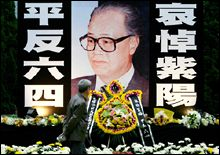
Zhang Jian's lone confrontation against the communist army during the June 3rd & 4th Massacre of 1989.
This domain name, http://www.uglychinese.org/, was first registered in 1998. The domain name was registered when this webmaster heard that his maternal grandmother, a feet-bound (lotus feet) peasant woman of all traditional virtues, passed away in 1998. In every recurring year this webmaster remembers his grandmother, this webmaster is in tears.
http://www.ugly-chinese.org was abandoned in preference for the name without the hyphen.
The word 'Chinese' used here is not derogatory, and most people will agree that Bai Yang, a Taiwan writer who wrote the book 'Ugly Chinese' ((Ugly Chinaman and the Crisis of Chinese Culture By: Po-Yang [on Amazon]), was a true patriot. Note, Po Yang's surname should be pronounced as 'Bai', not 'Po' or 'Bo', and the English term 'chinaman' was wrongly chosen for sure. I will deem this website patriotic as well. There are a few people who disapproved the name and the content (such as the coverage of China's caste society). I would counter it via the old saying, namely, hiding the ugly aspects of an existing caste society in China would be equivalent to 'wearing the beautiful clothes outside but the dirty linings underneath'.
What will be China's caste society like then? I would say it is just a little better than the apartheid of old South Africa, which had at one time had the 'apartheid' written into the constitution. In today's world, you could find the segregation, physical and economical, in such countries as China and North Korea. In China, the babies born in the Chinese countryside had to register with their mother's locality and they had no right to move to town, study in town or work in town. Every American I talked to was shocked to find out about this. Worse than that would be the acquiesce of the city dwellers of China as well as the city dwellers' mockery at the miseries of the Chinese peasants. The city people's saying would be, "Hey. 'Ah Xiang' had bigger houses than us, the city folks." Should the 160-200 million unemployed peasants be content with their 'happy' life in the countryside, they would not be sleeping, in a daily number of 100,000, on the train station of Canton. To understand how strict China's registration system is, just note that in today's Beijing (Peking) the capital, a separate ruling is in effect, requiring that whoever male Beijing resident must undergo a DNA test to determine the father-child relationship before their pre-marriage child could apply for the registration of household in the Beijing Municipality.
By exposing the nature of China's caste society, I hope the kind-hearted nature of mankind will come to reflect on themselves and consequently prevail in the fight against the evils. What I want here is the sympathy from the world public and the conscience of the ethnic Chinese when their colleagues or friends inquire with them about the CASTE of China where the humble peasants, i.e., majority group of the mainland Chinese, have been serving as coolies and slaves for both the Chinese communists (i.e., national capitalists) and the multinational corporations and banksters of the West. The peasants also served as "pao hui", i.e., "dust of cannon blasts [the cannon fodder]". (Judging by the number of 100,000 Chinese officers expatriated to the Manchurian-Ussuri border in 1958, you could extrapolate how many field soldiers of peasant origin had been deployed and had perished on the Korean Battlefield. Should not be a surprise to see a casualty number as high as
700k to 1 million.)
After being overseas for so long, I never have forgot my countryside cousins. Born in the countryside of China and having spent 17 years there, I watched my cousins enslaved, exploited and disparaged by the caste for so long. There are too many sad stories to tell. For example, one of my cousins worked as a coolie on a transport ship [for the shipping of stones to make into cement], his kidney failed as a result of hard labor, he is now blind, and his woman left him and their baby. He is of the same age as mine, but he did not have the privilege to finish the junior high school. He has a name, and it is Yueping. It is certainly my right to tell the story of the Chinese caste society to the world.
While some segments of discussion are political, they are not intended to be the propaganda of political nature. The political rhetoric will be minimal and it will be covered in the section on the caste society that was first written in 1997/1998 and still unfinished yet. I do feel guilty about my procrastination. I first read about the Chinese peasants' blood selling saga and their possibly contracting the AIDS as a result of unsterilized needles in year 1999. In China, there was and is only nominal blood 'donation'. The blood donation in China is a business, not some donation like the Red Cross. The government used a so-called rotating lottery to force the workers into blood donation in each and every enterprise or working unit. I also intended to propagate the striking reality of peasant women's suicides in China by means of usually pesticides called 'Di Di Wei' (namely, a sarcastic brand name of 'enemy enemy scared') and poisons for rats etc. Fortunately, the World Health Organization is paying more and more attention to the peasant women suicides in China. As we know, across the world, men are more prone to suicides, but in China, the peasant women took the abnormally high proportion as a direct result of their lowest status quo in the Chinese caste society. As long as China's discrimination against the peasants still exists, this site will be alive and kicking. Only when the Chinese re-possess compassion, kind heart, philanthropy and conscience will I take down this 'ugly' site.
I originally intend to call the attention to the cruel nature of the caste society prevailing in China today. I had apparently been overtaken by the pride of my being a Chinese. I had shifted more and more towards a re-discovery of my identity and the Chinese history. The culture and history presented in this website certainly contradicts the criticisms by Bai Yang in his book 'Ugly Chinaman and the Crisis of Chinese Culture'. I could understand why Bai Yang blamed China's failures and frustration on China's imperial past. Also, there are people who constantly claimed that our nation and our people had been over-burdened by history. Is that really so?
Some wise guys pointed out that the Chinese communists had simplified the language two times to the extent that no ordinary Chinese could read the "classical Chinese language" any more, which was an attempt to cut off the present from the past and the inspiration the past would bring along. The "cultural revolution" already swept away everything. Today's material pursuit inside China certainly is not restrained by any ethics. Not many Chinese possess the astute knowledge of the past, and they forget about the past, i.e., history. There is no such talk as too much history or too much historical burden. Simply not true. Comparative studies of the Chinese history versus the European history had shed new light on the fundamental cause as to the origin and sustaining nature of the Chinese civilization. China would not have been China should there be lacking the kind of morality, compassion and righteousness as expounded by Confucius and Mencius. Take a look at the world around, only China and Ottoman Empire had been able to withstand the firepower of the European powers. Australia, the American continents, or elsewhere, people simply fell in the wake of the European advances. Once we cool down, we would be surprised to find out that the idea of 'revolution' (a word cited by Confucius for the Cheng-Tang Revolution) was directly responsible for the later French Revolution in Europe. Professor Lock Hoe had commented that China's dynastic changes and revolution (as seen in the saying 'Every 50 Years, A Cycle In Cathay') had served as an illuminating guide for the Jesuits who visited China in the 16-17th centuries, and it was due to the Jesuits who propagated the egalitarian and revolutionary ideas that led to the conclusion that the French or British royal houses could be overthrown by a 'revolution'. Confucius first described the Shang Tang replacement of the first Chinese dynasty of Xia as a 'revolution'. Dr. Sun Ya-tsen cited the 'revolution' concept in calling for an overthrow of the Manchu rule in late 19th century.
The main threads of my discussion will be dynastic substitution as well as the racial and ethnical interaction. Origin of the Chinese is examined in the prehistoric section, the concept of the 'Mandate of Heaven' will be examined for the validity and power base of Chinese emperors and rulers. Ethnic interaction will be covered in the Huns, Turks and Mongols etc., and the rise and fall of dynastic powers will be detailed in the sections on the major dynasties. Whenever possible, I would relay the comments and insights of ancient saints (like Confucius and Sima Qian) as well as those of contemporary scholars. Example, Sima Qian commented that Qin Dynasty could defeat rivals and unite China because of its capabilities for reform and change, and this applies to today's China as well. China's imperial power will be examined, and the balance of power between the emperors and the ministers would be touched upon.
Historian Tang Degang pointed out that the ancient Chinese had utilized the "mandate of heaven" as a two-edge weapon, i.e., legalizing the inheritance of right to ruling from the Heaven's divine mandate as well as restraining the absolute power of emperors with the omens of heaven. For example, when some minister told Soong Emperor Shenzong that the natural disasters had no bearing to the omens or warnings from the Heaven as to emperor's deed, Prime Minister Fu Bi admonished the emperor by stating that "The only thing that emperors fear is Heaven. Should emperors fear no Heaven, then emperors could do anything they want." Furthermore, Tang Degang pointed out that Mao Tse-tung [Mao Zedong], i.e., an atheist, had taken the 1976 Tangshan Earthquake as a bad omen that he would soon die. Similarly, Kissinger mentioned that Mao Tse-tung at one time had shown his superstition. After analyzing the difference of divine rights between the Orient and the Occident, Tang Degang cited the 'Heaven' as constraints on the Chinese emperors. Though, Tang Degang complimented China's Soong Dynasty as a good example of the balance of power between the emperors and prime ministers.
The conclusion is clear: China's rule of law is what made her a civilization in the first place. There is no excuse in citing China's imperial past as an insurmountable hurdle for entering the phase of democracy, liberty and freedom. China's administrative brilliance, such as the civil examination system, should never be discounted. The ancient ideas and concepts could still serve as useful guides for managing a country like China today. Wise Chinese leaders should draw inspiration from the past and understand the true essence of the 'Mandate of Heaven'. By concentrating more on the historical aspects, I hope that the Chinese will reflect seriously on their past and present and realize who they are and where they are going.
The Political Dissertation: The Caste Society
Long after the Mongol Yuan Dynasty devised the discriminatory society in China, which divided people in China into four groups, in a caste-like system the Chinese government would successfully set up on the Chinese continent an even tighter and crueler caste system after their obtaining power in 1949. Unlike that of the Mongols which was ethnic in nature, the current system is political and power-driven, and it is more hidden and disguised, unknown to the outside as a result of collusion, conscious or subconscious, of the people in upper castes in China.
By "conscious or subconscious", I am pointing direct at the so-called city caste in China, without any distinction. This may sound unfair and harsh. However, the truth is that should you encounter some Chinese in the streets of San Francisco, LA or New York, most likely those people come from the background of a city dweller in China. The Fujian illegals would probably work and sleep in the restaurants around the clock or work in the sweatshops stitching clothes.
When I was asked to explain in details the situation of peasants versus city dwellers, I thought it hard and then derived a good analogy. I told people that you could probably think of the Chinese peasants as the 'invisible men' as depicted by a Black author in the U.S. (Ralph Ellison), and the kind of relationship between the Chinese peasants and city-dwellers would be equivalent to the Blacks versus Whites in the U.S. in the 1960s. The so-called Chinese people do not include the INVISIBLE Chinese peasants. The peasants' image was rarely seen in the TV or heard on the radio. They certainly did not appear in TV screens when China had the carnival for winning the right to host the Olympics. I had recently realized why so few of my classmates had ever been enrolled in senior high school which are located in township capitals or cities. There had existed a quota all the time. It is not that my countryside classmates were not smart enough to excel in the open entrance exams, but that the admitting scores for the country boys and girls had always been higher than for the city boys and girls. Recently (in year 2000), someone had compared the admitting scores for college entrance that were required of students in Beijing versus Fujian Province; the result shows that those Beijing students, though with scores lower than Fujian counterparts by 150-200 points, could still enter Qinghua University or Beijing University. Stats show that among students of Peking U or Qinghua U, 30% come from the city of Peking, 30% from provincial cities of China, 20% from townships of provincial China, and less than 10% from the countryside of China. In year 2001, I had noticed a surge of complaints on the internet about the unfair admitting scores and the quotas. I really hope that the city people, once realizing the unfairness and inequality of the system in college entrance, will extrapolate this to make a case for the heavily exploited peasants who live in the bottom of the Chinese caste society.
Some wise guy pointed out that Chinese communists had deliberately weakened the Chinese race physically as well as mentally. The stringent caste society had led to an unscientific inter-marriage among the peasants (comprising of 70-80% of the total Chinese population), with statistics showing that 80% of peasants inter-marry within the same county, 50% within the same xiang (shire equivalent, previously in the form of communes), and 30% within the same village. I simply could not imagine how short-sighted the communists are in weakening the Chinese Race and am extremely worried about the future of the Chinese People and Chinese Nation !!!
In history, the Mongols had also adopted quota in the civil services exams, which was to make sure that at least half of the government posts would be occupied by people of the Mongol descent. By the Ming Dynasty, however, discrimination against different groups of people was revoked, and the imperial exams had been open to all walks of life. But the current system in China is discriminating against the peasants in all aspects, economically, socially, culturally and politically. This caste is no better than that in India. Even worse is that the people in the city caste never realize that they are consciously or subconsciously safeguarding this caste system.
Some reader questioned my statement in regards to caste, stating that: "There's no point in pointing fingers at other people, I believe the saying: if you are not part of the solution, you're part of the problem ... I don't disagree with a lot of things you said, but you seem to confuse politics with ethnicity/nationality. I'm not defending the communists, but you seem to suggest chinese=communist... As for exaggerations, to say the present Chinese society has a caste system is untrue. Prejudice, racism exist everywhere but a caste system? !comeon! a little strong don't you think?"
My reply: "Unfortunately, China's problems only got worsened now than before, contrary to maybe wishful thinking. China's communists know no shame. They only know how to hide their dirty linens underneath their beautiful clothes. Why is the matter getting worse? Because Shanghai, beginning from year 2002, adopted the same rascal policy as Shenzhen and Beijing. Shanghai now requires so-called temporary residency card. Police could stop any person on the street for checking this ID. Police could throw any migrant into the van and send it to detention center. Recent newspaper report stated that some businessman was caught in Minhang area, thrown into a police van, trucked to Zhuanqiao's detention center, rerouted to Shanghai's dispatchment center, and then packed into train with other migrants for their hometown province. --This only reminds me of the Nazi train that carried the Jewish victims for gas chambers, and I hope that this reader will someday realize the seriousness of the Chinese problem as well as the apathy of the privileged class."
I further replied: "Bo Yang wrote his version of 'Ugly Chinese' and lots of people felt indignant about it. What I had tried to do is to make Chinese beware of 'shame' first, a quality called "Whoever Knows Shame Is Courageous" per Confucius. This reader's sensitivity proves that she still had retained conscience, which is good. I never said chinese=communist; however, Chinese who grew up under the communist system had been part of the pyramid. In light of the plight of majority Chinese people and the apathy of the Chinese who had left China, what I had expounded is only constructive in caring to speak out about those majority Chinese under communist control."
How Was the Chinese Civilization Sustained
Paul Kennedy, in "The Rise & Fall Of The Great Powers", claimed that Europe's mountainous geography had guaranteed the disunity and individuality of European nations, principalities and peoples. Then, is China lacking the mountains, gorges and deserts that should have precluded the "unification aspiration" of the Chinese people from a continuance? The geographical thesis marks Paul Kennedy's 600-page book invalid automatically.
China, at least from the time of Confucius, repeatedly talked about the term "da [grand] yi [one] tong [unification]". What Confucius argued 2500 years ago was different from the unification agenda of kings or emperors: Confucius was talking about which month of the year should be treated as the first month on the "da [grand] tong [unification] li [calendar]" [i.e., a same term used by Ming Dynasty Emperors in distributing China's calendars to vassals including Japan & Ryukyu]. In Confucius' times, the Soong Principality was using the Shang Dynasty's calendar [Dec]; Jinn was using the Xia Dynasty's January as the first month; the Zhou court used November as the first month of the year; and vassal Qin adopted October as the first month of the year.
China had been a united country or possessed an inertia for unity because of the same origin of our people as well as the invention and adoption of pictographic form of written language.
Revolutionary forerunner Zhang Taiyan (Zhang Binglin) pointed out in the early 20th century that a nation like China was unique in its continuity for three important characteristics, i.e., language, customs, and history. The trinity, especially the written language, conspicuously distinguished the "Chinese nation" or the Sinitic people from all the rest of the people for the technical difficulty in cloning the said language. In China, the written language was traced to the Cangjie characters from the Yellow Thearch's era. Lord Huang-di, i.e., the Yellow Thearch, was recorded in the Warring States time period of the Zhou dynasty to have possessed the chronicle official Cangjie who had first created the Chinese characters.
Though the barbarians had conquered China and slaughtered the majority of the Chinese population more than once, and changed the Sinitic customs like the hair style and the clothing style, the Sinitic language and the Sinitic legacy (history) turned out to be the ultimate lease of life and the provenance of inspiration that allowed the Sinitic country and Sinitic people to get reborn.
Further, the Confucian school of thoughts upheld the ancient ancestor worship to the apex, leading to the blood affinity of clans and families, a phenomenon that continued till the 1960s when communist China destroyed all tombs, including that of my grandfather.
Our civilization, born out of a mundane society, had survived the impacts and challenges as a result of the establishment of our ancestral belief and morality systems and values.
In past thousand years, our peoples and clans were used to saying that we, of same last name, were from the same family 500 years ago. From the Soong Dynasty onward, Prime Minister Fan Zhongyan, as a philanthropic activity, had provided a model of purchasing lands for the same clan members. Each and every member of the clan, after success in career or wealth, would usually return to the hometown to rebuild the family ancestral pilgrimage. In early 20th century, the father of diplomat Gu Weijun [i.e., Wellington Koo] did the same in buying large patches of lands on behalf of the Gu clan. After Taiwan opened the visitation to mainland China in 1988, hundreds of thousands of compatriots had visited mainland to do the same. My word of advice for our Chinese brothers: Love your cousins. As Zhang Binglin said, the clan affinity was from fetus & placenta. You, as an individual Chinese, could make a change in today's China by spreading the message of love and care for your fellow brothers.
As another ancient Chinese saying goes, it takes 10 years to plant a tree and 100 years to raise a person.
"Raising a person [i.e., an ordinary Chinese person]" is a task that should be undertaken from ground up inside of China. Only after restoring the baseline of China's societal foundation and values [which had been destroyed by the communist regime] would there be possibility of a resurrected Chinese Nation.
(Paul Kennedy's other thesis in "The Rise & Fall Of The Great Powers", i.e., economic power determining the outcome of a war, was wrong as well even though it partially explained why Germany were twice defeated by Britain and the U.S. Germany's defeats lied in its fatal bogging down in Russia the same way as Japan's entanglement in China during WWII. For both Japan and Germany, they attacked economically backward Russia and China but failed invariably. Similarly, Manchu China, though relatively wealthy after 300 years of silver inflow [including that from the gold mine of Mexico, nevertheless fell prey to the imperialists, spitting out the tonnage of silver China accumulated over thousands of years on top of the intake in last couple hundreds of years.)
Two books, "A History of Asia" by Woodbridge Bingham of UC Berkeley, and "China's Imperial Past" by Charles Hucker of Standford University, had been very helpful in shedding the light on the cause of the continuity of the Chinese civilization. The former touches on religion and culture, and it is from this book that my conviction is vindicated, i.e., the mundane powers determine the religion, not the other way around. As we know, Indian King Ashoka and Roman Emperor Constantine directly caused the later developments of the two religions. The latter book touches on government and philosophy in depth, and it proposed the so-called notion that 'ancient Chinese were Confucian superficially, Daoist innerside, and legalist in governance.' This is basically the same saying as Mr Lin Yutang proposed during early 20th century.
As to Chinese civilization, I would emphasize two points which I think play the fundamental role in upholding and sustaining the Chinese civilization. The first would be the fundamental Chinese belief in 'ancestor worshipping'. Real-sense cherishing and appreciation of a heritage would be for the descendants to actually remember who their ancestors were and what accomplishments their ancestors had achieved. Note that China's surname could be mapped to the same Y-chromosome. As a result of ancient Chinese ancestor worshipping, Chinese clans present a unique way of identification of surnames and Gene-tree Y-chromosome. Confucius had a saying 'king king, minister minister, father father, son son' and I would say this had shaped China's moral and legal bases in a mundane society where no religion like Christianity, Buddhism and Islam had ever originated and developed. Confucius had simply developed the ancient Chinese philosophy of 'ancestor worshipping' as recorded on the Shang oracle bones. Confucius was very much trying to resurrect the so-called 'li' (rituals) of early Zhou Dynasty, and his ultimate motive was to exalt the virtues and system of early Zhou Dynasty as heralded by Archduke Zhou and those people in Soong State (Confucius' ancestral state where the direct descendants of earlier Shang Dynasty had been living since the Shang-Zhou transition year of 1066 BC). Lack of the moral and legal bases will not make a nation. This is best illustrated by the failure of the Huns although they had been living along the Chinese since inception of the Chinese history. The Hunnic kings historically took over their stepmothers and brothers' wives as concubines and they could never make a nation, even with many defector Chinese generals (like Li Ling, historian Sima Qian's friend and general Li Guang's grandson). For a mundane country like China, people would have no choice but to seek for their fundamental strength in 'ancestor worshipping' so as to safeguard their moral and legal formality and way of life. Today's China, void of this fundamental base, certainly had become a decadent society full of corruption and crimes. Wise guys had pointed out the urgent need for the Chinese to re-possess 'Ren Yi Li Zhi Xin', namely, compassion, being righteous, courtesy or rituals for 'Li', intelligence for 'Zhi', and keeping promise for 'Xin'. Alternative saying would be 'Li Yi Lian Chi' or courteous, righteousness, frugal or economical, and shame-awareness.
The continuity of Chinese civilization, however, lies in the so-called pillars and safeguards of the system, the elite class who obtained their officialdom posts via either the 'recommendation system' in Han times or the civil services exam (open to almost all classes of people, though not altogether) in Tang-Soong-Ming-Qing dynasties. While some Italian traveler wrote of the liberal and somewhat lascivious lifestyle of southern Chinese in Canton on the eve of Mongol attacks, not much different from the exotic social life as depicted in Arabian Nights, the Chinese civilization had survived for past thousands of years because of the pillars and safeguards of the system, simply called emperor's men. This is best illustrated by the familial motto guides such as Zhu Family Mottos by Zhu Xi the neo-Confucian of Soong Dynasty. This system of emperor's men had its heyday in Soong Dynasty when the first emperor of Soong forced all his generals into retirement and conferred even the military posts onto civil-service officials. Soong Dynasty produced such righteous ministers as Fan Zhongyan who was famous for a motto that "one should worry before the populace do so and seek happiness only after the populace become happy". Soong Dynasty produced numerous 'Si Yi' intellectuals, i.e., those Confucians who sacrificed their families and lives for the country. When chased by the Mongols, Prime Minister Lu Xiufu, with young emperor on his back, fled to southern coast. After driving his family into the sea, Lu jumped into the sea with emperor on his back. Wen Tianxiang, on the date of being executed, wrote a poem, stating that "Confucius proposed that one should die for compassion (Ren) and Mencius suggested that one should die for righteousness (Yi). Only when righteousness is fully exerted will the compassion be derived. What should I endeavor after educating myself with so many books of the ancient saints? However, I am sure that I feel no guilty about myself from this death moment on." (Confucius wording for 'Ren' should mean a broader sense of human perfection, similar to nirvana in Buddhism. 'Ren' also meant nucleus in Chinese, as used for the nucleus of various fruits like apple.)
Intellectuals, as said earlier, had always been China's conscience, and it was those intellectuals who had faced up with the emperors in the past 2000 years and maintained China's civilization. Today, under the oppression of the communist government, China's intellectuals had lost their traditional courage and it might take many more years for them to pick up this same courage again to face up with the new tyrants in Peking. In the 1950s, two intellectuals stood out as the 'conscience of China', namely, Liang Suming (the agriculturalist) and Ma Yinchu (the expert on demography). Both persons did not bend in face of the organized rascal attacks orchestrated by Mao the tyrant.
Mao was too much a tyrant for the intellectuals, and damages were done. Mao personally said that Qin's First Emperor Shi Huangdi was nobody because Mao himself had routed hundreds of thousands of the 'rightists' while Qin only buried a few hundreds of Confucians. The Communist life philosophy is class struggle and human struggle against each other. When I first read Salisbury's 'New Long March' in 1983, I realized that the so-called 'AB League', namely, the Anti-Bolshevik League, was a conspiracy by Mao's Hunan communists to purge those Jiangxi communists on the Jinggangshan mountains. In the early 80s, there was a movie 'From Slave To General' showing that the AB agents were shot to death once they were caught. A reading of the English version 'Red Star Over China' also shed light on many things skipped in the Chinese translation. Recently, I read about the Yan'an Rectification Movement of the 40s, and I was surprised to find out that Wang Shiwei, a writer who was classified as a reactionary (Trotsky follower) in 1944(?), was not executed (via decapitation) till 1947 till the communists evacuated from Yan'an, with a random draw to state that the 100 most serious offenders be executed [by decapitation, of course, to save the bullets], the 100 mid-level serious offenders ordered on a march to Manchuria, and the 100 light offenders re-assigned the jobs. The executioner for Wang Shiwei was later assigned the post as some kind of party secretary of Sichuan Province. What a sad story here. Mao's purge of his comrades would be too long a topic for me to touch on here. It's no less than Stalin's Purge, and it was something that triggered Mao's launching the cultural revolution partially since Mao was phobic about his comrades (Liu, Deng & Zhou et al.) possibly learning from Kruschev's negating Stalin in 1956. Partial is my word here because Mao and his unofficial wife (Jiang Qing), both, had utilized every possible chance to avenge on their comrades for any mischiefs they felt in the 30s and 40s.
This website's contents are the result of 20 years' writings --that could be compared to the "archaeological deposits" in a literary sense.
The freelance-style writings on the website were not proof-read.
Portion of the writings, i.e., related to Pre-History, Xia, Shang, Zhou, Qin, and Han dynasties, was extracted, polished, reconciled, and synthesized into
The Sinitic Civilization - Book I which is
available now on
Barnes & Noble,
Amazon,
Google Play|Books
and
Nook.
Book II is
available now on
Amazon
and Barnes & Noble.
Check out this webmaster's 2nd edition --that realigned Han dynasty's reign years strictly observing the Zhuanxu-li calendar of October of a prior lunar year to September of the following lunar year
and
cleared this webmaster's blind spot on the authenticity of the Qinghua University's Xi Nian bamboo slips as far as Zhou King Xiewang's 21 years of co-existence with Zhou King Pingwang was concerned.
To give the readers a heads-up, this webmaster had thoroughly turned the bricks concerning the Sinitic cosmological, astronomical, astrological, historical, divinatory, and geographical records, with the indisputable discovery
of the fingerprint or footprint of the forger for the 3rd century A.D. book Shang-shu (remotely ancient history),
and
close to 50 fingerprints or footprints of the forger of the contemporary version of The Bamboo Annals --a book that was twice modified and forged after excavation.
All ancient Chinese calendars had been examined, with each and every date as to the ancient thearchs being examined from the perspective how they were forged or made up.
Using the watershed line of Qin Emperor Shihuangdi's book burning to rectify what was the original before the book burning,
this webmaster filtered out what was forged after the book burning of 213 B.C.
This webmaster furthermore filtered out the sophistry and fables that were rampant just prior to the book burning, and validated the history against the oracle bones, bronzeware and bamboo slips.
There are dedicated chapters devoted to interpreting Qu Yuan's poem Asking Heaven, the mythical mountain and sea book Shan Hai Jing, geography book Yu Gong (Lord Yu's Tributes), and Zhou King Muwang's travelogue Mu-tian-zi Zhuan, as well as a comprehensive review of ancient calendars, ancient divination, and ancient geography.
One chapter is focused on the Huns, with a comprehensive overview of the relationship between the Sinitic people and the barbarians since prehistory.
The book has appendices of two calendars: the first Zhuanxu-li anterior quarter remainder calendar (247 B.C.-85 A.D.) of the Qin Empire, as well as a conversion table of the sexagenary years of the virtual Yin-li (Shang dynasty) quarter remainder calendar versus the Gregorian calendar, that covers the years 2698 B.C. to 2018 A.D.
Refer to
Introduction_to_The_Sinitic_Civilization,
Afterword,
Table of Contents - Book I (Index)
and
Table of Contents - Book II (Index)
for details.
Hucker categorically claimed that the Chinese society consisted of "at least 80 per cent of the total population" that consisted of "farming villagers" and "20 per cent or so of the traditional population" of the "homogeneous literate culture'. This categorization is similar to Alfred Tennyson and William A. P. Parsons Martin's claims as to "A Cycle of Cathay" for Sinitic China's superficial staleness, namely, what Gernet pointed out to be the repeat of stages of "stagnation, periodical return to a previous condition, and permanence of the same social structures and the same political ideology". As pointed out by Jacques Gernet, China was a technical civilization, not a vegetable (i.e., agrarian) civilization as commonly perceived. Gernet took China as "the land of the most skilled metallurgists". It needs to be acknowledged that Professor Jacques Gernet was the most brilliant Sinologist of all, who made almost impeccable generalizations about history of China.
Gernet's A History of Chinese Civilization (Le Monde Chinois, 1972/1999) is a general history book on China, that covers the political, economic, and social aspects and traverses the Chinese history from antiquity down to the 20th century.
Gernet piled praise on the Chinese civilization for the "tremendous historical dimension", "writing, its technology, its conceptions of man and of the world, its religions and its political institutions", and "the originality of all Chinese intellectual traditions". Specifically, Gernet raised a good point in regards to importance of intellectuals who had "the prerogative of the written word in the Chinese world" and who were "attached in China to a knowledge of writing and to book knowledge" and acknowledged the Chinese language characterset as "most effective instruments of political unification". Note that Hucker's China's Imperial Past did not shake off the old-fashioned stereotyped description of China and its land, topology, people, language and other "themes that pervade Chinese life and history", such as China proper and its purported insulation from "other major centers of civilization until the advent of modern communication and transport techniques" or China taken to be the "only major nation of Asia that is racially homogeneous".
Hucker's book, in addition to a general history, aligned the chapters into political institutions, socioeconomic organization, religion and thought, and literature and the arts. This author's duology could serve the purpose of a complimentary reading to Gernet's Chinese history book in that it filled the "gaps, imperfections, and errors" of both Gernet's and Hucker's works --that were said by Gernet to be inevitable in his general history due to the fact that China's written literature contained "rich and varied a range of events extending over three and a half millennia".
Perhaps, a student of Chinese history could read both Professor Jacques Gernet's book and this webmaster's duology The Sinitic Civilization to achieve an enhanced understanding of the Chinese history.
Gernet made a succinct point that the West or the world "borrowed from China" without "realizing it" nor "recognizing its sizable debt to her, but for which we (i.e., the West or the world) ourselves would not be what we are". This is similar to Aly Mazaheri's claim in La Route De La Soie (1983) that China just needed the Ferghana stallions while the West needed everything from China, including products such as paper, musk, iron cast ovens, iron wok, steel nails, pliers, needles, scissors, iron file, iron hammers, bronze mirrors, fire-making sickle [that Europe had utilized for eighteen centuries], etc. What Gernet and Mazaheri did not realize was Sinitic China's prehistoric contribution, including the written language and the cognates. It would not be farfetched to make a claim that the Sinitic pictographic characters, which could have origin in the Jiahu pristine engraved pictograms with a long history of 6000-8000 years, was the common origin for both the Shang oracle bone characters and the Sumerian wedge script --that shared similar significs or radicals, such as using the 'bow' signific for armies, adopting the reeds' signific to mean writing, and treating the 'square earth' character as animal, hunting and husbandry. In addition, it could be deduced that the Sinitic language, which shares 74% cognates with the Proto-Tibeto-Burman, could be the source for both the cognates of the Proto-North-Caucasian and the Proto-Indo-European for the "Old Chinese" sharing 43% cognates with the Proto-North-Caucasian, rather 23% with the Proto-Indo-European --as a result of the N haplogroup people's relocating to North Asia and then to Latvia, Estonia, Finland and Scandinavia and bringing along the Sinitic language to the Proto-North-Caucasian who in turn gave it to the Proto-Indo-European. From the bronze technology angle, Jacques Gernet believed that the Chinese "mastery of the potters of Lungshan, the high temperatures which they seem to have been capable of obtaining, and the restricted role of hammering and forging in the technical traditions of the Far East all incline one to favor the idea of an independent discovery of bronze metallurgy".
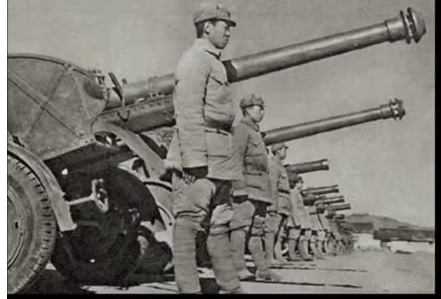
Though, Gernet, who was the most prescient among all Sinologists, made some similar general observations, such as the argument that "no clergy, no military caste, no merchant class ever succeeded in gaining political power" in China while applying the term of Sino-barbarian autocracy to the southern and northern dynasties of China, a time period of disintegration for China, that saw northern China being ruled by the barbarians who belonged to a mercenary military caste. Gernet's prescience in evaluating China's imperial system could be seen in his caution to avoid making distinction between "monarchy and democracy too absolute", and expressed admiration for the "complex forms of political organization" of China and "fundamental traditions" in the political, religious, aesthetic, juridical arena. Gernet erred in claiming that the "peasant militias", i.e., Soviet-sponsored proxies, founded in 1949 the communist nation after sweeping away "a military dictatorship", i.e., Republic of China. Gernet did not know that it was the Soviet-supplied artillery divisions and regiments that blasted the cities of Jinzhou, Xinbao'an, Taiyuan and Tientsin to pieces. Gernet thought he had worked out "a general framework" that "will help to crystallize... ideas about the successive changes in the political forms of the Chinese world". Note that the communist revolution of China was not another indigenous or autochthonous cycle of 50 years in Cathay.
This snippet is for sons and daughters of China:
Heed the sons & ministers' agony and sorrow of our ancestors who died or lived through the Mongol,Manchu andSoviet-Chicom conquestand
theYongjia,Jingkang andJiashen cataclysms !
Jeanne d'Arc of China:
Teenager girl Xun Guan breaking out of the Wancheng city to borrow the relief troops in the late Western Jinn dynasty;
Liu-Shao-shi riding into the barbarian army to rescue her husband in the late Western Jinn dynasty;
teenager girl Shen Yunying breaking into Zhang Xianzhong's rebels on the horseback to avenge on father's death in the late Ming dynasty.
China's Solitary and Lone Heroes:
Nan Jiyun breaking out of the Suiyang siege and charging back into the city in the Tang dynasty;
Zhang Gui & Zhang Shun Brothers breaking through the Mongol siege of Xiangyang in the Southern Soong dynasty;
Liu Tiejun breaking through three communist field armies' siege of Kaifeng in the Republican China time period;
Zhang Jian's lone confrontation against the communist army during the June 3rd & 4th Massacre of 1989.
Liang Suming, the Last Confucian Of China
Liang Suming was called the last Confucian of China because he was the first scholar to stand up against Mao Tse-tung's agricultural policies and the so-called 'land reform' in the early 1950s. He thought he was doing his job just like numerous intellectuals or Confucians in the prior dynasties. Mao personally cursed or bashed agriculturalist Liang Suming for more than one hour during the September 1953 National Agriculture Meeting. What distinguishes Liang Suming and Ma Yinchu from the other intellectuals would be the fact that they refused to write self-criticism and succumb to tyranny.
Liang did not know what kind of tyrant Mao really was. In the past 2000 years, China's emperors cared about what history would write about them, and they would usually ask historians to give them favor for their usurpation and killing. In the Spring & Autumn time period, there were three brothers who worked as the royal chronicler for the Qi Principality.
For the 548 B.C. murder of Qi Lord Zhuanggong, the three Qi chronicle officials kept on writing the entries about the murder, with the two elder brothers killed by Cui Zhu.
The elder brother wrote that prime minister, Cui Zhu, killed the king and hence got killed by the usurper, the second brother continued his brother's version and got killed, and the third brother did it again, which made Cui Zhu frustrated at it and hence left the record unchanged.
Nan-shi-shi, another chronicle official, was ready to die as well and recorded the killing on a bamboo slip.
(Confucius' private annals, The Spring & Autumn, enjoyed a high remark which goes like this: After Confucius edited the Spring & Autumn, the usurpers & tyrants had become wary of their conducts.)
Liang Suming (1893-1988) was a talented scholar as we mentioned in the section on the Mongols. Liang, from Guiling, today’s Guangxi Province, claimed the Mongol heritage. His father, Liang Li, sacrificed his life to protest against China's weakness. He wrote an article "An Exploration Into Yuan Dynasty" in 1918 and hence was appointed the post as lecturer of philosophy in Peking University at the age of 25. He would later advocate a new school of Buddhism based on the humanitarianism, loving-kindness and compassion. He was labelled a conservative for his criticism of facile westernization and modernization. In the 1930s, he launched an experiment with agriculture in Shandong Province by setting up the village schools and Confucian academies.
Together with James Yen, his activities would be called "The Rural Reconstruction Movement".
At about the same time, Zhang Yinwu, a retired military general who previously served under Yan Xishan, launched the Sicun (four preservation of Confucius and Mencius' virtues) Middle School in Hebei Province.
Thousands of graduates from both Liang Sumin and Zhang Yinwu's schools later became the pillars of the resistance wars against the Japanese occupation army, and waged relentless guerrilla wars behind the enemy's line, till the Chinese Communists were to wipe them out completely, by the means of live burial and decapitation by hundreds and thousands.
Later in the 1940s, Liang Sumin visited Mao in Yan'an and debated the agriculture and the peasants' issues with Mao for days. Liang and Mao agreed to disagree on the matter of agriculture and the peasants. While Liang was a proponent of the agricultural reform, Mao was conducting the bloody and radical "land revolution" by killing the landlords and distributing land to the peasants, with the radical elimination movement nominally mitigated a bit during the resistance war time period. Liang was a prominent member in the Democratic League and stayed on in Peking to meet Mao during the communist takeover in 1949, and he was appointed a post as an agricultural expert in the so-called Chinese People's Political Consultative Conference or Committee (CPPCC). Ma Yinchu, like Liang Suming, stayed on to greet Mao as well in 1949.
(More available at THE ENEMY FROM WITHIN: CHINESE COMMUNIST ATTACKS AT GOVERNMENT TROOPS - 1940)
This snippet is for sons and daughters of China:
Heed the sons & ministers' agony and sorrow of our ancestors who died or lived through the Mongol,Manchu andSoviet-Chicom conquestand
theYongjia,Jingkang andJiashen cataclysms !
Jeanne d'Arc of China:
Teenager girl Xun Guan breaking out of the Wancheng city to borrow the relief troops in the late Western Jinn dynasty;
Liu-Shao-shi riding into the barbarian army to rescue her husband in the late Western Jinn dynasty;
teenager girl Shen Yunying breaking into Zhang Xianzhong's rebels on the horseback to avenge on father's death in the late Ming dynasty.
China's Solitary and Lone Heroes:
Nan Jiyun breaking out of the Suiyang siege and charging back into the city in the Tang dynasty;
Zhang Gui & Zhang Shun Brothers breaking through the Mongol siege of Xiangyang in the Southern Soong dynasty;
Liu Tiejun breaking through three communist field armies' siege of Kaifeng in the Republican China time period;
Zhang Jian's lone confrontation against the communist army during the June 3rd & 4th Massacre of 1989.
Philosopher-turned Scholar Shan Shaojie, in Mao In Power 1949-1976 (Mirror Books, 2000, Carle Place, NY, ISBN 962-8744-31-3), had a good account of Mao's bashing of Liang:
"On September 9th, 1953, Zhou Enlai invited Liang Suming for making a speech at the expanded meeting for the CPPCC standing committee. On September 11th, Liang Suming pointed out the mistakes and blunders committed by the CCP on the agricultural issues. The second day, 60-year-old Mao Tse-tung made a speech in response to Liang Suming's criticism by claiming that "What a joke it is that some body dared to show off the carpenter's hatchet in front of a master". On September 13th, 60-year-old Liang Suming had a short encounter with Mao and defended himself by stating that he had no ill intent in his criticism, but Mao claimed that Liang was unconsciously against the general policies of the CCP. From September 16th to 18th, Liang Suming defended his innocence during the 27th session of the commissar meeting of the central people's government and requested that Mao made a self-criticism. Mao Tse-tung interrupted Liang's talk several times, claiming that Liang Suming was someone murdering the people with pens the same way as Chiang Kai-shek murdering people with the gun barrels. Mao further said that Liang, a reactionary in disguise, had utterly no contribution to the common people during his whole life, that Liang refused to acknowledge his reactionary perspectives while painting himself more appealing than such ancient Chinese beauties as Lady Xi-shi, Lady Wang Zhaojun and Lady Yang Guifei, that Liang Suming, not someone to be trusted, should not be allowed to attend even the small-scale meetings hosted by the democratic parties and organizations, that Liang Suming should repent over his thoughts and tell people how he had turned into a reactionary representing the landlords, that Liang Suming knew no shame in thinking he was smarter than the communists on the matter of agriculture/peasants or smarter than people's volunteer soldiers flying warplanes over Korea or the PLA soldiers digging trenches during the civil wars, and that Liang Suming was a hypocrite with wild ambition." Zhou Enlai slammed Liang Suming by lodging an accusation as to Liang's sabotaging the peace-talks between the K.M.T. and the CCP in 1946-7. (See Zhou Enlai's tears.
What Zhou Enlai was referring to was a last ditch efforts by the democratic parties to draft a resolution for the KMT and the C.C.P. so as to avert an outright civil war; however, Zhou Enlai and the communists, no longer interested in the peace talks, had no intent to work on a draft resolution, and hence broke off the efforts by the democratic parties, saying in tears that he was to break the dozens of years of friendship with the democratic party members for the democratic parties' efforts at maintaining peace. After that, the Youth Party and the other democratic parties, which were less infiltrated by the communists, exited the league of democratic parties and announced to participate in the National Assembly in the absence of participation by the pro-communist democratic parties and the communist party.)
Shan Shaojie claimed that the red guards of the 1965 cultural revolution must have learnt Mao's rascal approach from right here and that Mao had contrasted sharply with Liang Suming as far as Confucius's old saying goes, namely, that a wise man should possess the listening flat ears by the age of 60. Liang Suming hence shutting up his mouth, Mao Tse-tung, however, did not forget to launch a mass movement to further criticize Liang Suming in May of 1955.
Mao's ascension to total dictatorship came in stages. Mao Tse-tung, directly responsible for the rascal movement in Hunan Prov in 1927, would be the red-handed culprits in the Purge of Anti-Bolshevik League during 1930-1931, the Purge of Trotskyists during 1937-1941, and the Rectification Movement during 1942-1945. Purge of Trotskyists (1937-1941) and Yan'an Rectification (1942-1945) had purged most of the senior political enemies such as Wang Ming, Zhang Wentian and Zhang Guotao. The next stage would come in 1953, after Mao finished another political enemy, Gao Gang. To win the Civil War against the Nationalists during 1945-1949, Mao had adopted a mild and deceptive policy of attracting the intellectuals with slogans of 'freedom' and 'democracy'. Around the 1940s, intellectuals flocked to Yan'an and extolled the communists against the 'corruption' of the Nationalist government (KMT). (Today's China, with power and business intertwined, is certainly more than 10,000 times more corrupt than the so-called 'corruption' of the K.M.T.) One noteworthy intellectual would be a historian called Fan Wenlan, a person responsible for editing the Chinese history from the communist ideological perspective (i.e., historical materialism). Foreigners flocked to Yan'an as well, including Edgar Snow whom Mao had privately suspected to be a CIA agent. In the aftermath of the WWII, intellectuals were in continuous employment by the communists. In the K.M.T. areas, students and intellectuals staged incessant demonstrations. My university campus was littered with a monument in remembrance of two communist student martyrs who were killed by the KMT government for subversion.
A so-called consultative conference was convened in Peking in the name of rebuilding China. As pointed out by Bao Tong, in his article, "Revealing the CCP", 1949 saw Mao upholding the so-called "Common Guiding Principles" which was submitted to CPPCC and conferred constitutional status. This document stated that "the state protects the private property of workers, peasants, small and domestic bourgeoisies", that "freedom of thought and freedom of migration" of the people was protected, and that "the members of the National People’s Congress (NPC) at all levels shall be elected by a direct election process." But in 1953, Mao suddenly initiated "the transformation towards socialism," and dealt a death penalty to the Common Guiding Principles according to Bao Tong. (Shan Shaojie pointed out that the underlining logic for practicing 'socialism' rather than the transitionary 'neo-democracy-ism' would be Mao Tse-tung's efforts at the property deprivation of individual proprietors or petty-bourgeoise to the extent that individual proprietors or petty-bourgeoise would forfeit their economic basis after losing their quasi voting rights in the Chinese People's Consultative Committee. See section on 'Jiti Enterprises' [i.e., 'Collective Registers' enterprises] for details.) To solidify his rule, Mao purged 552,2887 "bourgeoisie rightists" nationwide in 1957, and after 1959 Lushan Meeting, went on the Anti-Rightist Trend to rout another 3,800,000 people. The failure of the Great Leap Forward and People’s Commune (1958-1961) and 40 million peasant death from starvation had compelled Mao into relinquishing some of his power, but Mao fought back against Liu Shaoqi with the launch of the Cultural Revolution (1966-1976) during which one hundred million fell into victims nationwide.
The Mandate Of Heaven
The concept of 'Heaven' as an ancient 'Di' or overlord had been with Chinese since the era of Three Sovereigns and Five Thearchs. Shang Dynasty's founder, Shang-Tang, claimed that Lord Highness (Heaven) instructed him to campaign against King Jie of the Xia Dynasty (21-16th c. BC; ? 2207 B.C.E. - 1766 BC per Lu Jinggui's obfuscatory chronicling; 1978-1559 from lord Qi to lord Jie per raw data from the forgery contemporary version [Jin Ben] of The Bamboo Annals or 1991-1559 B.C.E. per Zhu Yongtang) because of Jie's corruption and cruelty. Later, Confucius would term it by the 'Shang Tang Revolution', a word that would be used by Dr. Sun yat-sen in his efforts at overthrowing the Manchu rule.
Ancient China, while lacking a personified omnipotent,
omniscient and omnipresent god who created the universe and engendered the mankind, stratified
the divine spirits into the grandiose sky ('huang tian') and the lord on high ('shang di') before combining
the two into one and creating a separate grand one god ('tai yi') by the late Zhou dynasty.
The grandiose sky ('huang tian') was eulogized as a divine spirit shining on the 'nao' (i.e., Xia) land, with the Sinitic lords' ancestors sitting or standing next to the lord on high in the heavenly kingdom.
The first citation of the 'Mandate of Heaven' could be seen in Zhou King Wuwang's campaign against the Shang Dynasty in the 12th-11th centuries B.C. Zhou was a small tribal state in today's Shaanxi Province, southwest of the Mountain Qishan, in a place called 'Zhouyuan'. Wuwang, named Ji (last name) Fa, on basis of 50 years of management by his father Ji Chang who was conferred the title of Xibo (Count West) by last Shang King and with the help of counsel Jiang Taigong (i.e., Lu3 Wang4), launched an attack in the 12th-11th centuries B.C. at Shang Dynasty which controlled central China at the time.
The Da
Ming (big brightness) poem of Shi-jing, in eulogizing Jiang-tai-gong, stated that the military counsellor
was like a flying eagle (i.e., 'ying [eagle] yang [flying]').
When King Wuwang called upon various tribes to rebel against Shang (1765/1765 B.C.E. - 1122 BC per Shao Yong; or 1559 - 1050 per the forgery contemporary version [Jin Ben] of The Bamboo Annals), he stated that he was carrying out the order from the Heaven to penalize Shang king who had disrupted his kingdom by killing his elder son (Bigan) and imprisoning the uncle (Ji-zi) under the influence of the witch-like Shang queen.
Mu Shi4 (oath of war at Muye), hinting at the Shang king's wife, stated
that when the hen made the rooster crow in the morning, i.e., the reversal of male and female, it would
lead to a broken home and country ('pin-ji zhi chen, wei jia zhi suo').
King Wuwang assembled 300 chariots, 3000 brave soldiers, and an army of 45000 and crossed the Yellow River. In the outskirts of Shang capital Chaoge, a place called Muye, he met his alliance who had joined him with 4000 more chariots, and they confronted the Shang army of 700 thousand and defeated them. Ji Fa hence proclaimed the founding of Zhou Dynasty under the 'Mandate of Heaven'.
(Chaoge, mistaken by the later poets to be named after Zhaoge-shan (morning song mountain) and juxtaposed with the evening chord music, could be a causality case like Japan's Wakayama (Mt. Yamato song) that derived from either nearby mount Gangshan or a Waka river bund in poetic anthology Manyoshu.)
The last Shang ruler, Zhouwang, was a despotic ruler who killed one Marquis (Jiu Hou) and his daughter because the Marquis's daughter was not lewd. Another Marquis (Er Hou) was killed because he tried to protect Jiu Hou. Count Xibo, i.e., Ji Chang, sighed about the killings, and hence was imprisoned by Zhouwang. Zhouwang would kill Count Xibo's elder son, Boyikao, and made a dish out of Boyikao's flesh for Xibo to eat.
King Zhouwang laughed when Xibo ate it without knowing that it was his son's flesh.
Note here that the Boyikao story could be a late Zhou dynasty or Han dynasty sophistry writing, not a historical fact.
Count Xibo was set free only after Xibo's minister bribed Zhouwang by presenting a beauty. Prince Bigan, son of Zhouwang, would be deposed for trying to persuade Zhouwang into correcting his deeds. When Count Xibo invaded a Shang vassal called the Jiguo Statelet, Zu Yi, a Shang minister, expressed the worry that the 'Mandate Of Heaven' might be changed. Zhouwang rebutted Zu Yi, saying that the 'Mandate Of Heaven' was with him the minute he was born. After Xibo passed away, the later Zhou King Wuwang would rally eight hundred Shang vassals on the bank of the Yellow River, Mengjin. The vassals said to Wenwang, "Zhouwang could be campaigned against by now." Wuwang said, "You guys did not know the 'Mandate Of Heaven' yet." Zhouwang's brother, Wei-zi, would flee the capital. Zhouwang's son, Prince Bigan, seeing the departure of Wei-zi, would try to persuade Zhouwang again, but was ordered killed by Zhouwang to see whether Bigan's heart had 9 compartments as the saints were said to possess. Zhouwang's uncle, Prince Ji-zi, would pretend to have gone mentally ill, but he was still imprisoned by Zhouwang. When Shang's chief music ministers, Tai Shi and Shao Shi, fled to Zhou with Shang's ritual instruments, Zhou King Wuwang now ordered a campaign against Shang. After losing the Battle of Muye, Zhouwang would commit suicide by setting his palace on fire and jumping into fire when the Shang capital city Chaoge was sacked by King Wuwang of Zhou (1106-771 B.C. per Zhang Wenyu; 1044-256 B.C. per Cao Dingyun; 1122-256 B.C. per Liu Xin; 1116-256 B.C. per Huangfu Mi; 1111-256 B.C. per Seng Yixing; 1050 - 256 per the forgery contemporary version [Jin Ben] of The Bamboo Annals).
The 'Mandate of Heaven' hence become a norm for the substitution of Chinese dynasties. To enforce the concept, some legends would be fabricated to support the claim of the will of the Heaven. For Han Dynasty founder Liu Bang, there was the legend that his mother had dreamt about some dragon flying into the house when she gave birth to his son. Even nomadic rulers, like the Hunnic king Liu Yuan of Hunnic Zhao Dynasty (A.D. 304-329), would proclaim himself emperor in AD 308 and declared his dynasty as 'Han' on basis of one sound logic that Hunnic kings had historically acknowledged that they were the nephews of Han Chinese emperors. By designating his dynasty as 'Han', he intended to play the card of asserting the so-called 'Mandate of Heaven'.
(Zhou-gong, who was known for his humanism, made the statement that the heaven could not be trusted, something to mean that the Zhou people wanted the people to revere the awe of heaven but admonished the ruling clique to take the fate into their own hands. The purpose was to exhort Shao-gong in working together with him.
In Jun-shi of Shang-shu, Duke Zhou-gong was known to have appreciated Ji Shi's advice as to relying on the "persons", not the "heaven", as the key to the rule of a dynasty as Zhou-gong dared not put the fate in the mandate of heaven, and dared not discern from a distance the awe of the heaven and the will of the people. This was taken to be something to do with ancient China's humanism, i.e., a rational system of thought attaching the prime importance of matter to the human beings rather than divine or supernatural beings --something that already existed in the theological and sacrifice-focused Shang dynasty time period. The main point was to request for brother Shao-gong's giving guidance and wish to work together tirelessly and redoublingly to accomplish the merits and virtues of Zhou King Wenwang so that the people as far as at the seaside, where the sun rose, would obey the Zhou rule.)
In the sections on dynasties, we would point out where the dynasty names came from. For example. the name of 'Han' was the title of King Han conferred to Liu Bang by General Xiang Yu at the end of the war which overthrew the Qin Empire. This title designates the land of conferral, namely, the domain of Hanzhong in between today's Sichuan and Shaanxi Provinces. Similarly, Liu Yu of the Soong State, Liu Soong (A.D. 420-479), during the period of the Southern Dynasties (A.D. 420-589), adopted the dynasty name of Soong because he was conferred the title of Duke Soong by the Eastern Jin Dynasty (A.D. 317-420). Sui Dynasty (A.D. 581-618) founder, Yang Jian, derived the name from the title of Duke Sui which was conferred by Northern Zhou Dynasty (A.D. 557-581), while Tang Dynasty (A.D. 618-907) founder, Li Yuan, derived his name from the title of Duke Tang conferred by Sui emperor. Certainly, the 'Mandate of Heaven' is hard to apply to the aliens as well as numerous usurpers. It is a pretext at most. The Mongols, after encircling the city of Xiangyang for 4 years, had finally made the city surrender, and then crossed the Yangtze River to have the whole China conquered for the first time by an alien tribal group in A.D. 1279. The Manchus easily achieved their objective of ruling China after two rebel leaders, Li Zicheng and Zhang Xianzhong, ravaged and destroyed northern China and forced the last Ming Dynasty emperor to hang himself inside the Forbidden City in A.D. 1644. Similarly, the Japanese invasion of China from 1931 to 1945 which had severely destroyed the Nationalist Part ruling base in China, coupled with Russian wholesale aid to the Chinese communists and American sellout of Republic of China at Yalta, made the communists the natural inheritor of the so-called 'Mandate of Heaven'.
This snippet is for sons and daughters of China:
Heed the sons & ministers' agony and sorrow of our ancestors who died or lived through the Mongol,Manchu andSoviet-Chicom conquestand
theYongjia,Jingkang andJiashen cataclysms !
Jeanne d'Arc of China:
Teenager girl Xun Guan breaking out of the Wancheng city to borrow the relief troops in the late Western Jinn dynasty;
Liu-Shao-shi riding into the barbarian army to rescue her husband in the late Western Jinn dynasty;
teenager girl Shen Yunying breaking into Zhang Xianzhong's rebels on the horseback to avenge on father's death in the late Ming dynasty.
China's Solitary and Lone Heroes:
Nan Jiyun breaking out of the Suiyang siege and charging back into the city in the Tang dynasty;
Zhang Gui & Zhang Shun Brothers breaking through the Mongol siege of Xiangyang in the Southern Soong dynasty;
Liu Tiejun breaking through three communist field armies' siege of Kaifeng in the Republican China time period;
Zhang Jian's lone confrontation against the communist army during the June 3rd & 4th Massacre of 1989.
The Tragedy Of China's Revolution
Xin Hao-nian, in his book, Which Is The New China? (copyright 1999, Blue Sky Publishing House), expounded the Nationalist Revolution of early 20th century, with extraordinary insights into Dr. Sun Yat-sen's 'Three People-ism', the 'Five Branches Of Government', and three stages for China to evolve to democracy, namely, 'Jun Zheng' (military government), 'Xun Zheng' (KMT supervised government), and 'Xian Zheng' (constitutional government). Dr Sun Yat-sen proposed the three stages after reflecting on the incompleteness of Xin Hai Revolution, i.e., the 1911 Revolution that overthrew the Manchu rule.
Dr. Sun Yat-sen, however, had his shortcomings and deficiencies. He, like generations of people in the 20th century, had naive and utopian fondness for the Russian October Revolution of 1911. He misunderstood Lenin's lip-service in nullifying the unequal treaties imposed on China by Czar Russia, and hence entered into an alliance with Soviet Union and the Chinese Communist Party (CCP). Sun Yat-sen, in order to win support from the U.S.S.R., had contacted Lenin two times in 1918 and expressed much softer stance on Mongolia independence and China Eastern Railroad in 1922 correspondence with Joffe.
From 1920 to 1923, Lenin continuously sent his representatives to China for talks with northern/southern warlords as well as with Dr. Sun Yat-sen and communist activists. While the U.S.S.R. was dealing with Sun Yat-sen's southern movements and Peking's northern warlord lineage government, Comintern's claws entered China with the assistance of a Chinese-turned Russian Bolshevik called Yang Mingzhai (aka Yang Haode). In April 1920, Voitinsky and Yang Mingzhai met Li Dazhao several times and was then referred to Chen Duxiu in Shanghai by Li Dazhao for talks about establishing the CCP. In May of 1920, Yang Mingzhai attended the founding of 'Marxism Research Society' of Shanghai; in Aug, Yang Mingzhai, together with Chen Duxiu, Li Hanjun, Shen Xuanlu, Chen Wangdao, Yu Xiusong and Shi Cuntong, established 'Communist Party Launch Panel of Shanghai'; and thereafter, Yang Mingzhai and Yu Xiusong founded the 'Socialist Youth League of Shanghai'. Comintern Rep Maring was dispatched to Shanghai for organizing the Chinese Communist Party (CCP). From 1921 to 1923, Maring paid three visits to China in total. Maring's notes in Dutch archives mentioned that Chen Duxiu was the leader of the C.C.P. in Shanghai, with his New Youth magazine enrolling a total of 50-60 people in 7-8 centers across the nation. When various provincial representatives convened in Shanghai for founding the CCP in July 1921, Maring, as one of two Russians present, congratulated the official founding of the C.C.P.
Attending the meeting would be Mao Tse-tung who was a CY converted to the CP on the spot by Li Da the meeting organizer.
Twenty days later, Maring requested with Chen Duxiu for abandoning his education official career in Canton and persuaded the C.C.P. into an alliance with the K.M.T. Maring thereafter left for Canton's KMT government and met Sun Yat-sen in Guangxi for talks about the K.M.T.'s alliance with the U.S.S.R. and the C.C.P.
Representative of Lenin came to Shanghai where Sun Yat-sen was seeking safe haven after Chen Jiongming betrayed Sun. In a joint declaration on Jan 26th, 1923, Joffe promised to Dr. Sun that they would help China to reunite under Dr. Sun's Three People-ism without implanting communism in China. Mikhail Borodin's military supplies and a package of 2 million Mexican dollars in annual aid made Dr. Sun declare a new policy of 'allying with the U.S.S.R. and allowing CP members to join the K.M.T. individually'. (Xin Hao-nian mentioned that Dr. Sun might have mis-judged CP's destabilizing capabilities because CP possessed only 432 members by the end of 1923.) Dr. Sun Yat-sen, after Jan 26th 1923 Sun-Joffe Joint Statement, had fallen into a de facto Soviet agent, sowing the seeds of struggles and conflicts between the K.M.T. and the C.C.P. as well as the disasters of the Chinese people in 20th century.
Dr. Sun's decision for alliance with the U.S.S.R./CCP was due to two factors: i) disappointment over the betrayal of warlord or militarist like Chen Jiongming; ii) agony over Western imperialist powers' antagonism to Chinese revolution. This could be best represented by what he complained to reporters of New York Times in July, 1923. As pointed out by Xin Hao-Nian, Dr. Sun's decision to withhold surplus from the Canton Customs was opposed by various imperialistic powers.
After Sun yat-sen reorganized the military government in Canton in December 1920, the foreign diplomatic corps stopped the funding of 13% of the customs surplus that was due to the southern government on the pretext that Canton government did not represent the whole area of Southwest China as stipulated by the prior funding agreement. Wu Tingfang protested against the foreign corps' Canton legation and threatened to take over custody of the customs office in revenge. In December, 1923, to counter the threat of the Canton government, the foreign powers sailed their warships and gunboats to the Bai'etan (white swan pond) area of Canton in a show of force. Britain, the U.S., France, Japan, Italy and Portugal, etc., sent their warships and gunboats to Canton to exert pressure on Dr. Sun and protest against the customs tax withholding.
At http://www.larouchepub.com/other/2004/3123morgan_v_dr_sun.html, Mike Billington wrote for "Executive Intelligence Review" an article titled "How London, Wall Street
Backed Japan's War Against
China and Sun Yat Sen", pointing out the behind-the-scene manipulation as to "SYNARCHISM AND WORLD WAR".
As stated by Mike Billington, "... British synarchist banking interests, centered around Bank of England head Montagu Norman, Hongkong and Shanghai Bank director Sir Charles Addis, and J.P. Morgan chief executive Thomas Lamont, deployed militarily and politically to destroy Sun Yat Sen and his influence.
... when their subversion and looting failed to crush Sun's republican movement, the British threw their weight behind the synarchist/fascist forces in Japan, financing the Japanese military occupation of the Chinese mainland...
By 1931, J.P. Morgan had floated $263 million in loans for Japanese borrowers, including direct loans to the government in 1930", with quite some of the funds going direct to the Southern Manchurian Railway under disguise to avert the world opinions. Note that President Wilson rejected Reinsch's 1917 financing arrangement for building an alternative rail route to the South Manchurian Railroad, "even assured Japan that the United States would honor their special position in Manchuria", and in October 1918 agreed to the formation of a new bankers' Consortium which was orchestrated by Anglo-American bankers for sake of depriving China of any chance of obtaining an international loan.
Note that Paul Samuel Reinsch, who was disillusioned by President Wilson's betrayal of China over the division of WWI spoils at the Paris Peace Conference, quit the minister-to-China job to work for China and died for China in Shanghai in 1923.
There are many kinds of Americans, like those sharing the British colonial and colonialist sentiments, like those who were Soviet spies, like those who unconsciously worked as the communist fellow travelers, and like those [Kerr] who despised Chiang Kai-shek's background and personality. There are last two categories, i.e., missionary Americans and true sympathizers of the Chinese cause, including John Birch who devoted his life to the missionary duty in China and whose aspiration was to preach Lord Jesus Christ's gospels in Tibet and Chinese Turkestan.
Till we fully appreciate the help of good-hearted and sympathetic Americans such as
Anson Burlingame,
Paul Samuel Reinsch,
Patrick Jay Hurley,
Claire Lee Chennault, Milton Miles and Albert Wedemeyer,
Arthur Young, and John Birch,
and build the ever-lasting and eternal monuments in remembrance of them, there would not be another American who would follow their footsteps.
This snippet is for sons and daughters of China:
Heed the sons & ministers' agony and sorrow of our ancestors who died or lived through the Mongol,Manchu andSoviet-Chicom conquestand
theYongjia,Jingkang andJiashen cataclysms !
Jeanne d'Arc of China:
Teenager girl Xun Guan breaking out of the Wancheng city to borrow the relief troops in the late Western Jinn dynasty;
Liu-Shao-shi riding into the barbarian army to rescue her husband in the late Western Jinn dynasty;
teenager girl Shen Yunying breaking into Zhang Xianzhong's rebels on the horseback to avenge on father's death in the late Ming dynasty.
China's Solitary and Lone Heroes:
Nan Jiyun breaking out of the Suiyang siege and charging back into the city in the Tang dynasty;
Zhang Gui & Zhang Shun Brothers breaking through the Mongol siege of Xiangyang in the Southern Soong dynasty;
Liu Tiejun breaking through three communist field armies' siege of Kaifeng in the Republican China time period;
Zhang Jian's lone confrontation against the communist army during the June 3rd & 4th Massacre of 1989.
Zheng Langping, in "An Everlasting Glory", blamed Chinese casualties during First Burma Campaign on Stilwell's multiple blunders.
In Zheng Langping's opinion, the "Burma Counter-attack" would become an Anglo-American scheme to bog down China & Japan in a balanced way so that China would not emerge a victor to pose a threat to the Anglo-American interests in the Far East.
The infamous Ledo Highway, i.e., Stilwell Highway, could be a trap to exhaust the bulk of the U.S. wartime aid to China while giving China much less benefit than what the Hump Course had delivered.
The Anglo-American hostility towards and subversion against China continued well into the 1940s, at which time General Wedemeyer, right after succession of Stilwell's post in 1944, reported to Washington DC in a cable, stating that "...British Ambassador personally suggested to me that a strong unified China would be dangerous to the world and certainly would jeopardize the white man's position immediately in Far East and ultimately throughout the world".
During WWI, President Wilson, who was in the shoes and mindset of the British colonialists, believed that the U.S. had to keep China intact for securing the fate of the white civilization, while during WWII, the British impressed the Americans with the inverse of the former doctrine to state that a victorious Republic of China, which was to emerge from WWII, would pose a threat to the white civilization.
President Wilson's China policy was what
this webmaster referred to as the 100-year American hypocrisy.
It was pivoted from the hypocritical nature of America's Open Door Policy for China, which was originally an idea sold to the Americans by the British career customs' officers working in Manchu China's customs offices.
The reason that China should remain open to all powers, in the opinion of the U.S. president Thomas Woodrow Wilson, was that the 'white civilization' and its domination in the world rested largely on the ability to keep China intact, in the sense that should China fall completely under the Japanese [or the Tsarist Russian or someone else's] influence, then the massive Chinese manpower could be utilized like by Genghis Khan to conquer the world. This was the theme of the Yellow Peril, which was inverse to what the British ambassador claimed to Albert Wedemeyer during WWII that a strong and unified China would pose a threat to the Whiteman’s position in the Far East and immediately throughout the world.
So to say that the nation of China should be managed delicately, that is, should not be allowed to grow too powerful to pose a threat to the white civilization, nor should it be allowed to be hijacked by a non-U.S. power since China's immense human labor could be turned against the white civilization.
(During WWII, the Japanese, who were brought up by the Americans and the British, never realized that they could at most conquer half of China, not as a whole.)
Stilwell, the slimy who itched "to throw down ... shovel and get over there and shoulder a rifle with Chu Teh" [i.e., the communist commander-in-chief], before his kickout from China,
paid a visit to Mme. Sun Yat-sen, the No. 1 Comintern agent in China.
George Marshall quit his job twice, J.I.T (just in time), in anticipation of some pre-arranged phonecalls from Truman to tack on the jobs as 1) first the mediator in the Chinese civil war
and ii) secondly as defense minister [by kicking out defense minister Johnson] during
the Korean War, respectively.
George Marshall returned Zhou Enlai's address book to Zhou Enlai, while never alerting Chiang Kai-shek of communist spies like Xiong Xianghui.
While Currie stopped the German weapons of the European battlefield from shipping to China and Truman dumped China's Lend-Lease weapons to the Indian Ocean, Dean
Acheson and George Marshall personally pushed for the 1946-47 arms embargo against China and imposed three ceasefire onto the Chinese government,
on Jan-10-1946, June-6-1946, & Nov-8-1946.
Marshall deliberately flew back to China in the spring of 1946 to stop the Chinese Nationalist troops from chasing the disarrayed communists north of the Sungari River. This is how CHINA WAS LOST.
At this moment, the commies had rallied henchmen against Mr. Xin Haonian's book Which Is New China by repeatedly citing the writings of John Fairbank and the sort. This webmaster, though not agreeing with the said book on all accounts, does want to point out that John Fairbank and most of the "Old China Hands", being of anti-Chinese-nationalism in nature, were the "fellow travelers" of the communists and British colonialists
since the OSS/CIA days of the 1940s-50s. The best argument against the Chi-com would lie in the continuing exposition of i) the Russian/Comintern conspiracies against China, and ii) the century-long American hypocrisy towards China &
American manipulation of Chinese politics [e.g., Stilwell's instigating General Bai Chongxi, Stuart's instigating Li Zongren, and McArthur's instigating General Sun Liren].
The Wuhan Gang & The Chungking Gang, including Joseph Stilwell, Agnes Smedley, Evans Carlson, Frank Dorn, Jack Belden, S.T. Steele, John Davies, David Barrett and more, were the core of the Americans who were to influence the American decision-making on behalf of the Chinese communists.
It was not something that could be easily explained by Hurley's accusation in late 1945 that American government had been hijacked by
i) the imperialists (i.e., the British colonialists whom Roosevelt always suspected to have hijacked the U.S. State Department)
and ii) the communists. At play was not a single-thread Russian or Comintern conspiracy against the Republic of China but an additional channel
that was delicately knit by the sophisticated Chinese communist "agrarian reformers".
The Chinese communist agents on international arena would include Chen Hansheng [i.e., Owen lattimore's assistant]; Mme Sun Yat-sen [who acted as the intermediary between the domestic and international communists]; Wu Kejian & Xie Weijing who orchestrated the Chinese communist relief to the Spanish Civil War; and Wang Bingnan whose German wife "physically" won over the hearts of the above-mentioned Americans by providing the wartime 'bachelors' with special one-on-one service. Though, Anna Wang [Anneliese Martens], in her memoirs, expressed jealousy over Gong Peng by stating that the Anglo-American reporters had flattered the Chinese communists and the communist movement as a result of being entranced with the goldfish-eye'ed personal assistant of Zhou Enlai.
After 60 years, the crap about corruption of the Chiang Kai-shek's regime was so deeply rooted in the American academics that even the publication of the VENONA scripts would not make someone to rethink.
Some American senator talked about McCarthyism, while McCarthy had been proven to be right in 99% of the cases he prosecuted. Some other U.S. senator talked about "gung ho" recently, while not knowing what "Gung ho" was meant for. Let's be clear here: "gung ho" was not Evans Carlson's marine commando team in the Pacific Islands but a Comintern scheme to launder money to Yenan, totaling 20 million USD at minimum from Chen Hansheng's operations with the U.S. communist front organizations 1939 to 1941 plus more afterward, as well as a CCP underground tunnel (to use the same word as the American Black slaves' escape route to the north prior to the north-south war), on which road the CCP agents freely travelled around FREE CHINA by riding on the "gung ho" trucks; more, in Jiangxi, the anti-Japanese war base as well as the former Red Army enclave, the "gung ho" gangs were secretly training the cooperative workers to be anti-government insurgents to echo the raging civil wars that were going on along the Yangtze and in North China, which saw the communist Eighth Route Army and New Fourth Army slaughtering hundreds of thousands of village elderlies, county magistrates, government guerrilla forces, and patriotic gentry-organized forces.
Now all this was done prior to the Pacific War. But due to Stalin's demand for maintaining the CCP-KMT collaboration scheme, Mao and the communists dared not publicly talked about civil wars. Should they secretly take out the government guerrillas, they would make sure that no messenger would live to escape from the communist territory to tell the truth. Zhao Tong, and 200+ guerrillas, including his sister and dozens of female fighters, were run down by the communist cavalry, and killed to the last person while travelling towards Jehol. Who was Zhao Tong? He was the son of double-gun Mme Zhao, whom the same Wuhan and Chungking gangs, Theodore White and Annalee Jacoby's predecessors, had interviewed and talked about in the media both in China and over the world, a war hero fighting Japanese in Jehol since 1932-1933, and a Youth party member and later a statist member.
(Note that the Jehol area used to be the guerrilla army under Youth Party leader Zhao Tong who fought against the Japanese since 1931-1932. To prevent Zhao Tong's Jehol Vanguard Army, about 200-300 men and women, from returning to Jehol from Chungking, the communist armies, with advance information from communist leader Zhou Enlai who superficially participated in the farewell ceremony for the march of the vanguard army in Chungking, pooled resources all over the military districts including Heh Long's communist army from northwestern Shanxi and Suiyuan area, and ambushed and eliminated the vanguard army in the tri-provincial area of Shanxi-Henan-Hebei around the turn of 1939-1940.
The communists, in the Chahar-Suiyuan area and around Mt. Daqingshan [the great green mountain], had conducted similar horrifying campaign against the patriotic guerrilla forces, including the fire attack that killed a 90-year-old former Northeastern Cavalry Army corps commander and his guerrilla army, and furthermore attacked and eliminated KMT party operator Chen Jianzhong's party-directly-controlled guerrilla forces and all couriers who were sent through the communist-controlled territories of Shanxi-Shenxi, with Chen Jianzhong being the sole survivor to return to Chungking in disguise.)
After the Pearl Harbor, Stalin no longer cared about China's role in WWII. So the order changed, which was to say that Comintern agents had the free hand to bad-mouth China, with no penalty as imposed before the Dec 1941 Japanese attack at the Pearl Harbor. Hence you see Theodore White and Annalee Jacoby, and the gangs, writing the venomous articles against China. Theodore White was one of the top 3-4 playboys in wartime Chungking, and like John Fairbank, enjoyed "stalking" communist mouthpiece Gong Peng, the little black widow and Zhou Enlai's secretary, on the streets of Chungking. And you have Martens, the German communist, who provided one-on-one sexual service to those wartime American bachelors. I read through the craps by Theodore White and Annalee Jacoby just to find out who those guys cohorted with, and how they went around Free China, etc. My findings are the Theodore White gang always lived near the whorehouses, or one storey above the whorehouse, and this guy Theodore White at one time had a rendezvous with some Chinese general's concubine in a vacated hotel while the Japanese planes were dropping bombs over the whole city and people were fleeing to the bunkers. And another gang member was notorious in using the Hostel, a place the KMT government subsidized the international press rascals with a maximum cost of $1 and $3 for meals and lodging daily, as a daily party room to have fun with Chinese women. What you had were passages after passages of writings about the gang's whoring, and that's probably why Miles said he had thousands of pages of details on the gangs' antics and all those materials were locked up in the U.S. Navy's underground confidential room. From Rand's book, you could tell how those guys flew back and forth, between the U.S. and China, had liaison with the Comintern and CPUSA/CCP agents, like Yang Gang and Yang Zao pseudo brother and sister, even inviting the CCP "guest" to their home in New England; and of course the gang was responsible for hiring the CCP agents as translators and interpreters to work on the OSS watch and listen posts along the southeastern Chinese coastline. What a deal.
(For example,
Larry Wu-tai Chin, i.e., the top CCP mole inside of the U.S. and the CIA since the 1940s, first worked for the American OWI in Fuzhou (i.e., John King Fairbanks' CPUSA-dominated Office of War Information) in 1944, infiltrated into the American consulate in Shanghai in 1949, relocated to Hongkong in 1950, worked as translator in the Korea POW camps in 1951, entered the CIA in Okinawa in 1952 and relocated to the CIA office in Santa Rosa, California in 1961.)
Now, more to that. Almost all gang members were reaping profit by smuggling and selling scarce commodities, utilizing the black market rate of 1 USD to 120 CNC. The gangs made a killing and reaped huge profits, smuggling lipsticks for the sing-song women of Guilin, who were known to be Japanese spies. Some gang members purportedly had a "platonic" love club, with one CCP agent joining the drunkards' club to talk about love. While Theodore White and Annalee Jacoby returned to the U.S. to write a best-seller, arguing among themselves about who should put the name on the book and who should take the credit, the other gang members thought about having some fun in the outpost China and flew to the Chinese Turkistan to bad-mouth China which was defending itself against years of harassment wars conducted by Eastern Turkistan rebels and instigated by Stalin after China kicked out the Russians by taking advantage of the German invasion of the Soviet Union.
(The creeps were not merely fooling around with the women. They were engaged in the commercial smuggling of China's antiques.
Most notable would be the 1942 Zidan-ku Bo-shu (i.e., the Chu[-di] Silk Manuscript from the bullet weapons depot.
The Zidan-ku Bo-shu silk manuscript, which was dug out by the tomb raiders who took advantage of the city wall defense work in-between the Changsha campaigns, was smuggled to the United States by John Hadley Cox of the Yali Middle School (part of the Yale-in-China school system) and his OSS accomplice Frederic D. Schultheis, at a 10% deposit money to collector Cai Jixiang.
This piece of artwork, which was against the late will of the last collector to return to China, is now with
the Arthur M. Sackler Gallery, part of affiliation with the Smithsonian Institution's national museums of Asian art.
This webmaster, to pour some cold water onto the Arthur M. Sackler museum as to the Chu[-di] Silk Manuscript's value, wants to emphasize the meaning of the 'di' [land] suffix to point out that this piece of artwork was a Han dynasty product that was excavated from the former Chu Principality's land, not an actual Eastern Zhou dynasty product.
Read this webmaster's writing on
Pre-History, Xia, Shang, Zhou, Qin, and Han dynasties for the intricacy about the stages of Sinitic cosmological, astronomical, astrological and geographical development.
The Sinitic Civilization - Book I is on
Barnes & Noble,
Amazon,
Google Play|Books
and
Nook Book.
Book II is
available now on
Amazon
and Barnes & Noble.
Refer to
Table of Contents - Book I (Index)
and
Table of Contents - Book II (Index)
for details.)
Like to ask you spend some time on E.J. Khan, Peter Rand and Theodore White's books, and see how those creeps joined hands with the Comintern and CCP agents to sabotage China, and made China what it is today, i.e., billion coolies and slaves working to death for the multi-national corporations and international banksters. And of course read Dorn's book to know Marshall and Stilwell's scheme to assassinate Chiang Kai-shek.
This snippet is for sons and daughters of China:
Heed the sons & ministers' agony and sorrow of our ancestors who died or lived through the Mongol,Manchu andSoviet-Chicom conquestand
theYongjia,Jingkang andJiashen cataclysms !
Jeanne d'Arc of China:
Teenager girl Xun Guan breaking out of the Wancheng city to borrow the relief troops in the late Western Jinn dynasty;
Liu-Shao-shi riding into the barbarian army to rescue her husband in the late Western Jinn dynasty;
teenager girl Shen Yunying breaking into Zhang Xianzhong's rebels on the horseback to avenge on father's death in the late Ming dynasty.
China's Solitary and Lone Heroes:
Nan Jiyun breaking out of the Suiyang siege and charging back into the city in the Tang dynasty;
Zhang Gui & Zhang Shun Brothers breaking through the Mongol siege of Xiangyang in the Southern Soong dynasty;
Liu Tiejun breaking through three communist field armies' siege of Kaifeng in the Republican China time period;
Zhang Jian's lone confrontation against the communist army during the June 3rd & 4th Massacre of 1989.
It is no strange that the imperialist powers would oppose Dr. Sun's revolution since China's revolution was induced by the invasion of the foreign powers in the first place.
The southwest China's railway loans, such as the Hu-guang (Hukuang) loan, triggered the 1911 Xin Hai Revolution as a result of the Manchu attempt at nationalizing the railways for transfer to the European and American synarchists.
From the outset of the Xin Hai Revolution of 1911, the imperialist powers had opposed China's democracy process, and this is best exemplified by the U.S. ambassador's pressuring the Manchu government into recalling Yuan Shi-Kai for sake of cracking down on the Xin Hai Revolution.
Both the American and British ambassador received instructions to pressure the Manchu court on the matter of invoking Yuan Shikai. The pressure was more than diplomatic, but monetary. The foreign powers controlled China's customs, and the Manchu court got paid the surplus of customs after the foreign powers got their pay first. After the October 10th Revolution, the foreign powers, in the name of 'neutrality', cut the funding to the Manchu court. This is similar to what they did in stopping the funds to the Canton government after Sun Yat-sen returned to Canton after overthrowing the Guangxi clique in 1922. With the major source of money cut, the Manchu court was in more panic than ever. Other than cutting the customs tax pay to the Manchu court, the international financial consortium refused to loan to the Manchu court, but hinted they were willing to give 3000,000 taels of silver should Yuan Shikai return to control of the army. On December 20th, at the Anglo-American-brokered south-north peace conference in Shanghai, six countries "courteously" requested the peace negotiators to reach a truce in the interests of both the Chinese and the foreigners.
In late 1911, American newspapers carried articles blasting China's republic as a joke. The U.S. State Department expressed 'worries' about the establishment of a republic in China in a rash way. Only the American missionaries, like in the resistance war in the 1930s, supported China's efforts.
After Sun tacked on interim presidency on Jan 1st, 1912, the American government continued to state that Sun Yat-sen was a doubtful person, and Yuan Shikai was the powerful man who could control China. When R.O.C. Foreign Minister Wang Chonghui wired to the U.S. government on Jan 17, Jan 19th, 1912, for the American recognition of the ROC, both times, the Americans did not reply. Further, the Americans instructed that no American consulate should maintain contact with the revolutionaries in the south. American reporters passed on the American message to Sun Yat-sen: make a deal with Yuan Shikai, and don't count on Washington D.C., and don't count on the Republic of U.S.A. as your example and source of inspiration. --- Check out Frederick McCormick: Flowery-republic-Frederick-McCormick (London: John Murray, 1913), pp. 294-295.
After Sun Yat-sen quit the interim presidency, the U.S. Congress congratulated on China's adoption and maintenance of a Republican government, on February 29th, 1912. America was the first country to acknowledge Yuan Shi-kai's government in the aftermath of national turmoil owning to the assassination of Soong Jiaoren in March of 1913.
The U.S. government did not recognize the Republic of China till 1913 --after Yuan Shi-kai fully took rein of the country. That is what I will call here as the tragedy of Chinese revolution. This has nothing to do with Harold Isaacs' claim in his 1938 book "Tragedy of The Chinese Revolution", i.e., the Chinese revolution failed as a result of the ideological difference between Lenin/Stalin, Bukharin and Trotsky on the matter whether China's revolution was at the stage of the Russian 1905 Revolution or Russian 1917 Revolution.
America, i.e., the United States, was and is still shortsighted today, not knowing that Korea, at one time paradise of the American Evangelicals, was delivered into the hands of the Japanese imperialists as a result of the Anglo-American confrontation against Czar Russia, and in this geopolitical process, China, the land of the Great Sinitic Civilization, was made into a piggy-backed sacrificial/funereal object -the land ruled by the most evil cult called 'communism' that was an 'import' or an 'export' of Soviet Russia.
America would not learn the lesson that the geopolitical actions it is taking today would yield the 'bad fruit' 50 years or 100 years down the road.
America, and their British cousins, must have forgot the twenty-year Anglo-Japanese military alliance that allowed Japan to develop the warplanes and aircraft carriers to invade mainland China, not to mention the post-WWI ten-year arms embargo against Republic China and George Marshall's post-WWII arms embargo against Republic China 1946-1948.
They forgot that in 1931, President Herbert Hoover gave Japan a free hand in the invasion of Manchuria on the pretext that Japan could not tolerate a half-Bolshevik China.
They of course forgot that
after the eruption of the 1937 Sino-Japanese War, the Americans, biased towards Japan and against China, adopted a policy of "neutrality" (what Utley called by "unpositive neutrality") against the 'belligerent' countries, namely, Japan and China, which was free and unrestrained arms sale to Japan and de facto arms embargo against China. Note that the Japanese navy had a full blockade of China's coastline. Note that the blockade would choke China since China did not have an industrial base to produce the basic weapons while Japan's factories could roll out the warships and airplanes on a wholesale scale. Also note that in contrast with the Americans, the European powers, being constrained by the mediation role of the League of Nations, dared not openly sell arms to Japan. Through 1940-1941, prior to the U.S. revocation of the 1911 U.S.-Japan Commerce Treaty, the Americans were the biggest supplier of raw material, oil, aviation oil, and weapons, to the extent that some U.S. senator called by Scott making a claim that out of every one million Chinese killed by the Japanese, 544,000 Chinese were killed by the Americans. Thirty-one U.S. congressional members made a joint declaration to the effect that the U.S., not NAZI Germany, nor Italy, was the best ally of Japan. America, the 'stars' that engendered or heralded the rise of the [Japan] 'sun', long ago had the blueprint to make Japan into a stalwart against China the source of the Yellow Peril and Russia the source of the Half-Tartars, respectively, --whom the Americans could not assimilate according to George Kennan. In making this geopolitical decision, you have victimized the 1 billion humble Chinese peasants.
This snippet is for sons and daughters of China:
Heed the sons & ministers' agony and sorrow of our ancestors who died or lived through the Mongol,Manchu andSoviet-Chicom conquestand
theYongjia,Jingkang andJiashen cataclysms !
Jeanne d'Arc of China:
Teenager girl Xun Guan breaking out of the Wancheng city to borrow the relief troops in the late Western Jinn dynasty;
Liu-Shao-shi riding into the barbarian army to rescue her husband in the late Western Jinn dynasty;
teenager girl Shen Yunying breaking into Zhang Xianzhong's rebels on the horseback to avenge on father's death in the late Ming dynasty.
China's Solitary and Lone Heroes:
Nan Jiyun breaking out of the Suiyang siege and charging back into the city in the Tang dynasty;
Zhang Gui & Zhang Shun Brothers breaking through the Mongol siege of Xiangyang in the Southern Soong dynasty;
Liu Tiejun breaking through three communist field armies' siege of Kaifeng in the Republican China time period;
Zhang Jian's lone confrontation against the communist army during the June 3rd & 4th Massacre of 1989.
China's Status Quo
The so-called "China's current status quo" has been employed by the communist government either as an excuse for refusing democracy and liberty to Chinese people or in promoting a so-called 'socialism with China's special characteristics'. What's China's actual status quo? Is China an autocratic country with dictator-like rulers all the time? And being so, is that why China has no choice but to inherit the so-called autocratic way of ruling which the government euphemistically likened to that in Singapore, i.e., the neo-authoritarianism? It's a fallacy at best.
China's rule of law is what made her a civilization in the first place. The government ministers, like Fan Zhongyan of Soong Dynasty, are the fundamental cause that China's civilization had sustained in past two thousand years. The book Imperial China discussed in details the unique way of bureaucracy for past thousands of years and demonstrated the enlightenment in China's imperial past. China's tripartite governance certainly offered a good balance of power between various departments; China's emperors believed in the 'Mandate Of Heaven' and they cared about populace support and opinions; China's examination system was utilized to draw talents to the service of the country as well as alleviate hereditary and nepotism power; and China's legal system was designed to punish perpetrators no matter how high the rankings were. Remember both books were written before our information age, former in mid-1960s and latter in 1975. Not all emperors wielded absolute power. In Chinese history, there were numerous strong emperors as well as weak emperors. In case of weak emperors, ministers would make decision on behalf of the emperors. Eunuchs or emperor's in-law families would sometime take over the power as well. Western Han Dynasty was usurped by Wang Mang, an in-law family, and Eastern Han fell into chaos as a result of the eunuch, in-law families and warlords fighting each other. Though imperial power becoming stronger and stronger, the ministers still wielded enormous influence over their emperors.
China's tripartite governance is worthy of special attention. The balance of power was best shown in the Qin State's organization chart. Qin had used Bali Xi and Jian Shu as the rightside prime minister and leftside prime minister. After Shang Yang reform, three branches of governance were utilized, namely, chief counselor (chengxiang), grand marshal (taiwei), and censor-in-chief or inspector-in-chief (yushi dafu). Han Dynasty continued the Qin layout. Tang Dynasty devised Secretariat and Chancellery under the Grand Council, in addition to General Staff and Censorate. The function of a censor or inspector played an important role in governing a country like China. In addition to the censorship or inspector system, Imperial China adopted the examination system for sake of attracting talents and breaking hereditary rights and nepotism. In history, Soong Dynasty produced the majority of so-called commoner officials, like prime minister Fan Zhongyan. That's the true essence of China's 2000-year autocracy.
Egalitarianism is another feature Chinese enjoyed in the past dynasties. Ming Dynasty had abolished major unequal and unfair rulings and systems. The usual disparagement against the 'actors and actresses' or the 'circus' people was prohibited. Ming China allowed almost anyone access to taking the civil service exams. In one word, the Ming society had abolished any characteristic of caste society that China might have ever possessed. In Qing society, the castes were usually profession-oriented, like the tradesmen for salt and/or shipping on the Canal etc. Those tradesmen enjoyed special Manchurian-sanctioned privileges. Even under the severe alien ruling of the Manchurians, Chinese could have their voice heard by going to Peking the capital and appealed their cases to the emperors by hitting the drum outside of the judicial ministry, after of course their body rolling over the wooden plate with iron nails, a method designed for discouraging 'frivolous lawsuits'.
This snippet is for sons and daughters of China:
Heed the sons & ministers' agony and sorrow of our ancestors who died or lived through the Mongol,Manchu andSoviet-Chicom conquestand
theYongjia,Jingkang andJiashen cataclysms !
Jeanne d'Arc of China:
Teenager girl Xun Guan breaking out of the Wancheng city to borrow the relief troops in the late Western Jinn dynasty;
Liu-Shao-shi riding into the barbarian army to rescue her husband in the late Western Jinn dynasty;
teenager girl Shen Yunying breaking into Zhang Xianzhong's rebels on the horseback to avenge on father's death in the late Ming dynasty.
China's Solitary and Lone Heroes:
Nan Jiyun breaking out of the Suiyang siege and charging back into the city in the Tang dynasty;
Zhang Gui & Zhang Shun Brothers breaking through the Mongol siege of Xiangyang in the Southern Soong dynasty;
Liu Tiejun breaking through three communist field armies' siege of Kaifeng in the Republican China time period;
Zhang Jian's lone confrontation against the communist army during the June 3rd & 4th Massacre of 1989.
China, A Nation Divided By & Buried In Caste System
Only in today's China was erected a brand new discriminating caste society that is implemented for political control in human flows as well as economic exploitation. Economic exploitation was via so-called agri-industrial price scissor differential, namely, the peasants would surrender their grains to the government at pre-fixed price. This caste society is crueler than Indian caste or South Africa's apartheid in that babies, at birth, are pre-destined to be in same caste of the mother, and no marriage outside of the caste (i.e., peasants) could break the loop. Since peasants don't have means of changing their status quo, they are destined to live in the caste for their life. The possible chances of 'emancipation' would be: 1) joining PLA the army, 2) enrolling in colleges (but sarcastically they mostly don't finish junior high schools). When they left their hometown villages, they would either wind up in the mines where they die in cave-in or deliberate setup (by which the mine owners cheat the insurance money out of the deaths), or in the sweatshops where they work for 12-16 hours per day for menial pay, in southern and coastal areas or on Saipan islands. Forever slaves and coolies, they would be termed 'mang liu', i.e., aimless drifters, and the police could round them up at random and expel them from the cities and towns whenever a clean street is needed for celebration of the national day and the like. (Nowadays, police treated the roundup of migrant workers, sometimes including visitors, as a form of business operations by extracting 'custody release fee' or forcing the captives into enslavement for earning their train ticket's cost.)
Mao Tse-tung read history throughout and he knew exactly how the land-deprived peasants rose in the late Ming dynasty and forced the last emperor to hang himself inside the forbidden city. The rebels were all homeless and jobless peasants from Shenxi, Shanxi and Henan areas.
During every dynastic upheaval, you had a repeat of the peasants and marauders snowballing to millions to pose threat to the regimes, with the last most significant event being the Taiping Heavenly Kingdom which saw the rebels blanketing all population along the way to Nanking from Southwest China.
Mao wanted to make sure that the peasants would be pinned to the ground and never get a chance to leave the land again. Besides, Mao wanted to make sure that his government would never shoulder the financial responsibility, like covering the wages, medicare, education and retirement of the peasants. China's communist government pay salaries and subsidies to the city dwellers, only. It is estimated that China's city dwellers, though numbering 20% or less, had taken the stats of 80%+ in the national consumption. China's unemployment rate never counted the peasants. Among the census data of about 1.3-1.5 billion Chinese, 70-80 percent of China's population are peasants. Note that 20% of the Chinese peasants were unemployed, and that's equivalent to 160-200 million peasants [as of the year 2001]. Southern China is said to be in need of 10 million labor at the present. Right after the Spring Festival of every year, 5.3 million peasant coolies would stream out of the Canton train station, and about 100 thousand of them slept on the train station every night. And, this is still China's status quo today even though Mao had been dead for 25 years (counting from 1976 to 2001).
China, A Nation Void Of Belief, Morality & Values
There is an ongoing defection of the Chinese compatriots to the West as a result of loss of national and ethnic pride and dignity, with the pursuit of economic betterment certainly the main factor.
All walks of people had chosen to flee or leave the country. In early 1990s, a flurry of freight ships, with illegal Chinese immigrants, sailed towards the American coasts. 'Golden Venture' stranded on the beach of Long Island, causing numerous drowned deaths when those illegal immigrants attempted to swim to the shore, and another boat stealthily sailed under the Golden Gate Bridge to dock at Fishermen's Wharf, causing a manhunt across the city of San Francisco and ending in surrender of several refugees by the 'safe haven' of a church. To understand how desperate Chinese peasants are, just note that seven coolies, who smuggled out of China, stranded into Iraq during the Easter weekend of year 2004, only to be caught by Iraqi as "Japanese hostages".
Poverty-stricken families were quoted to have encouraged their children in "going far and away", "no coming home without a fortune", and "marrying an oceanic [Western] man for goodness sake".
It was widely noted that China's women had been smuggled across the Straits to Taiwan and Southeast Asia and transported as far as Arabia, Europe and America for prostitution,
with Asian women massage advertizings appearing on newspapers across the continental United States metropolitan cities.
Quite a proportion of them should be considered "voluntarily engaged in this business".
Dignity and pride gone notwithstanding, China and Chinese people are suffering unprecedented crisis in belief, morality and values.
The go-rich-fast atmosphere of post-Mao commodity society had led to the complete collapse of morality and belief among the Chinese men and women, both inside and outside of China.
What a humiliation the Chinese nation and people are imposing on themselves !
This snippet is for sons and daughters of China:
Heed the sons & ministers' agony and sorrow of our ancestors who died or lived through the Mongol,Manchu andSoviet-Chicom conquestand
theYongjia,Jingkang andJiashen cataclysms !
Jeanne d'Arc of China:
Teenager girl Xun Guan breaking out of the Wancheng city to borrow the relief troops in the late Western Jinn dynasty;
Liu-Shao-shi riding into the barbarian army to rescue her husband in the late Western Jinn dynasty;
teenager girl Shen Yunying breaking into Zhang Xianzhong's rebels on the horseback to avenge on father's death in the late Ming dynasty.
China's Solitary and Lone Heroes:
Nan Jiyun breaking out of the Suiyang siege and charging back into the city in the Tang dynasty;
Zhang Gui & Zhang Shun Brothers breaking through the Mongol siege of Xiangyang in the Southern Soong dynasty;
Liu Tiejun breaking through three communist field armies' siege of Kaifeng in the Republican China time period;
Zhang Jian's lone confrontation against the communist army during the June 3rd & 4th Massacre of 1989.
Disturbing video of a chained-up mother in rural Communist China of Xuzhou noted for over 48,000 abductee women from 1986 to 1989.
A teeth-extracted woman who was abducted from southwestern China while a twelve-year-old teenager and forced into a sex slave bearing more than eight children.
The woman, apparently having a conscious mind, claimed to the visitors that "THE WORLD DOES NOT WANT ME !", with her young child replying "I WANT !"
The woman, separately, claimed that "THIS WHOLE HOUSE ARE RAPISTS !".
In today's China, a land void of morality and values, everything could be for sale, not restricted to women and baby girls. The World Health Organization, in its dealings with communist China on the matter of pregnancy prevention and women's health, had obtained the communist government's shameless acknowledgement that China was in possession of 6 million women engaged in prostitution ! (Actual numbers could be much much worse, and those could be ONLINE now. As much as 10% of China's gross national product could be related to prostitution. And, China's prostitution, no matter for money or for going overseas or for both or for a racial change, had first revived in early 1980s around guesthouse and hotels where foreigners stayed.)
Today's China is a tragedy in sharp contrast with 100 years ago. While there are many similarities between the time periods of the late Manchu dynasty and the degenerating Communist China, one important distinction would be the patriotism and devotion of the Chinese revolutionaries in the early 20th century and the loss of national and ethnic pride and dignity among the Chinese of the 21st century. One century ago, especially after the Manchu Qing's 1905 abolition of the imperial civil services exam, innumerable talented revolutionaries pursued the overseas studies in Japan and the West, but they had mostly returned for services under the Manchu Qing government and the New Army, served as a generation of revolutionaries with progressive thinking and ideals, and played a pivotal role in the 1911 soldier uprising at Wuchang, Hubei Province -- which overthrew the Manchu rule. Concluding this section here, this webmaster has no other words to say other than citing Qu Yuan's poem: Unrestrained and lengthy being the road ahead, I would search and beseech my way back and forth.
The communists had conquered China owning to the key battle success in Manchuria, which was the result of treacheries on the part of Wei Lihuang, i.e., the government troops' commander-in-chief in Manchuria, a treachery that was comparable to Soong Dynasty prime minister Jia Sidao's abandoning to the Mongol the Xiangyang city [which was under siege for 4-5 years] and Ming Dynasty general Wu Sangui's betrayal of the Mountain and Sea Pass to the Manchus.
Wei Lihuang, with the communist mole by his side from the days of the resistance war, overrode General Wang Tiehan's proposal and made the government army into the sitting ducks in the isolated pockets and cities of Manchuria, for the communist army to attack.
Namely, Wei Lihuang allowed the communist army to take the transcendental secret maneuver to ship thousands of artillery to the foot of the Jinzhou city wall under the assistance of the Soviet railway army corps.
General Wang Tiehan suggested that the Changchun garrison troops could break out towards Mukden to the south as intelligence had shown that the communist army had disappeared along the trunk line of Changchun-Jirin-Mukden.
Only the 52nd Corps, that was hoodwinked by Wei Lihuang into attacking towards Shenyang [i.e., Mukden] as the relief troops but impeded by the communist army halfway for lack of coordination between Wei Lihuang and the communist army, managed to return to the Yingkou port to escape the Manchurian battleground via sea.
A part of the Youth Army division, which broke out of the Mukden siege, fought its way along the Liao-xi Corridor to arrive at the Mountain and Sea Pass.
We don't need to remind the readers that the communist army was a motley group of mercenaries including about 250,000 ethnic-Korean Japanese Kwantung Army diehards per Kim Il-sun plus the Outer Mongolian cavalry army, not counting the Soviet railway army corps.
According to the Soviets, the 'railway' tag was a guise for intervening in the Chinese civil wars, namely, the cloak of secrecy under which the Soviets orchestrated the historical Soviet conquest of China to fulfill Stalin's mantle that pro-Soviet regimes must be established in all territories that the Soviet Red Army ever stepped on, no matter Europe or Asia.
That is, the Soviet military advisers who directed the Chinese civil wars were sent to Manchuria disguised as railway operators who controlled more than 60% of the total railway tracks in the whole territory of Manchuria.
Alternatively speaking, the Soviet records actually meant that the Soviet military's intervening in the Chinese civil wars started from day one, and that from 1948 onward, the Soviet military's intervening in the Chinese civil wars expanded beyond Manchuria into China proper.
George Kennan's Fallacious Disclaim of Soviet Instigation and Bankrupt 'Long' Containment View:
George Kennan
naively discounted
the Chinese communist revolution as "part of the Soviet system" and asserted its victory to be an
exception to the Soviet "military intimidation or invasion" and not a result that could be ascribed
"primarily to Soviet propaganda or instigation" (American Diplomacy, p. 119. The U of Chi Press 1951,
expanded edition).
George Kennan's bankrupt 'long' view as to communism was "a long-term, patient but firm and vigilant containment", which was to seek solutions in the "historical"
context, namely,
the "Russian or the oriental mind" of the "Russian-Asiatic world", something the communist China twin shared, that was
seemingly perceived as an innate matter that could not be overcome.
TEN TRAINS EQUIVALENT AMERICAN LEND-LEASE WEAPONS THAT STALIN & RUSSIANS GAVE TO MAO & CHINESE COMMUNISTS;
FORTY SHIPS EQUIVALENT QUANTITY OF TANKS & CANNONS, BOTH AMERICAN-MADE & JAPAN-MADE
3300 TONS OF PETROL FROM RUSSIANS IN 1947 ALONE; PLUS 2000 TONS OF DIESEL, 1000 TONS OF PLANE FUEL, 700 TONS OF EXPLOSIVES & 2000 TONS OF MACHINERY OIL
30000 TONS OF PETROL FROM RUSSIANS IN 1948; PLUS 1000 TONS OF PLANE FUEL, 5000 TONS OF KEROSINE, 3000 HEAVY WEIGHT TRUCKS & 150 ARTILLERY TRACTORS
DEATH OF MILLIONS OF YELLOW MEN, & POSSIBLY MORE IN THE FUTURE WAR AGAINST TAIWAN !!!!!
Reference: see the writing by James Perloff China Betrayed Into Communism on Friday, 24 July 2009 at
http://www.thenewamerican.com/index.php/history/world/1464
August Storm lend-lease weapons ended up in Mao's hands.
"At the Teheran and Yalta wartime conferences, however, Roosevelt asked Stalin if he would break his pact with Japan and enter the Far East war. Stalin agreed, but attached conditions. He demanded that America completely equip his Far Eastern Army for the expedition, with 3,000 tanks, 5,000 planes, plus all the other munitions, food, and fuel required for a 1,250,000-man army. Roosevelt accepted this demand, and 600 shiploads of Lend-Lease material were convoyed to the USSR for the venture. Stalin’s Far Eastern Army swiftly received more than twice (should be ten times) the supplies we gave Chiang Kai-shek during four years as our ally.
"General Douglas MacArthur protested after discovering that ships designated to supply his Pacific forces were being diverted to Russia. Major General Courtney Whitney wrote: 'One hundred of his transport ships were to be withdrawn immediately, to be used to carry munitions and supplies across the North Pacific to the Soviet forces in Vladivostok.... Later, of course, they were the basis of Soviet military support of North Korea and Red China.'
On January 17th, 2005, reformer Zhao Ziyang, after 15 years of house arrest, passed away.
Before his passaway, Zhao Ziyang was said to have commented that there was "no cure " for China.
People who had hoped for a change at this juncture might be disappointed should no significant mourning-related activity or political loosening happen in China.
It is understandably so.
Note that in history, China's dynastic substitution was mostly the results of mutiny or foreign invasion, except for the Yellow Turpans of Eastern Han Dynasty and the Red Turbans of the Yuan Dynasty: mutiny applied to Li Zicheng & Zhang Xianzhong rebellion in the late Ming Dynasty, and the Xin Hai Revolution in late Qing Dynasty, as well as applies to the scenario of the 1927 Communist Revolution against the Nationalist Government; hence, one would have to pessimistically expect that the Chinese communists would commit suicide by themselves one way or the other [e.g., attacking Taiwan] in order to see a revolution similar to the Xin Hai Revolution that had overthrown the Manchu rule in 1911.
After we have closely examined the historical context of China's reforms from 1979 to 1989, we would understand that in today's China, i.e., year 2005, there will be void of any chance of change. This is because the "Enlightened Intelligentsia" had been routed since the June 4th, 1989 Massacre, while no significant regenerating force had ever emerged.
The damage to China's fortune was many times worse than the abortion of late Manchu-era "Hundred Day Reformation" at which time incessant foreign invasion had sustained the fighting spirits and martialness of the Chinese people, as seen in Assassination & Uprisings.
China's fate, i.e., a continuous down-sloping in the context of past 500 years, continues unabated in the same line. Any Chinese technological advancement, no matter the space rockets or atomic bombs, would look pale in comparison with Big-Bang-like accelerating speed of industrialized countries, not to mention the lost spirits among today's Chinese people.
There is reason to believe that China is on a very wrong path, and China will have no time for any catch-up work should the current course stay.
A word of caution deserves here against the prevalent anticipation of a fast collapse of the Chinese communist regime.
Extra vigil must be paid to China's ferocious & predatory neighbors, far away or near by, for sake of guarding against the likely re-emergence of hundred-year intervals of historical turmoil because China of the 21st century is no longer living in a shielded environment juxtaposed against the predictable nomadic Hunnic, Turkic & Mongol invaders any more.
Should China disintegrate into one dozen countries now, China would never have a chance to reunite again as a single entity ever.
What likely ensue could be that the Uygurs or Tibetans could be subjugated by the invaders rather than being independent.
The invaders could grab the territories of Chinese Turkestan and Tibet.
Though, the Uygurs or the Tibetans deserve to be free, the same way as the Chinese people.
Especially so, in light of the communist massacre of the Tibetans from 1956 to 1962, and the persecution of the Uygurs going on at the moment.
(Putin thought he would reap profits by sitting on the fence of the U.S.-China trade war, i.e, the Zheltorossiya dream[, and India would not be satisfied with grabbing South Tibet, Bhutan and Sikkim alone].)
With the filthy Chicoms colluding with the Western synarchists, i.e., banksters and multinational corporations, the danger would be that China would never be able to overthrow the Chicoms' yoke --unless this collusion between the Chicoms and the Western synarchists is to break one day.
Not to mention the trend that the filthy Chicoms' children and grandchildren already started mingling with the Caucasians of the West, to the extent that the Chicoms might not be distinguishable from the Western synarchists at all, and in a few generations, would look exactly the same in appearance.
Since the communists could not be counted on to change by themselves, you would have to expect the communists to commit suicide one way or the other, like attacking Taiwan, or to hope that some colonels in the communist army could rise up against the princeling generals.
In light of the corrupt communist army, there is doubt that there exist some conscientious colonels.
Not to mention that the communist army troops are forbidden from carrying the live ammunition during the peacetime.
There is one possibility that China could be changed. That would be the 30 million bachelors who have no wives and no families.
Maybe, with the Trump trade war causing the massive unemployment, the 30 million bachelors, i.e., peasant males who comprise the lowest echelon of the caste society of China, will one day rise up, smash the communist apparatus and destroy the hell the Chicoms created, i.e., the historical cycle of China's dynastic violence that saw 60-90% of the population killed.
China's future is not a matter to be determined in 10 years or less, but could be up to 100 years, beyond which the uncertainty of its fate and fortune could set in.
The essential endeavors should be exerted to the upbringing of a new generation of Chinese patriots with ideals and devotion for the nation.
As the ancient Chinese saying goes, it takes 10 years to plant a tree and 100 years to raise a person.
"Raising a person [i.e., an ordinary Chinese person]" is a task that should be undertaken from ground up inside of China.
Only after restoring the baseline of China's societal foundation and values [which had been destroyed by the communist regime] would there be possibility of a resurrected Chinese Nation.
Now, the Scourge-of-God-Tetralogy.
Book III of
The Barbarian Tetralogy, i.e., this webmaster's barbarism series, is released in October of 2022 by iUniverse. This barbarism series would be divided into four volumes covering the Huns, the Xianbei, the Turks, the Uygurs, the Khitans, the Tanguts, the Jurchens, the Mongols and the Manchus.
Book I of the tetralogy would extract the contents on the Huns from
The Sinitic Civilization-Book II,
which rectified the Han dynasty founder-emperor's war with the Huns on mount Baideng-shan to A.D. 201 in observance of the Qin-Han dynasties' Zhuanxu-li calendar.
Book II of the Tetralogy would cover the Turks and Uygurs.
And
Book IV would be about the Manchu conquest of China.
From the Khitans to the Jurchens & Mongols: A History of Barbarians in Triangle Wars and Quartet Conflicts
, i.e., Book III of
the Scourge-of-God-Tetralogy,
focused on the Khitans, Jurchens and Mongols, with the missing one-year history of the Mongols' Central Asia campaigns rectified.
This webmaster, other than the contribution to the Sinology studies in rectifying the Huns' war to 201 B.C., and realigned the missing one-year history of the Mongol Central Asia war, had one more important accomplishment, i.e., the correction of one year error in the Zhou dynasty's interregnum (841-828 B.C. per Shi-ji/840-827 per Zhang Wenyu) in The Sinitic Civilization-Book I, a cornerstone of China's dynastic history.
This website expresses the personal opinions of this webmaster (webmaster@republicanchina.org, webmaster@imperialchina.org, webmaster@communistchina.org, webmaster@uglychinese.org: emails deleted for security's sake, and sometime deleted inadvertently, such as the case of an email from a grandson of Commander Frank Harrington, assistant U. S. naval attache, who was Mme Chiang Kai-shek's doctor in the 1940s). In addition to this webmaster's comments, extensive citation and quotes of the ancient Chinese classics (available at http://www.sinica.edu.tw/ftms-bin/ftmsw3) were presented via transcribing and paraphrasing the Classical Chinese language
into the English language. Whenever possible, links and URLs are provided to give credit and reference to the ideas borrowed elsewhere.
This website may be used or reproduced in any form or by any means, with or without the prior written permission, on the pre-condition that an acknowledgement or a reciprocal link is expressively provided. This acknowledgment was for preventing future claims against the authorship when the contents of this website are made into a book format.
For validation against authorship, https://archive.org/, a San Francisco-based nonprofit digital library, possessed snapshots of the websites through its Wayback Machine web snapshots.
All rights reserved.
WARNING: Some of the pictures, charts and graphs posted on this website came from copyrighted materials. Citation or usage in the print format or for the financial gain could be subject to fine, penalties or sanctions without the original owner's consent.
This snippet is for sons and daughters of China:
Heed the sons & ministers' agony and sorrow of our ancestors who died or lived through the Mongol,Manchu andSoviet-Chicom conquestand
theYongjia,Jingkang andJiashen cataclysms !
Jeanne d'Arc of China:
Teenager girl Xun Guan breaking out of the Wancheng city to borrow the relief troops in the late Western Jinn dynasty;
Liu-Shao-shi riding into the barbarian army to rescue her husband in the late Western Jinn dynasty;
teenager girl Shen Yunying breaking into Zhang Xianzhong's rebels on the horseback to avenge on father's death in the late Ming dynasty.
China's Solitary and Lone Heroes:
Nan Jiyun breaking out of the Suiyang siege and charging back into the city in the Tang dynasty;
Zhang Gui & Zhang Shun Brothers breaking through the Mongol siege of Xiangyang in the Southern Soong dynasty;
Liu Tiejun breaking through three communist field armies' siege of Kaifeng in the Republican China time period;
Zhang Jian's lone confrontation against the communist army during the June 3rd & 4th Massacre of 1989.
For this webmaster, only the ancient history posed some puzzling issues that are being cracked at the moment, using the watershed line of Qin Emperor Shihuangdi's book burning to rectify what was the original history before the book burning, filtering out what was forged after the book burning, as well as filtering out the fables that were rampant just prior to the book burning, and validating against the oracle bones and bronzeware.
There is not a single piece of puzzle for this webmaster concerning the modern Chinese history.
This webmaster had read Wellington Koo's memoirs page by page from 2004-2007, and read General Hu Zongnan's biography in the early 1990s, which was to have re-lived their lives on a day by day basis.
Not to mention this webmaster's complete browsing of materials written by the Soviet agents as well as the materials that were once published like on the George Marshall Foundation's website etc., to have a full grasp of the international gaming of the 20th century.
The unforgotten emphasis on "Republican China", which was being re-outlined to be inclusive of the years of 1911 to 1955 and divided into volumes covering the periods of pre-1911 to 1919, 1919 to 1928, 1929 to 1937, 1937 to 1945, and 1945-1955, will continue.
This webmaster plans to make part of the contents of "Republican China, A Complete Untold History" into publication soon. The original plan for completion was delayed as a result of broadening of the timeline to be inclusive of the years of 1911-1955.
For up-to-date updates, check the RepublicanChina-pdf.htm page.
Due to constraints, only the most important time periods would be reorganized into some kind of publishable format, such as the 1939-1940, 1944-1945, and 1945-1950 Chinese civil wars, with special highlight on Kim Il Sung's supplying 250,000 North Korean mercenaries to fighting the Chinese civil war, with about 60,000-70,000 survivors repatriated to North Korea for the 1950 Korea War, for example --something to remind the readers how North Korea developed to threaten the world with a nuclear winter today.
Note the fundamental difference between the 250,000 ethnic-Korean Japanese Kwantung Army diehards and the ethnic-Korean Chinese living in China.
The communist statistics claimed that altogether 65,000 ethnic-Korean Chinese minority people, or the Korean migrants living in China, joined the communist army, with approximately
60% coming from the Jirin subprovince,
21% from the Sungari subprovince, and
15% from the Liaodong subprovince.
The objectives of this webmaster's writings would be i) to re-ignite the patriotic passion of the ethnic Chinese overseas; ii) to rectify the modern Chinese history to its original truth; and iii) to expound the Chinese tradition, humanity, culture and legacy to the world community.
Significance of the historical work on this website could probably be made into a parallel to the cognizance of the Chinese revolutionary forerunners of the 1890s: After 250 years of the Manchu forgery and repression, the revolutionaries in the late 19th century re-discovered the Manchu slaughters and literary inquisition against the ethnic-Han Chinese via books like "Three Rounds Of Slaughter At Jiading In 1645", "Ten Day Massacre At Yangzhou" and Jiang Lianqi's "Dong Hua Lu" [i.e., "The Lineage Extermination Against Luu Liuliang's Family"].
Revolutionary forerunner Zhang Taiyan (Zhang Binglin), a staunch anti-Manchu revolutionary scholar, invoked Xin Shi (The History [Book] of Heart, a book written by Soong loyalist Zheng Sixiao who sank it in a tin-iron box into a well in the late 13th century A.D., and rediscovered about three and half centuries later), for rallying the nationalist movements against the Manchu rule.
Additionally, revolutionaries in Sichuan often invoked 17-year-old prodigy-martyr Xia Wanchun's Xia Jiemin [Quan-]Ji (Complete anthology of Xia Wanchun's poems and prose) for taking heart of grace in the uprisings against the Manchus.
This webmaster intends to make the contents of this website into the Prometheus fire, lightening up the fuzzy part of China's history.
It is this webmaster's hope that some future generation of the Chinese patriots, including the to-be-awoken sons and grandsons of arch-thief Chinese Communist rulers [who had sought material pursuits in the West], after reflecting on the history of China, would return to China to do something for the good of the country.
This webmaster's question for the sons of China: Are you to wear the communist pigtails for 267 years?
And don't forget that your being born in the U.S. and the overseas or your parents and grandparents' being granted permanent residency by the U.S. and European countries could be ascribed to the sacrifice of martyrs on the Tian-an-men Square and the Peking city in 1989.
(If you were the Chi-com hitting this site from the Bank of China New York branch or from the party academy in Peking, spend some time reading here to cleanse your brain-washed mind.)
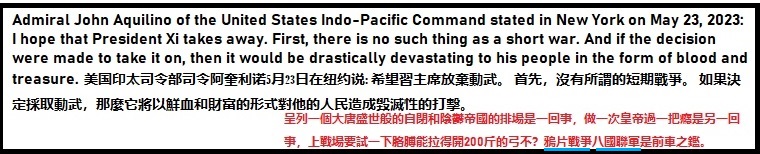
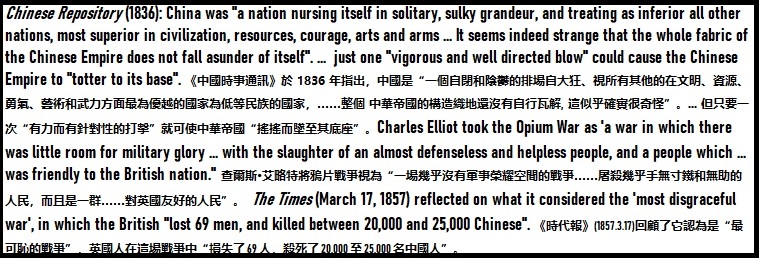
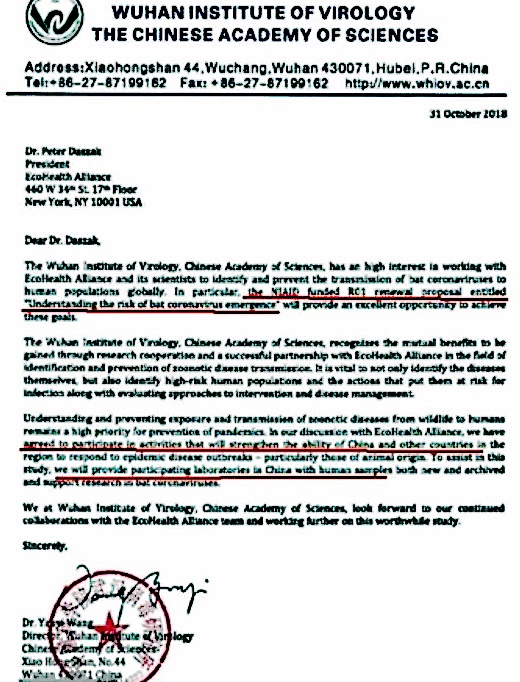
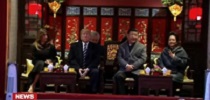
 ***
***
![Though, Anna Wang [Anneliese Martens], in her memoirs, expressed jealousy over Gong Peng by stating that the Anglo-American reporters had flattered the Chinese communists and the communist movement as a result of being entranced with the goldfish-eye'ed personal assistant of Zhou Enlai](GongPeng.jpg)
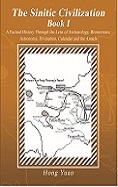
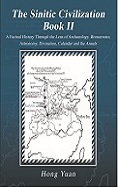

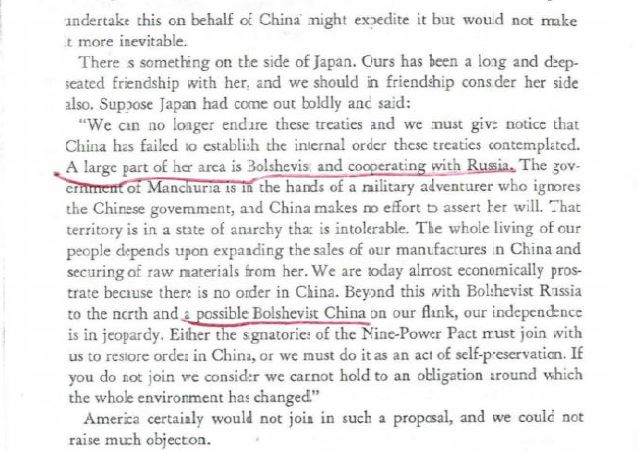
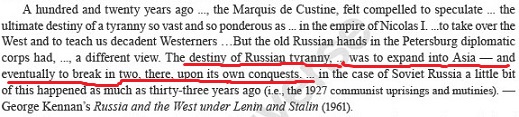
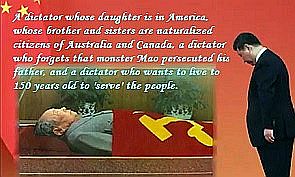
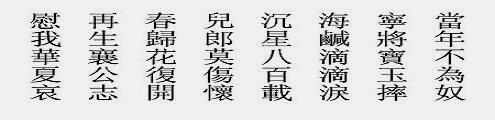

 Some reader questioned my statement in regards to caste, stating that: "There's no point in pointing fingers at other people, I believe the saying: if you are not part of the solution, you're part of the problem ... I don't disagree with a lot of things you said, but you seem to confuse politics with ethnicity/nationality. I'm not defending the communists, but you seem to suggest chinese=communist... As for exaggerations, to say the present Chinese society has a caste system is untrue. Prejudice, racism exist everywhere but a caste system? !comeon! a little strong don't you think?"