Sinitic Civilization-Book 1
Sinitic Civilization-Book 2
Tribute of Yu
Heavenly Questions
Zhou King Muwang's Travels
The Legends of Mountains & Seas
The Bamboo Annals - Book 1
The Scourge-of-God-Tetralogy:
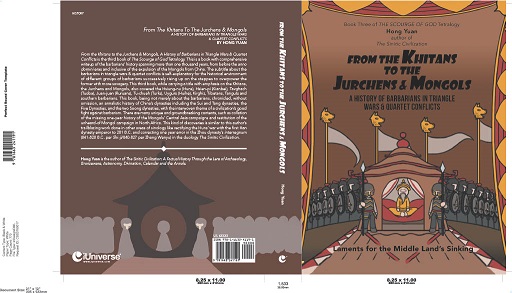
From the Khitans to the Jurchens & Mongols: A History of Barbarians in Triangle Wars and Quartet Conflicts
(available at iUniverse;
Google;
Amazon;
B&N)
|
|
Chiang Kai-shek's Money Trail
(*** machine-translated Chinese language version:  ***) ***)
|
|
The Invasion Of Manchuria, Chaha'er & Jehol 1931-34
Mukden Incident - 9/18/1931 & The Battle Of Jiangqiao
The Shanghai Provocation - 1/28/1932
Battles of the Great Wall
China In Crises Of Internal Turmoil & Foreign Invasions
The Japanese Invasion (1937-1945)
The Marco Polo Bridge Incident & Battle of Tianjin-Peking
The Campaign Of Nankou & Campaign of Xinkou
The Air Battles Directed By Chennault & With the Russian Pilots
The Battles of Shanghai, Jiangyin, Si'an & Nanking Defence
The Rape Of Nanking & The Great Rescue Of 1937
The Eight Year Long Resistance War
Mingguang, Linyi-Tengxian, Tai-er-zhuang , & Xuzhou
The Battles of Lanfeng, Wuhan, Nanchang, &
Sui-Zao,
1st Changsha Battle, Kunlunguan, Wuyuan, & Zao-Yi,
Saturation Bombing of Chongqing by the Japanese
The Aggression Against Vietnam & Southeast Asia
Yu-nan & E-bei, Shanggao, & Mt Zhongtiaoshan
The 2nd Changsha Battle, & Pacific Wars
3rd Changsha Battle, Zhe-Gan, Changde, & E-xi
First, & Second Burma Campaign, & Phase II
|
| [ revolution.htm & tragedy.htm] |
Communist Armed Rebellions
Second Northern Expedition
War Of Chiang Kai-shek versus Gui-xi (March 1929)
War Of The Central Plains (May 1930)
Campaigns Against Communist Strongholds
The Long March
Xi'an Incident - Turning Point of Modern History
Demise Of Red Army Western Expedition
|
| [ campaign.htm & terror.htm ] |
[ default page: war.htm ] |
|
Continuing from Tragedy of Chinese Revolution, Campaigns & Civil Wars, & White Terror vs Red Terror:
The Truman crap cited by Yuanyuan Peng in "The Chinese Banking Industry: Lessons from History for Today's Challenges":
I discovered after some time that Chiang Kaishek and the Madame and their families, the Soong family and the Kungs, were all thieves, every last one of them, the Madame and Him included, And they stole 750 million dollars out of the [US$3.5] billion that were sent to Chiang. They stole it, and it is invested in real estate down in Sao Paulo and some right here in New York.
(Miller 1974:289)
The Truman crap cited by Harry Gelbe in "The Dragon and the Foreign Devils: China and the World, 1100 B.C. to the Present":
They're all thieves, every damned one of them. They stole 750 million out of the billions that we sent to China. They stole it, and it's invested in real estate down in SAao Paolo and some right here in New York.
The August 1949, 1000 page U.S.'s China White Paper published by D.G. Acheson claimed that the U.S. had given to China an aid of US$2 billion.
After checking Freda Utley's calculation,
we could tell the 2 billion amount consisting of the majority in the form of service(s) during and immediately after the WWII,
which included the UNRRA goods that was said to be 685M USD by Seagrave and 500M by Kerr.
The bulk of 2 billion, i.e., service(s), included the costs in dispatching Chinese troops to the coast and Manchuria
as well as the costs in repatriating 2 million Japanese to the Japanese islands.
The remnant of the Lend-Lease program, e.g., the rotten inventories on Pacific Islands, were probably the only American flow to China
after the outbreak of the 1945-1950 civil war.
Jung Chang, in "Mao: The Unknown Story", repeated the cliché by exaggerating the American aid amount to be 3 billion U.S. dollars, i.e.,
one billion more than Acheson's. Her brother, Zhang Pu, lurking on the internet, had found out the loopholes
and began to whitewash the number to 1.5 billion financial aid and about 0.8 billion military aid [which were still untrue].
Communist China's Social Academy chief Liu Da’nian acknowledged that Chiang Kai-shek received no more than 0.6 billion in the form of American aid.
The actual number won't be more than 0.2 to 0.3 billion, including the 0.125 billion from the 1948 China Aid Act which rolled over to the China Area Aid,
to be squandered in Indochina, instead, in the 1950s and 1960s.
In the past decade, a new generation of academics had emerged in mainland China and reflected on the communist ascension to power in the 1949, including Yang Kuisong, Gao Hua, Niu Jun, Zhang Baijia, Dai Chaowu, Shen Zhidan & Li Danhui and et al.. But none of them wish to become China's Sakharov as Fang Lizhi had attempted prior to June 4th 1989 Massacre. We could not put blame on the courage and conscience of people still in China, though; the mere mentioning of their names could give them trouble, and the banning of their personal websites.
The conscience of China, meanwhile, had undergone setbacks in the information age that would supposedly open up China.
Yahoo, for instance, has admitted to sharing user information for journalist Shi Tao with Chinese authorities earlier this year in a move that landed him a 10-year jail term. In doing so, the firm 'complied with local Chinese law', according to Yahoo spokeswoman Mary Osako.
Outside of China, Yu Maochun, as late as in "OSS In China", still failed to see through the agenda of Joseph Stilwell, as seen in Foreign Military Aid and Assistance to China.
Stilwell, who took over the post originally set for Drum, was to execute George Marshall's agenda of "Germany First & Asia Second", i.e., a Soviet spies' agenda and a British design to choke the Republic of China to make sure China would not emerge from the world war to be victorious.
Some overseas dissidents, like Cao Changqing et al., had a blind faith in the so-called "American generosity" and the Republican Party's doctrines of 'democracy, freedom and liberty' as a result of delusion over the intermittent American for-show statements, like the Monroe Doctrine, Wilson's 14 Points, the Hull "ultimatum" of November 26th, 1941, & the American opposition to the British-Franco's colonialist activities in the Middle East.
In or outside China, they failed to see the in-depth of the Russian/Comintern conspiracies against China. They have not come to discern the American plays of the Chinese cards, and are still arguing among themselves, blindfolded by
Acheson's 2 Billion Crap aid to Nationalist China and
Marshall's Dupe Mission To China & Arms Embargo, not to mention i) American President Grant's attempt at making Manchu China divide Ryukyu into three parts with Japan, ii) John Watson Foster 's collusion with the Japanese in selling the Shimonoseki Treaty, iii) the American navy's sailing gunboats and warships in the Yangtze to protest against the 1911 Xinhai Revolution, iv) the American navy's sailing gunboats and warships into the 'White Swan Pond' of Canton to protest against Sun Yat-sen's threat to withhold the customs tax surplus, v) J.P. Morgan and Wall Street's floating $263 million in loans to the Japanese by 1931 while refusing to aid China on the pretext of isolationism, vi) America's continuing sale of scrap metals and petrol oil after the Japanese sinking Panay in 1937, and vii) America's selling out China at the Yalta and colluding with the Russians [Soviets] in subversion of Nationalist China.
Incidentally, the underlying logic behind "The China Exception: Russian Communism being wicked, the Chinese are good communists" is an inherent fear of the Yellow Peril, i.e., billion Chinese would actually enjoy real democracy, go to college and develop their intelligence.
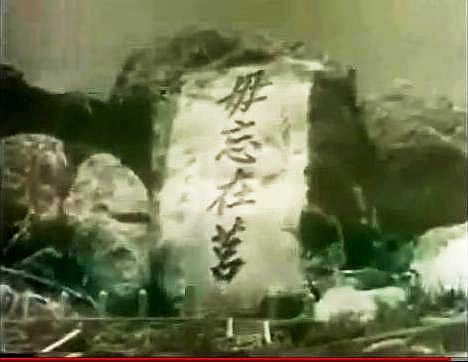
Wu [no] Wang [forgetting] Zai [at] Ju [the Ju fort]
* In Commemoration of China's Fall under the Alien Conquests in A.D. 1279,
A.D. 1644 & A.D. 1949 *
 U.S.S.R./Comintern Alliance with the KMT & CCP (1923-1927)
 Korean/Chinese Communists & the 1931 Japanese Invasion of Manchuria Korean/Chinese Communists & the 1931 Japanese Invasion of Manchuria
American Involvement in China: Soviet Operation Snow, IPR Conspiracy, Dixie Mission, Stilwell
Incident, O.S.S. Scheme, Coalition Government Crap, Amerasia Case & The China White Paper
* Stay tuned for "Republican China 1911-1955: A Complete Untold History" *
|
|
Zou Rong's Revolutionary Army;
Shin Kyu Sik's
Shrine (Spirit, Kunitama) of Korea
|
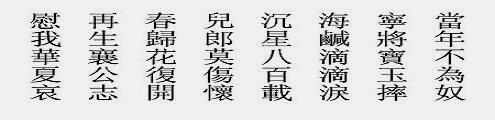
This snippet is for sons and daughters of China:
Heed the sons & ministers' agony and sorrow of our ancestors who died or lived through the Mongol, Manchu and Soviet-Chicom conquest
and
the Yongjia, Jingkang and Jiashen cataclysms !
Jeanne d'Arc of China:
Teenager girl Xun Guan breaking out of the Wancheng city to borrow the relief troops in the late Western Jinn dynasty;
Liu-Shao-shi riding into the barbarian army to rescue her husband in the late Western Jinn dynasty;
teenager girl Shen Yunying breaking into Zhang Xianzhong's rebels on the horseback to avenge on father's death in the late Ming dynasty.
China's Solitary and Lone Heroes:
Nan Jiyun breaking out of the Suiyang siege and charging back into the city in the Tang dynasty;
Zhang Gui & Zhang Shun Brothers breaking through the Mongol siege of Xiangyang in the Southern Soong dynasty;
Liu Tiejun breaking through three communist field armies' siege of Kaifeng in the Republican China time period;
Zhang Jian's lone confrontation against the communist army during the June 3rd & 4th Massacre of 1989.
|
|
|
Before President Roosevelt, there was President Wilson's China policy, which
this webmaster referred to as the 100-year American hypocrisy.
It was pivoted from the hypocritical nature of America's Open Door Policy for China, which was originally an idea sold to the Americans by the British career customs officer working in Manchu China's customs office.
During WWI, President Wilson, who was in the shoes and mindset of the British colonialists, believed that the U.S. had to keep China intact for securing the fate of the white civilization, while during WWII, the British impressed the Americans with the inverse of the former doctrine to state that a victorious Republic of China, which was to emerge from WWII, would pose a threat to the white civilization.
The reason that China should remain open to all powers, in the opinion of the U.S. president Thomas Woodrow Wilson, was that the 'white civilization' and its domination in the world rested largely on the ability to keep China intact, in the sense that should China fall completely under the Japanese [or the Tsarist Russian or someone else] influence, then the massive Chinese manpower could be utilized like by Genghis Khan to conquer the world. This was the theme of the Yellow Peril, which was inverse to what the British ambassador claimed to Albert Wedemeyer during WWII that a strong and unified China would pose a threat to the White men’s position in the Far East and immediately throughout the world.
So to say that the nation of China should be managed delicately, that is, should not be allowed to grow too powerful to pose a threat to the white civilization, nor should it be allowed to be hijacked by a non-U.S. power since China's immense human labor could be turned against the [Anglo-American] white civilization.
(More available at "Changing Alliances On International Arena", "Century-long American hypocrisy towards China", "Anglo-American & Jewish romance with Japanese",
"American's Unpositive Neutrality in the Sino-Japanese War",
"Joe Stilwell's Authorization To Assassinate Chiang Kai-shek", and "What Foreign Powers Did To The Flowery Republic Prior To, During And After The 1911 Revolution".)
American Involvement in China: the Soviet Operation Snow, the IPR Conspiracy, the Dixie Mission, the Stilwell Incident, the OSS Scheme, the Coalition Government Crap, the Amerasia Case, & The China White Paper
[Modified : Monday, 25-Feb-2013 22:00:00 EST]
America, i.e., the United States, was and is still shortsighted today, not knowing that Korea, at one time paradise of the American Evangelicals, was delivered into the hands of the Japanese imperialists as a result of the Anglo-American confrontation against Czar Russia, and in this geopolitical process, China, the land of the Great Sinitic Civilization (Barnes & Noble,
Amazon,
Google Play|Books
and
Nook Book), was made into a piggy-backed sacrificial/funereal object --the land ruled by the most evil cult called 'communism' that was an 'import' or an 'export' of Soviet Russia.
America would not learn the lesson that the geopolitical actions it is taking today would yield the 'bad fruit' 50 years or 100 years down the road.
America, and their British cousins, must have forgot the twenty-year Anglo-Japanese military alliance that allowed Japan to develop the warplanes and aircraft carriers to invade mainland China, not to mention the post-WWI ten-year arms embargo against Republic China and George Marshall's post-WWII arms embargo against Republic China 1946-1948.
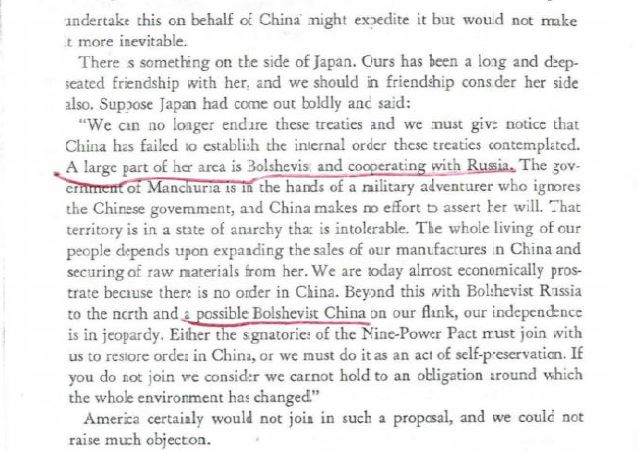
They forgot that in 1931, President Herbert Hoover gave Japan a free hand in the invasion of Manchuria on the pretext that Japan could not tolerate a half-Bolshevik China.
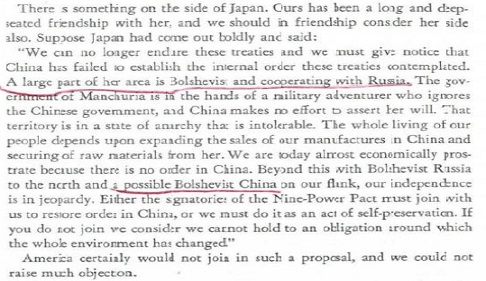 Earlier, in the 1920s, President Hoover, who personally nipped the post-WWI communist uprisings in Germany and Hungary with the grains embargo, fed Lenin the ingenuity, i.e., the [worldwide communist revolution] road to Paris lay through Peking.
They of course forgot that
after the eruption of the 1937 Sino-Japanese War, the Americans, biased towards Japan and against China, adopted a policy of "neutrality" (what Utley called by "unpositive neutrality") against the 'belligerent' countries, namely, Japan and China, which was free and unrestrained arms sale to Japan and de facto arms embargo against China.
Note that the Japanese navy had a full blockade of China's coastline.
Note that the blockade would choke China since China did not have an industrial base to produce the basic weapons while Japan's factories could roll out the warships and airplanes on a wholesale scale.
Also note that in contrast with the Americans, the European powers, being constrained by the mediation role of the League of Nations, dared not openly sell arms to Japan.
Through 1940-1941, prior to the U.S. revocation of the 1911 U.S.-Japan Commerce Treaty, the Americans were the biggest supplier of raw material, oil, aviation oil, and weapons, to the extent that some U.S. senator called by Scott making a claim that out of every one million Chinese killed by the Japanese, 544,000 Chinese were killed by the Americans.
Thirty-one U.S. congressional members made a joint declaration to the effect that the U.S., not NAZI Germany, nor Italy, was the best ally of Japan.
Earlier, in the 1920s, President Hoover, who personally nipped the post-WWI communist uprisings in Germany and Hungary with the grains embargo, fed Lenin the ingenuity, i.e., the [worldwide communist revolution] road to Paris lay through Peking.
They of course forgot that
after the eruption of the 1937 Sino-Japanese War, the Americans, biased towards Japan and against China, adopted a policy of "neutrality" (what Utley called by "unpositive neutrality") against the 'belligerent' countries, namely, Japan and China, which was free and unrestrained arms sale to Japan and de facto arms embargo against China.
Note that the Japanese navy had a full blockade of China's coastline.
Note that the blockade would choke China since China did not have an industrial base to produce the basic weapons while Japan's factories could roll out the warships and airplanes on a wholesale scale.
Also note that in contrast with the Americans, the European powers, being constrained by the mediation role of the League of Nations, dared not openly sell arms to Japan.
Through 1940-1941, prior to the U.S. revocation of the 1911 U.S.-Japan Commerce Treaty, the Americans were the biggest supplier of raw material, oil, aviation oil, and weapons, to the extent that some U.S. senator called by Scott making a claim that out of every one million Chinese killed by the Japanese, 544,000 Chinese were killed by the Americans.
Thirty-one U.S. congressional members made a joint declaration to the effect that the U.S., not NAZI Germany, nor Italy, was the best ally of Japan.
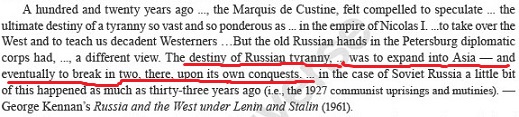 America, the 'stars' that engendered or heralded the rise of the [Japan] 'sun', long ago had the blueprint to make Japan into a stalwart against China the source of the Yellow Peril and Russia the source of the Half-Tartars, respectively, --whom the Americans could not assimilate according to George Kennan.
William Christian Bullitt Jr. (1891-1967) disclosed that the Americans' national policy or strategic aim was to see the Russians and Japanese' holding a balance of power against each other in China rather than seeing either the Russians or the Japanese overpowering the other party in taking control of China.
In making this geopolitical decision, you have victimized the 1 billion humble Chinese peasants.
(Note President Wilson's doctrine that the intactness of China was vital to the white civilization -- in the sense that the nation of China should be managed delicately, that is, should not be allowed to grow too powerful to pose a threat to the white civilization, nor should it be allowed to be hijacked by a non-U.S. power since China's immense human labor could be turned against the white civilization.
The theme of China to the white civilization, morphing superficially into a ***hypocritical*** American national policy of engagement with Communist China for changing the Chinese communists' behavior, rested on the same underlying logic:
"The
China Exception: Russian Communism being wicked, the
Chinese are good communists", which is an inherent fear
of the Yellow Peril,
i.e., billion Chinese would actually enjoy real
democracy, go to college and develop their intelligence.
Now, President Biden, a stooge of Communist China, explicitly abandoned the
hypocritical American policy of engagement to change communist China to his imbecilic communist buddy and dictator Xi Jinping.
Other than the stooge Bidens who ripped communist China's financial coffer (Tony Bobulinski FULL INTERVIEW Tucker Carlson), don't forget that President Roosevelt boasted of his family's ripping the China trade money in the 19th century, i.e., the opium trade;
and President Hoover certainly got the first bin of gold from the Kai-luan coal mine in collusion with the British during the 1900-1901 boxers' incident-related invasion.)
America, the 'stars' that engendered or heralded the rise of the [Japan] 'sun', long ago had the blueprint to make Japan into a stalwart against China the source of the Yellow Peril and Russia the source of the Half-Tartars, respectively, --whom the Americans could not assimilate according to George Kennan.
William Christian Bullitt Jr. (1891-1967) disclosed that the Americans' national policy or strategic aim was to see the Russians and Japanese' holding a balance of power against each other in China rather than seeing either the Russians or the Japanese overpowering the other party in taking control of China.
In making this geopolitical decision, you have victimized the 1 billion humble Chinese peasants.
(Note President Wilson's doctrine that the intactness of China was vital to the white civilization -- in the sense that the nation of China should be managed delicately, that is, should not be allowed to grow too powerful to pose a threat to the white civilization, nor should it be allowed to be hijacked by a non-U.S. power since China's immense human labor could be turned against the white civilization.
The theme of China to the white civilization, morphing superficially into a ***hypocritical*** American national policy of engagement with Communist China for changing the Chinese communists' behavior, rested on the same underlying logic:
"The
China Exception: Russian Communism being wicked, the
Chinese are good communists", which is an inherent fear
of the Yellow Peril,
i.e., billion Chinese would actually enjoy real
democracy, go to college and develop their intelligence.
Now, President Biden, a stooge of Communist China, explicitly abandoned the
hypocritical American policy of engagement to change communist China to his imbecilic communist buddy and dictator Xi Jinping.
Other than the stooge Bidens who ripped communist China's financial coffer (Tony Bobulinski FULL INTERVIEW Tucker Carlson), don't forget that President Roosevelt boasted of his family's ripping the China trade money in the 19th century, i.e., the opium trade;
and President Hoover certainly got the first bin of gold from the Kai-luan coal mine in collusion with the British during the 1900-1901 boxers' incident-related invasion.)
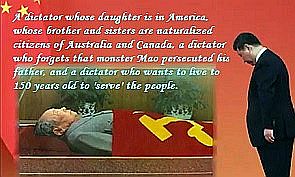 Now you, as the midwife who delivered China into the communist hands, are morally obligated to take China [and North Korea {and Vietnam}] out of communism.
This time, you may feel your hands forced as North Korea, with its nuclear weapons, could become Communist China's cecal appendix in a repeat of history.
(The Chicoms don't understand the urgency of Trump's trade war having the roots in nuclear North Korea, nor the domino effect on North Korea and Russia after the knock-out of communist China.
Putin thought he would reap profits by sitting on the fence of the U.S.-China trade war, i.e., the Zheltorossiya dream - revitalized by Aleksandr Gelyevich Dugin
[, and India would not be satisfied with grabbing South Tibet, Bhutan and Sikkim alone].
Previously, this webmaster thought that the Americans could be hoodwinked by the Chicoms who might just sign any agreement just for sake of getting a red carpet at the White House in lieu of a visit to Mar-a-Lago.
With Trump's war with Communist China flaring up, this webmaster believed that China's dictator would continue to commit blunders and became the tomb digger for the Chinese communist regime.
The thuggery communists, who would not allow the millions of the Hongkong people to have autonomy, could have caused the demise of the regime over the inevitable crackdown, not knowing that the communist ascension to power had its very roots in Churchill's collusion with Roosevelt in selling out the Republic of China for sake of retaining crown jewel Hongkong after hoodwinking Wellington Koo and Chiang Kai-shek that Britain would return Hongkong to China after Japan was to surrender so as not to damage the British wartime morale. --What happened was that Putin first jumped off the fence ahead of communist China in launching an invasion of Ukraine.)
Now you, as the midwife who delivered China into the communist hands, are morally obligated to take China [and North Korea {and Vietnam}] out of communism.
This time, you may feel your hands forced as North Korea, with its nuclear weapons, could become Communist China's cecal appendix in a repeat of history.
(The Chicoms don't understand the urgency of Trump's trade war having the roots in nuclear North Korea, nor the domino effect on North Korea and Russia after the knock-out of communist China.
Putin thought he would reap profits by sitting on the fence of the U.S.-China trade war, i.e., the Zheltorossiya dream - revitalized by Aleksandr Gelyevich Dugin
[, and India would not be satisfied with grabbing South Tibet, Bhutan and Sikkim alone].
Previously, this webmaster thought that the Americans could be hoodwinked by the Chicoms who might just sign any agreement just for sake of getting a red carpet at the White House in lieu of a visit to Mar-a-Lago.
With Trump's war with Communist China flaring up, this webmaster believed that China's dictator would continue to commit blunders and became the tomb digger for the Chinese communist regime.
The thuggery communists, who would not allow the millions of the Hongkong people to have autonomy, could have caused the demise of the regime over the inevitable crackdown, not knowing that the communist ascension to power had its very roots in Churchill's collusion with Roosevelt in selling out the Republic of China for sake of retaining crown jewel Hongkong after hoodwinking Wellington Koo and Chiang Kai-shek that Britain would return Hongkong to China after Japan was to surrender so as not to damage the British wartime morale. --What happened was that Putin first jumped off the fence ahead of communist China in launching an invasion of Ukraine.)
|
President Trump
understood the China situation and the China problem.
Should the American politicians follow the footsteps of Anson Burlingame (1820-1870),
Paul Samuel Reinsch (1869-1923)
and
Patrick Jay Hurley (1883-1963), i.e., three most prominent U.S. statemen who loved China and the Chinese people,
then the Chinese people could have a chance of salvation from the communist tyranny.
Note the historic recurrence and the repetition of similar events:
Anson Burlingame, in opposition to the anti-Chinese discriminatory whirlwinds rampant in the U.S. in the 19th century, authored the Burlingame Treaty for China and
died for China in 1870 in St. Petersburg
while still on the Manchu China's mission to the U.S. and Europe;
Paul Samuel Reinsch, who was disillusioned by President Wilson's betrayal of China over the division of WWI spoils at the Paris Peace Conference, quit the minister-to-China job to work for China and died for China in Shanghai in 1923;
and
Patrick Jay Hurley, who convinced President Roosevelt of the American moral blunders in selling out the Republic of China at Tehran and Yalta, personally travelled to Moscow and London for sake of averting and reverting China's fate of becoming a victim of WWII war spoils (i.e., the loss of Port Arthur and Hong Kong, etc.), but failed to make remedy to the secret Tehran and Yalta agreements in the aftermath of President Roosevelt's death in April 1945.
|
|
For better understanding the head-on collision between the United States and Communuist China,
refer to
the U.S.-China fatalistic conjunction through the hands of the Japanese firepower during WWII, that derived from the American unpositive neutrality;
the U.S.-China fatalistic conjunction through the hands of communist army's firepower during the 1945-1950 civil war, that derived from American-supplied Soviet August Storm weapons; and
the U.S.-China fatalistic conjunction through Joseph Stalin, Kim Il Sung and Mao Tse-ting's hands during the 1950-1953 Korean War.
|
|
|
|
More, refer to the Communist Platonic Club at wartime capital Chungking
and
The American Involvement in China: the Soviet Operation Snow, the I.P.R. Conspiracy, the Dixie Mission, the Stilwell Incident, the O.S.S. Scheme, the Coalition Government Crap, the Amerasia Case, & The China White Paper.
|
|
|
|
The following is a compilation of money trails before I discovered the writing by Freda Utley
The China Story by Freda Utley
Chapter 2, Too Little, Too Late --
The Facts About "Aid to China"
Historical Context - 1933 - national vault 3 million yuan cash, to-be-issued bonds worthy of 27 million yuan, no foreign currency, and no gold.
The colonialist powers and imperialist nations, to defend Shanghai against the Northern Expedition Army, assembled an army of 23000 in Shanghai and dispatched over 90 warships towards Nanking.
There was no record that the colonialist powers had offered any financial aid to Chiang Kai-shek as Chiang's purging the communists was not a coordinated act with the foreigners.
Just prior to the 1927 Shanghai worker uprising, American mayor Sterling Fessenden [Fei-xin-dun], i.e., chairman of the Shanghai Municipal Council, was fetched by the French for a meeting with Du Yuesheng, which was for sake of approving the transportation of 5000 guns to the gangster forces through the "international settlement" zone. The fuse was the repeating conflicts between the settlement and the communist- and Comintern-instigated picket forces as well as the nightly shootings into the settlement and concession areas by the communist saboteurs.
There was no exaggeration about the communist and Comintern's plots to launch the Shanghai Commune and to provoke a war between China and the European and American powers, with Mark Gayne, a Soviet agent who in the future penetrated into the Japan-controlled news media in occupied Shanghai and consecutively infiltrated to the U.S. to be involved with the assassination of President Kennedy, coming to Shanghai as part of the setup.
The Shanghai merchants, with the gangster elements included, were said to have formed a consortium for loaning Chiang Kai-shek 3 million yuan of money for delivery on April 1st, 1927 as a downpayment. Seven million followed. Then, another delegation promised to loan Chiang Kai-shek 30 million yuan currency for establishing a moderate government in Nanking. Zhang Yufa pointed out the Shanghai bankers offered Chiang Kai-shek the 15 million and 30 million loans after the purge by citing some 'primitive' documents, like "Moscow & Chinese Communists" (Robert C. North, pp.97), "The Tragedy Of The Chinese Revolution" (Isaacs, p. 151-152), and "A History Of China" (Wolfram Eberhard, p. 315), all a bunch of pro-communist propagandists.
(Zhang Yufa's research of the Chinese communist history was predicated on a series of writings by the turn-coat communist Southern Bureau leader Guo Qian, and served as some guide for Taiwan's 2nd-generation communist history researchers, such as Chen Yongfa/Yung-fa Chen.)
--Arthur Young pointed out that the C$30 million, May 1, 1927, loan for the "extraordinary military expenses" was securitized, meaning that Chiang and Soong could not have obtained a loan at will without pledging the customs surtax. Hence the rumors of extortion were not founded.
Chiang Kai-shek was still short of money. Li Zongren's memoirs pointed out the so-called fundamental cause of the explosive growth of the communist bases and enclaves in the early years, i.e., Chiang Kai-shek deliberately ignoring the Communists for sake of exercising the economic, military & political dictatorship. Numerous times, Li Zongren claimed that he had advised Chiang Kai-shek of the need to quell the communist rebellion while Chiang Kai-shek merely treated the communists as banditry. At one time, Jiangxi Province chairman Zhu Peide requested with Li Zongren for a joint visit to Chiang Kai-shek, with Li Zongren's offer to allocate a portion of his Gui-jun army for deployment against the communists in Jiangxi Province. (Zhu Peide's 3rd Corps had only six regiments.) Chiang Kai-shek declined this proposal. The Jiangxi Province native association in Shanghai also petitioned with Chiang Kai-shek for quelling the communist rebellion. In Sept-Oct of 1928, Li Zongren proposed that Liu Zhi's 2nd Division be sent to Jiangxi for quelling the communist rebellion, stating that the communists were not mere banditry but brigands possessing the "ideals" and "ism". On another occasion, Chiang Kai-shek had Soong Ziwen (T.V. Soong, Tse Vung Soong) assemble a group of Shanghai financiers for sake of extracting the loans and funds in the name of quelling the communist insurgency. Chiang Kai-shek was said to have made a quick appearance at the meeting and scared the financiers by hinting that the communist insurgents might come to Shanghai to stage a rebellion should the financiers fail to assist his government in the crackdown on the communist enclaves. Li Zongren pointed out that the Shanghai financiers shook their heads at the statement made by Chiang Kai-shek. Though, Li Zongren claimed that Chiang Kai-shek still failed to put the raised funds to usage and refrained from dispatching the Whampoa lineage military against the communist bases. (The immediate danger to Chiang was the continuous rebellion by the warlords and militarists, behind whom could be seen the black hands of the Chinese communists on each and every occasion.) On another occasion, Zhang Jingjiang complained that Chiang Kai-shek, after marriage with Soong Mei-ling, no longer listened to his admonition. (Seagrave, who was influenced by the pro-communist American academic writings, called it a blackmail, and claimed that Chiang Kai-shek did it again in the late 1940s with demands for aid from the U.S.A.)
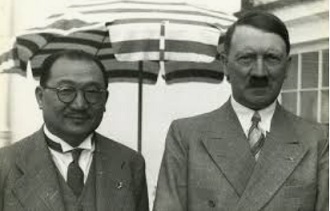 On April 6th, 1933, Kong Xiangxi (H.H. Kung) tacked on the post of President of the Central Bank. On November 1st, Kong Xiangxi (H.H. Kung) took over the finance minister post from T.V. Soong. Chiang Kai-shek's national vault had 3 million yuan cash, to-be-issued bonds worthy of 27 million yuan, no foreign currency, and no gold.
How the Kong & Soong Families Make Money? - part I
H.H. Kung nominally registered the Yuhua Commercial Savings Bank with 100,000 silver dollars in the mid-1910s, but appropriated most of the funds for importing the kerosene oil, candle oil, soap and matches under the Xiangji (H.H. Kung) Company. With profits from the export and import business, H.H. Kung injected funds into the Chinese Publishing House (zhonghua shuju??) of Shanghai, speculated in Shanghai’s real estate market, and cooperated with Chen Guangfu and Zhuang Dezhi in launching the Shanghai Commercial Savings Bank. Separately, Madame H.H. Kung started business dealings with Du Yuesheng, i.e., the gangster leader "Big-Eared Du", (1887-1951).
After examining the history, we could see clearly that the communist-published records mostly leveled accusation that Kong had mostly profiteered from the bonds and foreign exchange manipulations BEFORE 1945.
On April 6th, 1933, Kong Xiangxi (H.H. Kung) tacked on the post of President of the Central Bank. On November 1st, Kong Xiangxi (H.H. Kung) took over finance minister post from T.V. Soong. Chiang Kai-shek's national vault had 3 million yuan cash, to-be-issued bonds worthy of 27 million yuan, no foreign currency, and no gold.
On March 23, 1935, Kong Xiangxi (H.H. Kung) forcefully announced the takeover of the privately-held Bank of China and Transportation Bank even though the Central Bank was an empty shell with no significant assets. Two banks were converted to the state-owned banks on June 4th. In June, four provincial agriculture banks were forcefully converted to the state-owned China Agriculture Bank. On August 15th, the Central Trust Bureau was established for handling the munitions' purchase.
Criticism of this nationalization act lacked an understanding of the international financial predatory system at the time. Roosevelt's hijacking the silver price of the world definitely would bankrupt China. A conversion to the CNC paper money, in lieu of silver, had paved the way for China to beat Japan financially during the WWII.
This is something to be clarified about the nationalization of the banks in the 1930s. The four banks still carried the same names in communist China.
(H.H. Kung should be given credit for where it was.
Kung had one shortcoming: Kung said he always upheld Chiang's prestige in any conference or debates. T.V. Soong, though, offended Chiang numerous times.
Over the matter of evicting Joe Stilwell from China, T.V. Soong slammed door behind Chiang Kai-shek after Chiang Kai-shek took Mme Chiang Kai-shek's words to retain Joe Stilwell in China, for which Chiang Kai-shek got mad and kept T.V. Soong in the cold for two months.
This is what T.V. Soong thought that Chiang Kai-shek had squandered the efforts that T.V. Soong exerted in the U.S. to get Joe Stilwell replaced, and what George Marshall schemed behind to tip Joe Stilwell about the Chinese efforts at recalling Joe Stilwell as well as to ask Joe Stilwell to bribe Mme Chiang Kai-shek to mend fences.
Stilwell, calling Chiang Kai-shek by peanut and looking towards Mme Chiang Kai-shek as Snow White, had a dark psychology against Chiang Kai-shek.
Stilwell, who took over the post originally set for Hugh Drum, was to execute George Marshall's agenda of "Germany First & Asia Second", i.e., a Soviet spies' agenda and a British design to choke the Republic of China to make sure China would not emerge from the world war to be victorious.
Ultimately, Stilwell successfully schemed to make China lose badly during the 1944 Japanese Ichigo Campaign.)
Two avenues of profiteering were possible. One involved the debt reorganization of February 1932 and 1936, which were meant for the extension of maturities and the lowering of interest rates on most of the foreign debts inherited from the Manchu government and the Peking government.
Mme Kong Xiangxi, i.e., Soong Ai-ling, was said to have created the "seven star company" and profited from the bond market trading through insider information. (One of H.H. Kung's lieutenants, who was imprisoned by the ROC government, stayed on in mainland China and could be purportedly one of the sources for the bond trading scams if any.)
In this year, Mme Kong Xiangxi, i.e., Soong Ai-ling, profited from the bond market through manipulation by her "seven star company".
In 1933, the U.S. raised the price of silver, and passed the Silver Act in 1934. Nancy Tucker agreed that the U.S. had hurt China's economy deeply while not giving any aid to China "for fear of antagonizing Japan". In 1935, the U.S. forced China into abandoning the Silver Standard.
In Spring of 1934, Kong Xiangxi (H.H. Kung) revoked 5000 categories of taxes. On April 17th, Japan announced the intent to control China's economy. In July, Kong Xiangxi (H.H. Kung) decreed the forceful purchase act to have banks spend 25% assets to buy government bonds. In Sept, 0.18 billion yuan worthy of silver flowed out of China. On October 15th, issued rules as to export tax and balance tax on export of silver, and further ordered Bank of China and Transportation Bank to work with Central Bank to balance the foreign exchange market. In November, China abandoned silver standard.
On November 4th, Kong Xiangxi (H.H. Kung) announced the adoption of the "fa bi" (legalized currency) policy for averting the Japanese attempt at robbing China's silver. On November 13th, America agreed to buy 50 million ounces of silver from China. The receipts from the silver deal were used as China's reserves for issuing the "fa bi" (legalized currency) paper money.
The Americans, to thwart H.H. Kung’s attempt to sell silver on the London market and peg the CNC to the sterling, temporarily halted the silver purchase, which led to a drop of the silver's price and a dry-up of the silver trades. H.H. Kung promised to detach from sterling and hence won Morgenthau's help in selling silver as reserves, namely, an early collaboration that was to pave way for the barter trades between the two during the WWII.
Meanwhile, the Roosevelt government, which was hijacked by the leftists and communists, deliberately avoided helping China on the excuse that any aid to China would be to help Chiang Kai-shek with fighting the civil war against the Red Army.
Throughout the 1930s, there were only two loans:
In 1931, there was a customs-revenue-securitized loan of 9 million USD dollars to purchase wheat [Young, p. 49]; and
in 1933, there was a cotton and wheat loan of US$50 million, actually a credit offered by the Americans for boosting the American Agricultural Price, which China had to cut down to 10 million from the original 40 million on the cotton component due to hyper-price set in the unfavorable terms of trade.
(Throughout the first part of the 20th century, the Americans never bothered to provide aid to China, with Paul Reinsch, i.e., American minister to China, circumventing the Morgan house-controlled consortium to liaison with the Chicago banks for loaning money to China. The Morgan house, a lackey of the Japanese imperialists, had deflected the China financing on the pretext of not offending Japan.)
In this year, Soong Ai-ling's "seven star company" was said to have continued to profit from the bond markets.
In January 1935, Soong Ai-ling's "seven star company" was said to have profited from the bond markets through the conversion of old bonds to newly-issued united bonds.
The second avenue would be the non-official China Development Finance Corporation (CDFC) which was launched on June 21, 1934, against the Japanese consul's objection but with the acquiesce of the British-American interests. The CDFC participants bought 500k as the paid-in capital, and 17 banks were asked to contribute. The first shareholder meeting was held June 4, 1934. Kung became chairman of the board, Soong and Pei as the executory directors, and Z L Soong general manager – altogether 21 directors and 7 supervisory. Both Kung and Soong were said [by the communists-published books] to have profited from the operations of CDFC which controlled dozens of the enterprises. CDFC actively penetrated the Japanese economic blockade to strike deals with the British and Chinese Corporation. For example, CDFC obtained a deal in November 1934., which was an arrangement for the issuance of a loan of C$16 million for completion of the Shanghai-Hangchow-Ningbo RR, including the long bridge over the Chientang River near Hangchow --a bridge which was completed construction prior to the war and had to be blown up to stop the Japanese from continuous march along the Zhejiang-Jiangxi Railway during the WWII. Prior to the war, CDFC worked on numerous projects as organizer of the syndicates, including projects such as the Chungking-Chengtu line, the Kunming-Kweiyang line, some Belgian venture, from Paoki, to connect with Chengtu, the Lunghai RR whose construction the Belgian interests had largely financed.
* In Commemoration of China's Fall under the Alien Conquests in A.D. 1279,
A.D. 1644 & A.D. 1949 *
U.S.S.R./Comintern Alliance with the KMT & CCP (1923-1927)
Korean/Chinese Communists & the 1931 Japanese Invasion of Manchuria
American Involvement in China: Soviet Operation Snow, IPR Conspiracy, Dixie Mission, Stilwell
Incident, O.S.S. Scheme, Coalition Government Crap, Amerasia Case & The China White Paper
* Stay tuned for "Republican China 1911-1955: A Complete Untold History" *
|
|
Zou Rong's Revolutionary Army;
Shin Kyu Sik's
Shrine (Spirit, Kunitama) of Korea
|
This snippet is for sons and daughters of China:
Heed the sons & ministers' agony and sorrow of our ancestors who died or lived through the Mongol, Manchu and Soviet-Chicom conquest
and
the Yongjia, Jingkang and Jiashen cataclysms !
Jeanne d'Arc of China:
Teenager girl Xun Guan breaking out of the Wancheng city to borrow the relief troops in the late Western Jinn dynasty;
Liu-Shao-shi riding into the barbarian army to rescue her husband in the late Western Jinn dynasty;
teenager girl Shen Yunying breaking into Zhang Xianzhong's rebels on the horseback to avenge on father's death in the late Ming dynasty.
China's Solitary and Lone Heroes:
Nan Jiyun breaking out of the Suiyang siege and charging back into the city in the Tang dynasty;
Zhang Gui & Zhang Shun Brothers breaking through the Mongol siege of Xiangyang in the Southern Soong dynasty;
Liu Tiejun breaking through three communist field armies' siege of Kaifeng in the Republican China time period;
Zhang Jian's lone confrontation against the communist army during the June 3rd & 4th Massacre of 1989.
|
|
|
The League of Nations' Assistance to China, & the American Quasi-government Assistance
Note that the League of Nations, which failed to stop the Japanese invasion of Manchuria and subsequently failed to make Japan withdraw from Manchuria, had turned around to be the main player in China for the R.O.C.'s ten-year construction between 1927 and 1937.
The American government under Roosevelt was hijacked by the Soviet agents who worked as the new dealers. The only American attempt at helping China would be in the 1910s when Paul Reinsch worked as minister to China and personally contacted the Chicago banks to go around the pro-Japan Morgan banking group of the Wall Street to help China.
In 1931, there was a customs-revenue-securitized loan of 9 million USD dollars to purchase wheat [Young, p. 49], namely, the only monetary aid that the U.S. ever gave to China.
Though, President Hoover, in 1931, gave Japan a free hand in the invasion of Manchuria on the pretext that Japan could not tolerate a half-Bolshevik China.
Hoover, who spent his early life in China and was possibly involved in swindling some Chinese mine enterprise, took Chiang Kai-shek as a half-Bolshevik, with his memory still set in the 1920s, when Chiang Kai-shek took the reign of the northern expedition as a 'Red' general.
Then in 1933, there was a cotton and wheat loan of US$50 million, actually a credit offered by Americans for boosting the American Agricultural Price,
which China had to cut down to 10 million from the original 40 million on the cotton component due to hyper-price set in the unfavorable terms of trade.
The U.S. department of state, at the time of the cotton and wheat loan, debated whether to give this credit or not, claiming that any aid for China could be used by Chiang Kai-shek to fight the Chinese Red Army.
(Heh Long's communist Red Army, in its extremity, had killed all their village-level cadres who were involved in distributing the American wheat.
Madame Sun Yat-sen, meanwhile, convened a defend-USSR meeting in Shanghai, denouncing the American cotton and wheat aid.
What a communist farce!)
In 1932, the Nationalist Government decided to establish China's airforce. The Central Aviation Academy was set up in the Jianqiao Airport of Hangzhou, Zhejiang Province, with about 20 Americans invited to be lecturers.
The American commerce department's deal with China was not inter-governmental in nature, but a referral to William D. Pawley of the Curtis-Wright Corporation, i.e., a private company.
This joint venture, i.e., the Central Aircraft Manufacturing Company (CAMCO), after the 1932 interruption over the American pilots' refusal to fight the Fujian Republic rebels, was renewed in the mid-1930s, culminating in the visitation of Claire Lee Chennault to China three months prior to the eruption of the Sino-Japanese War of 1937.
Other than the 1931 Yangtze Flood loan to China, this would be the American quasi-government's support for China as a result of the sympathy of the officials of the American commerce department [which was less infiltrated by the CPUSA and the Soviet agents], something to do with the personal contacts between T.V. Soong and some American.
The American Aid: Pre-Lend-lease
In 1937, Kong Xiangxi (H.H. Kung) toured Europe and America, with a mission to buy the firearms. Possibly, Kong Xiangxi (H.H. Kung) might have received kickbacks and commissions, which was the standard practice among all belligerent and non-belligerent European and American states.
Though, per Wellington Koo's memoirs, any commission kickback was mandated to be returned to the government.
Whereas, the foreigners actually benefited from the kickbacks and commissions. Example: Bill Pawley to get the "Curtiss-Wright pay $4.5 million in the sale of the hundred P-40Cs to China for the Flying Tigers."
On August 13th, 1937, after the war eruption, Kung and Soong organized the joint representative office of four Chinese state-owned banks. China moved 452 factories to the hinterland, away from the Japanese invasion.
China, for purpose of purchasing the Russian planes, exported huge amounts of wool, tea, silk, tung oil, stibium ore [Hunan Province], and tungsten ore [Jiangxi Province] to Russia by citation of the 1938 barter-loan agreement
The Japanese, together with Zhangjiakou (Kalgan)'s puppet Mongolian Bank, Peking's Hebei Province puppet government and Shanghai's Huaxing Commercial Bank, tried to assert the "Japanese military currency" and Wang Jingwei's "puppet reserve bank currency" over the Nationalist Government's "fa bi" (legalized currency).
The powers, since 1938, colluded with the Japanese in depositing China's customs tax and salt tax, i.e., the funds reserved for the payment of the reorganized R.O.C. bonds, in the Japanese Yokohama Specie Bank, hence forfeiting the claim to payment of the principal and interests on the R.O.C. debts --that were reorganized in the 1930s to have included the Peking government's debts, i.e., 1913 Chinese Reorganization gold bonds, etc., and the Manchu debts such as the Huguang railroad and public works debt in what's now Hebei Province and three other southern and southwestern provinces, that were on and off reorganized and reinstated in 1928 and 1937, respectively.
The 1913 "aftermath borrowing", commonly labeled as Yuan Shikai's reorganized gold loan and known as the "1913 Chinese Reorganization Gold Bonds", was restructured in the 1930s together with the old debts of the Qing dynasty.
The southwest China's railway loans that triggered the 1911 Xin Hai Revolution as a result of the Manchu attempt at nationalizing the railways for transfer to the international synarchists, was paid a coupon and interests again in 1928.
This loan, with the British, German and American funds, became the poster child auctioned on the EBay today.
The Hu-guang (Hukuang) loan, together with the Tientsin-Pukow railway loan, were pledged by the customs and salt revenue tax.
After the Japanese invasion of Manchuria, the salt taxes that were robbed by the Japanese made China default on the two railway loans, portion of which belonged to the Americans. The two railway loans, which were barely reorganized and reinstated in the early part of 1937, fell back again after the Japanese invaded China and seized all ports along the coast.
After the restructuring of the 'aftermath loan' in 1913, the United States withdrew from the six-nation consortium.
In 1920, a new four-nation consortium was formed; however, this consortium did not give any loan to China on the pretext of not offending Japan.
The United States had never given a loan to China before 1931. The only loan was refund of the Boxer Indemnity Fund.
According to Diana Preston's The Boxer Rebellion, Michael Hunt of Yale University in May 1972 concluded in an Journal of Asian Studies article that U.S. Secretary Hay knew at the beginning that the American claims for the boxers' indemnities were exaggerated and excessive; that Roosevelt ignored the Chinese claim for refunding the surplus and procrastinated the refund for as long as possible; and that Roosevelt approved the partial refund only after the Chinese side softened the positions to allow the refund to be used according to the American wish, namely, the Chinese side proposed the usage of funds for educating the Chinese studies in America.
Mike Billington, in "How London, Wall Street Backed Japan's War Against China and Sun Yat Sen", pointed out that "the House of Morgan, functioning as an arm of British imperial policy within the United States, first became seriously involved with the formation of a bankers' Consortium for China, in 1909, consisting of banking interests from the United States, Britain, France, and Germany. The British, under Hongkong and Shanghai Bank chief Sir Charles Addis, took overall direction of the Consortium, with a J.P. Morgan representative leading the American Group. Although the Consortium did finance a Shanghai-to-Canton rail line, their primary task was to prop up the decayed Ching dynasty against the mounting republican revolutionary pressure".
Republic of China, in light of the force majeure event and the fact that the powers colluded with Japan in intercepting the custom taxes, announced in January 1939 that the debt payments would be stopped after the strenuous efforts at making such payments throughout 1937-1938 and that the powers should seek payments of the principal and interests with Japan, instead.
Later, in 1950-1951, the U.S., which again betrayed the R.O.C. in excluding the R.O.C. Taiwan government from the treaty signatory ceremony, reached a consensus with the rest of powers in relinquishing the wartime damages against Japan, which in the sense of international law nullified the claims to the R.O.C. reorganized bonds that were securitized by the customs tax and salt tax that were robbed by the Japanese.
The San Francisco Treaty of Peace in 1950-1951 required countries to abandon claims for the financial losses caused by the Japanese aggression, including the claims related to the Chinese war time loss of the customs duties and salt tax.
The powers, in relinquishing the wartime damages against Japan, nullified the claims to the R.O.C. reorganized bonds that were securitized by the customs tax and salt tax that were robbed by the Japanese.
From this point of view, alone, the European powers or the United States lost the recourse to recover debts with payments ceased due to the Sino-Japanese war.
Prior to the puppet reserve bank's birth, the Japanese-controlled puppet currency, etc., totaled no less than 0.666 billion equivalent Chinese currency; the Japanese military currency, with no numbering, in 1940 alone, totaled 1 billion printed amount; and the total Japanese military currency was equivalent to 3.5 billion equivalent Chinese "fa bi" (legalized currency) by 1940.
The foreign exchange, which was maintained by the Nationalist Government in cooperation with Britain and America, had been fluctuating in synchronization with the war developments. China's "fa bi" (legalized currency) was impacted by the 1937 war outbreak in Shanghai when there was a flight of capital to HK and elsewhere. The U.S. bought 312,000,000 taels of silver from China in 1937-1938 for lending support to the exchange rate with the "fa bi" (legalized currency). (China had stored in both the U.S. and Europe considerable amount of silver prior to the war.)
Prior to the loss of Canton to the Japanese, the American finance minister had invited Chen Guangfu to D.C. for the barter talk on tung oil. The loss of Wuhan two days after Canton would make the U.S. statesmen uneasy about the barter trade with China. On October 25th, 1938, the U.S. approved a barter trade in loaning China 20 million U.S. dollars after dispelling any doubt of a quick fall of Chiang Kai-shek's government. The U.S. finance minister Morgenthau pressured the State Department into accepting this barter by emphasizing the need of becoming China's friend like the Russians. The U.S. and China established some shadow commercial corporations to engage in this barter trade for sake of avoiding the antagonism from Japan. On December 15th, the U.S. Import & Export Bank officially cut the loan of 25 million to China. Five days later, Britain followed through with an offer of 500,000 pounds credit line to China for purchasing trucks in the transport of tung oil on the Sino-Burmese Railway and Highway. After the eruption of the European War, China obtained a second batch of "tung oil" loan on March 7th, 1940, with the collateral requirement of China's tin ore.
In March of 1939, the "fa bi" (legalized currency) already devalued 46%. The European war outbreak would see some of the 'flight' money back to Shanghai's French concession and International Settlement.
From March 1939 to August 1941, China exported the tung oil via primitive transport tools to Haikou for selling to the Americans as a means of exchanging the 33 million U.S. dollars' worth of machinery parts. After loss of Haikou, the transport path for the stibium ore and tungsten ore went to the Zhennanguan Pass of Vietnam or Rangoon of Burma. Later, export was lifted to India.
In February 1940, the U.S.-China signed a second barter agreement for the Yunnan-Guangxi Province's tin ore in exchange for a loan of 20 million U.S. dollars. China also exported Guizhou Province's mercury to the U.S.
On March 14th, 1940, with the communist instigation, hungry people in Chengdu rioted to rob the rice. Dai Li secretly arrested and executed communist cadres Che Yaoxian and Luo Shiwen for this incident. On August 11th, Kong Xiangxi (H.H. Kung) informed T.V. Soong, who was resident in the U.S. for the barter trades and the Flying Tiger organization, etc., that the rice price had risen more than eight folds within one year.
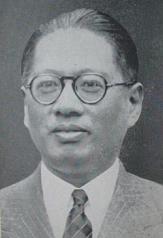 In June 1940, France stopped China from using the Vietnamese-Chinese highway and railway; in July, Britain forbade China from using HK and Burma as the transport routes. Pro-communist scholar Ma Yinchu attacked Kong Xiangxi (H.H. Kung) for 1) the bond market manipulation, 2) the foreign exchange manipulation.
In the U.S., T.V. Soong obtained aid from the U.S.
On April 1st, America agreed to provide a loan of 50 million U.S. dollars for equalizing the foreign exchange rate with the Chinese "fa bi" (legalized currency). On April 25th, 1941, Soong Ziwen (T.V. Soong) and the American finance minister made a joint announcement that the U.S. would supply a loan of 50,000,000 U.S. dollars while Britain would supply 5 million pounds for standardizing the exchange rate of China's "fa bi" (legalized currency). British-provided funds were restricted to deployment on the Shanghai Bund, which basically fell into the hands of Japan-controlled companies. Both the American and British loans and usage in the foreign exchange market were subject to cancellation with short notice as well as requiring the British/American government approvals. (Seagrave pointed out half of 50M, from the American Treasury, was for the currency stabilization, while another 25M, from the Export-Import Bank was for the Chinese purchase of the American goods.)
In June 1940, France stopped China from using the Vietnamese-Chinese highway and railway; in July, Britain forbade China from using HK and Burma as the transport routes. Pro-communist scholar Ma Yinchu attacked Kong Xiangxi (H.H. Kung) for 1) the bond market manipulation, 2) the foreign exchange manipulation.
In the U.S., T.V. Soong obtained aid from the U.S.
On April 1st, America agreed to provide a loan of 50 million U.S. dollars for equalizing the foreign exchange rate with the Chinese "fa bi" (legalized currency). On April 25th, 1941, Soong Ziwen (T.V. Soong) and the American finance minister made a joint announcement that the U.S. would supply a loan of 50,000,000 U.S. dollars while Britain would supply 5 million pounds for standardizing the exchange rate of China's "fa bi" (legalized currency). British-provided funds were restricted to deployment on the Shanghai Bund, which basically fell into the hands of Japan-controlled companies. Both the American and British loans and usage in the foreign exchange market were subject to cancellation with short notice as well as requiring the British/American government approvals. (Seagrave pointed out half of 50M, from the American Treasury, was for the currency stabilization, while another 25M, from the Export-Import Bank was for the Chinese purchase of the American goods.)
Per Francis Pike, Roosevelt sealed a deal with Congress on December 2nd to provide China with two US$50 million loans. What Pike meant by two loans could be the loan agreement signed back on April 1st, 1940, that designated the purpose of the first $50 million for the Chinese currency stabilization and an additional $50 million credit for purchase of supplies, that was said by Pike to be utilized to buy 100 Curtis P-40 Kittyhawk fighter planes -- that were later shipped to Rangoon for Chennault's Flying Tigers and prior to engagement with the Japanese after Pearl Harbor, numbered about one third left after wear and tear from training.
In summary, here were the pre-lend-lease amounts:
On October 25th, 1938, the U.S. approved a barter trade in loaning China a loan of 20 million U.S. dollars after dispelling any doubt of a quick fall of Chiang Kai-shek's government. U.S. finance minister Morgenthau pressured the State Department, which were hijacked by the British hands and the Soviet agents, into accepting this barter by emphasizing the need of becoming China's friend like the [Soviet] Russians --who schemed to provoke the Sino-Japanese War to make China into a blood pool to tie down Japan, an exact word used by Vasily Ivanovich Chuikov in his memoirs to describe the effect of the Sino-Japanese War on the Soviet Union.
On December 15th, the U.S. Import & Export Bank officially cut the loan of 25 million to China. Five days later, Britain followed through with an offer of 500,000 pounds equivalent of amount from a credit line to China for purchasing trucks in the transport of tung oil on the Sino-Burmese Highway. After the eruption of the European War, China obtained a second batch of the "tung oil" loan on March 7th, 1940, with the collateral requirement of China's tin ore.
From March 1939 to August 1941, China exported tung oil via the primitive transport tools to Haikou for selling to the U.S. as a means of exchanging 33 million U.S. dollars' worth of machinery parts.
In February 1940, the U.S.-China signed a second barter agreement for Yunnan-Guangxi Provinces' tin ore in exchange for a loan of 20 million U.S. dollars.
(Chen Guangfu and Morgenthau got acquainted with each other during the silver crisis of the 1930s.)
The ultimate American intervention in China in March 1940, i.e., the Americans' hastily giving Chiang Kai-shek a badly-needed loan, would be to prevent Japan and China from reaching a truce after Chiang Kai-shek deliberately spread a rumor that his Chongqing (Chungking) government could merge with the puppet Nanking government.
On April 1st, 1940, a promise of 50 million U.S. dollars for balancing the foreign exchange rate with the Chinese currency
Plus another loan of 50,000,000 US dollars.
(For comparison's sake, we want to list the amounts from the communist money laundering:
i) Chen Hansheng's laundering 20 million US dollars to Yenan through the CPUSA and the leftist and communist front organizations in the U.S.;
ii) communist actress Wang Ying's donation collection activities in Southeast Asia, that could amount to 10-20 million US dollars;
and
the Japanese foreign ministry's funneling of over 3 billion yens of funds to the Chinese communists through Pan Hannian, equivalent to 25 million US dollars, according to Endo Homare, the only survivor of her family from the 1948 communist siege of Changchun that led to the starvation death of 300,000 civilians.)
Unpositive Neutrality
The ultimate American intervention in China in March 1940, i.e., the Americans' hastily giving Chiang Kai-shek a badly-needed loan, would be to prevent Japan and China from reaching a truce after Chiang Kai-shek deliberately spread a rumor that his Chongqing (Chungking) government could merge with the puppet Nanking government.
This is after what Utley called by "unpositive neutrality" against the 'belligerent' countries, namely, Japan and China, which was free and unrestrained arms sale to Japan and de facto arms embargo against China. Note that the arms embargo only hurt China since China did not have an industrial base to produce the basic weapons while Japan's factories could roll out the warships and airplanes on a wholesale scale.
Also note that in contrast with the Americans, the European powers, being constrained by the mediation role of the League of Nations, dared not openly sell arms to Japan. Through 1940-1941, prior to the U.S. revocation of the 1911 U.S.-Japan Commerce Treaty, the Americans were the biggest supplier of raw material, oil, aviation oil, and weapons, to the extent that some U.S. senator called by Scott making a claim that out of one million Chinese killed by the Japanese, 544,000 Chinese were killed by the Americans.
Thirty-one U.S. congressional members made a joint declaration to the effect that the U.S., not NAZI Germany, nor Italy, was the best ally of Japan.
From 1937 to 1938, the U.S. provided 290 million U.S. dollars' worth of war materials to Japan under the Neutrality Act, with 190 million alone in year 1939.
After the outbreak of the 1937 war, the U.S. supplied 18 million U.S. dollars' worth of war planes to Japan, seven times more than the planes' sale in 1937.
Another 190 million U.S. dollars' worth of war materials were sold to Japan in 1940.
Prior to the U.S. revocation of the U.S.-Japan commerce treaty on January 26, 1940, Japan organized six procurement delegations to the U.S. and obtained 500 million U.S. dollars' worth of supplies from the U.S., including 36 million U.S. dollars' moulding-tool "master machine" equipment for manufacturing the artillery and other heavy military equipment.
In August 1940 alone, over 300,000 tons of U.S. scrap irons and raw irons were sold to Japan.
In 1941, the U.S. sold to Japan 131% more petrol oil to Japan than in 1940, which was to say that the Japanese planes that bombed the Pearl Harbor used the U.S.-made petrol oil.
Altogether, prior to the Pearl Harbor attack [which ensued from the U.S. freezing the Japan assets and ordering the oil embargo on July 25, 1941, i.e., the Soviet Snow Operation orchestrated by Harry Dexter White], the U.S. provided at least 1 billion U.S. dollars' worth of supplies to Japan, including scrap irons, steel, special steel (alloy steel), nickel, cobalt, tungsten, chemicals, etc., with 70% for the military purpose.
(What happened was that the Japanese, through two American missionaries, opened a channel of secret negotiations with the United States, that resulted in a to-be-signed memorandum with about five points for solution of the "China Incident", namely, the United States would pressure the Republic of China into accepting the state of puppet Manchukuo and waiving the demand for the Japanese war indemnity on the precondition that Japan withdrew its invasion army from China proper.
Later, this secret U.S.-Japan agreement was to be overturned by Matsuoka Yosuke who reached a non-aggression treaty with the U.S.S.R. on
April 13th, 1941, with the direct consequence of eruption of the Pearl Harbor attack.)
Before the war, the U.S. provided Japan with 181 million U.S. dollars' worth of weapons and arsenals to meet Japan's purported 1937-1942 six-year war plan against the Soviet Union.
Throughout the 1930s, the DuPond group sold Japan the chemical technology for manufacturing bombs; the Ford group transferred the metallurgy technology to Japan; the Rockefeller group assisted Japan with building the electronics industry; and the Mellon group modernized Japan's aviation.
Only Japanese Akira Ariye understood this part of the U.S.-Japanese history.
(Of course, the same synarchists built the armaments' factories for the Soviets in the Ural mountains.)
* In Commemoration of China's Fall under the Alien Conquests in A.D. 1279,
A.D. 1644 & A.D. 1949 *
U.S.S.R./Comintern Alliance with the KMT & CCP (1923-1927)
Korean/Chinese Communists & the 1931 Japanese Invasion of Manchuria
American Involvement in China: Soviet Operation Snow, IPR Conspiracy, Dixie Mission, Stilwell
Incident, O.S.S. Scheme, Coalition Government Crap, Amerasia Case & The China White Paper
* Stay tuned for "Republican China 1911-1955: A Complete Untold History" *
|
|
Zou Rong's Revolutionary Army;
Shin Kyu Sik's
Shrine (Spirit, Kunitama) of Korea
|
This snippet is for sons and daughters of China:
Heed the sons & ministers' agony and sorrow of our ancestors who died or lived through the Mongol, Manchu and Soviet-Chicom conquest
and
the Yongjia, Jingkang and Jiashen cataclysms !
Jeanne d'Arc of China:
Teenager girl Xun Guan breaking out of the Wancheng city to borrow the relief troops in the late Western Jinn dynasty;
Liu-Shao-shi riding into the barbarian army to rescue her husband in the late Western Jinn dynasty;
teenager girl Shen Yunying breaking into Zhang Xianzhong's rebels on the horseback to avenge on father's death in the late Ming dynasty.
China's Solitary and Lone Heroes:
Nan Jiyun breaking out of the Suiyang siege and charging back into the city in the Tang dynasty;
Zhang Gui & Zhang Shun Brothers breaking through the Mongol siege of Xiangyang in the Southern Soong dynasty;
Liu Tiejun breaking through three communist field armies' siege of Kaifeng in the Republican China time period;
Zhang Jian's lone confrontation against the communist army during the June 3rd & 4th Massacre of 1989.
|
|
|
The Lend-lease, & the Inverse Lend-lease - conclusion that there was not much for the Chinese to embezzle during WWII.
The actual American lend-lease amounts for the time period of 1940-1944 were smaller than Stalin and the Soviets' aid of 250 million USD from 1937-1940. Stalin's generosity was the result of the Soviet scheme to provoke the Sino-Japanese War in order to make China into a blood pool to tie down Japan, an exact word used by Vasily Ivanovich Chuikov in his memoirs to describe the effect of the Sino-Japanese War on the Soviet Union.
The itemized amounts were merely:
US$26 million (1941, mostly squandered in Burma in the aftermath of the Japanese invasion),
US$100 million (1942),
US$49 million (1943), and
US$53 million (1944). (Numbers were from Arthur Young, economic adviser to the Republic of China and one of the few Americans who harbored true sympathy with China and the Chinese people.)
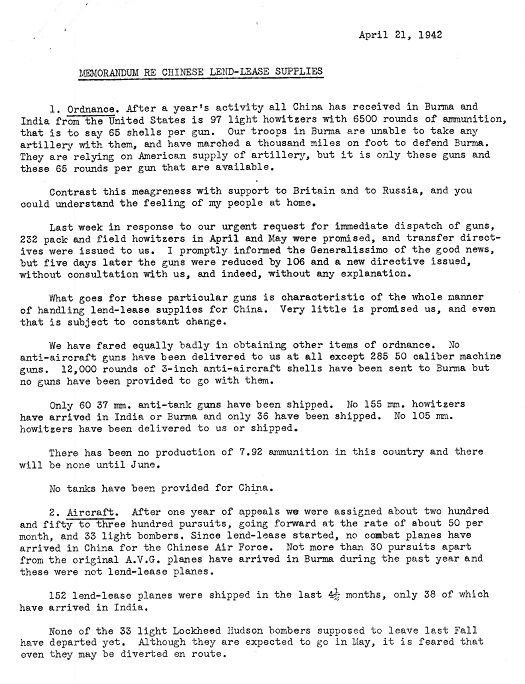 The American aid to China was completely sabotaged by i) the colonialists and ii) the communists inside of the U.S. government. The American Production Mission to China wasn't set up until September '44. Per Edwin Locke, "Well, the problem had just never been attended to before, for one thing; and for another, we were just getting into a position where militarily we could supply a lot more help to China. You see, China was at the end of the line before; she was almost an orphan, and we didn't do very much more than maintain Chennault and his hundred airplanes there in South China, until we began building big bomber bases in China for bombing Japan. China then began to assume a great deal more importance. I think this is your reason..."
Rather receiving any benefits from the lend lease, the Chinese side had spent enormous resource on supporting the American operation.
The airfields completely bankrupted China's wartime finance and led to spiraling inflation from 1942 to 1945, which replayed again from 1947 to 1949 when George Marshall left China.
Wellington Koo's memoirs often talked about some amount related to the INVERSE LEND LEASE, an amount that the Americans owed to China.
Wellington Koo, throughout the late 1940s and early 1950s, were constantly working with the Americans to balance out the dollar amount of aid from the Americans and the dollar amount of the support that R.O.C. provided to the Americans.
Germany was the only country to have given China a loan before the 1937 war outbreak. The term was 100 million German marks.
By 1938-1939, the balance of the loan was written off. The exact amount of the German marks allocated was not clear.
After the outbreak of the resistance war, from 1937 to 1939, the U.S.S.R., which of course provoked the Sino-Japanese War through the repeating G.R.U. operations in China
and espionage activities within the Japanese/American governments, gave China three generous loans, with no strings attached,
in the amount of 50 million USD, 50 million USD, and 150 million USD. (One minor string attached, it was said, was to have Chiang Kai-shek agree to equip the small communist army as the New Fourth Army [Corps] and the Eighth Route Army plus funding.)
The United States did not give an unsecured loan to China till the eve of the Japanese launch of the puppet Nanking regime in Nanking in March 1940,
with the only purpose of keeping China in the war with Japan.
(In 1931, there was a customs-revenue-securitized loan of 9 million USD dollars to purchase wheat [Young, p. 49];
and in 1933, there was a cotton and wheat loan of US$50 million, actually a credit offered by Americans for boosting the American Agricultural Price,
which China had to cut down to 10 million from the original 40 million on the cotton component due to hyper-price set in the unfavorable terms of trade. )
|
China's Millions Paving the Burma Road (in English)
While China's people, in millions, were paving the Burma Road to barter-trade the mercury, tungsten, pig hair bristles with the "neutrality"-observing U.S., for some meagre
credit of 15-25 million U.S. dollars, the Soviet Comintern agents, who surrounded Eleanor Roosevelt, plus George Marshall's wife, as the so-called "China Defense League" front organization,
funneled from 1938 to 1941 at least 20 million U.S. dollars to the Chinese Communists in Yenan, who in turn pincer-attacked the R.O.C. government troops and guerrila fighters
in synchronization with the Japanese invaders.
The Enemy From Within;
Huangqiao Battle;
Wan-nan Incident.
|
|
|
The lend-lease amounts were merely US$26 million (1941, mostly squandered in Burma in the aftermath of the Japanese invasion),
US$100 million (1942), US$49 million (1943), and US$53 million (1944).
The Aug 1949, 1000 page China White paper published by D.G. Acheson claimed that the U.S. had given to China US$2 billion. After checking Freda Utley's calculation, we could tell the 2 billion amount consisting of the majority in the form of service(s) during and immediately after the WWII, included the UNRRA goods that was said to be 685M USD by Seagrave and 500M by Kerr. The bulk of 2 billion, i.e., service(s), included the costs in dispatching Chinese troops to the coast and Manchuria as well as repatriating 2 million Japanese to Japan islands. The remnant of Lend-Lease program, e.g., the rotten inventories on Pacific Islands, were probably the only American flow to China after the outbreak of 1945-1950 civil war. Jung Chang, in "Mao: The Unknown Story", repeated the cliché by exaggerating the American aid amount to be 3 billion USD dollars, i.e., one billion more than Acheson's. Her brother, Zhang Pu, lurking on the internet, had found out the loopholes and began to whitewash the number to 1.5 billion financial aid and about 0.8 billion military aid [which were still untrue]. Communist China's Social Academy chief Liu Da’nian acknowledged that Chiang received no more than 0.6 billion in aid. The actual number won't be more than 0.2 to 0.3 billion, including the 0.125B from the 1948 China Aid Act which rolled over to China Area Aid, to be squandered in Indochina, instead.
|
After General Marshall became Acting Chief of Staff effective 1 July 1939, he wrote to the Japanese Army the following:
I am "sure that the cordial relations which have existed between the Imperial Japanese Army and the Army of the United States will continue, and I shall look forward to pleasant contacts with you [i.e., the Japanese general] during your tour of duty in Washington ." (Marshall to Yamauti, July 5, 1939, GCMRL/ G. C. Marshall Papers [Pentagon Office, Congratulations] . )
More,
Brigadier General John Magruder, in October of 1941, relayed the fear of Chinese leader [Chiang Kai-shek] that the "Japanese Army was poised to launch a major drive against the southern city of Kunming, aimed at cutting the Burma Road, China's last important supply link with friendly powers. Marshall's reply was "he knew Magruder very well and ... stated that he knew Magruder when he was in China before, and General Marshall was himself in China . When the Japanese were about to advance on Nanking [in 1937], Magruder, from his sympathy with the Chinese and from his viewpoint as gathered by his experience in China, became quite stampeded... and he knew Magruder so well that he, General Marshall, could properly interpret Magruder's messages."
That is, China, who cares!
The American aid to China was completely sabotaged by i) colonialists and ii) communists inside of the U.S. government.
The American Production Mission to China wasn't set up until September '44.
Per Edwin Locke, "Well, the problem had just never been attended to before, for one thing;
and for another, we were just getting into a position where militarily we could supply a lot more help to China.
You see, China was at the end of the line before; she was almost an orphan,
and we didn't do very much more than maintain Chennault and his hundred airplanes there in South China,
until we began building big bomber bases in China for bombing Japan. China then began to assume a great deal more importance.
I think this is your reason..." --The airfields completely bankrupted China's wartime finance and led to spiraling inflation from 1942 to 1945, which replayed again from 1947 to 1949 when George Marshall left China.
|
Stilwell, the slimy who itched "to throw down ... shovel and get over there and shoulder a rifle with Chu Teh" the communist commander, before his kickout from China,
paid a visit to Mme Sun Yat-sen the No. 1 Comintern agent in China.
George Marshall quit his job twice, J.I.T (just in time), in anticipation of some pre-arranged phonecalls from Truman
to tack on the jobs as 1) first the mediator in the Chinese civil war
and ii) second as defense minister for
the Korean War, respectively.
George Marshall returned Zhou Enlai's address book to Zhou Enlai, sealed,
while never alerting Chiang Kai-shek of the communist spies like Xiong Xianghui.
While Currie stopped the German weapons from shipping to China and Truman dumped China's Lend-Lease weapons to the Indian Ocean,
Acheson and George Marshall personally pushed for the 1946-47 arms embargo against China
and imposed three ceasefire onto the Chinese government, Jan-10-1946, June-6-1946, & Nov-8-1946. Marshall deliberately flew back to China in April 1946 to stop the Chinese Nationalist troops from chasing the communists north of the Sungari River. This is how CHINA WAS LOST.
As disclosed by the documents at the George Marshall foundation, George Marshall, possibly the most hideous agent working on behalf of Stalin and the Soviet Union, saved the ass of the Chinese Communists with a threat to withhold the economic aid that was supposedly coming from the U.S. export-import bank, which never materialized.
G Marshall, from 1946 to 1948, repeatedly probed numerous Chinese officials and generals as to who could be Chiang's successor.
The U.S. Department of State, run by the Soviet Russian agents, were repeatedly sending out rumors about getting a successor for Chiang. Marshall's hands had the blood of millions of Chinese killed in civil wars.
G Marshall, as Wedemeyer said, first armed China and then disarmed China. The U.S. arms embargo continued till the China Aid Act of 1948, and ammunition did not get released till Nov of 1948.
After weapons were shipped
out, Acheson and the undercover Russian agents further attempted to order the ships to turn around at Guam and Okinawa.
In Oct 1949, Acheson pleaded with the British, where the Cambridge Soviet Spy Ring was at work, for recognition of Communist China, which Britain did on Jan 1st, 1950.
After that, Acheson declared the Aleutian curvature, which direcly led to the eruption of the Korean War.
|
|
* In Commemoration of China's Fall under the Alien Conquests in A.D. 1279,
A.D. 1644 & A.D. 1949 *
U.S.S.R./Comintern Alliance with the KMT & CCP (1923-1927)
Korean/Chinese Communists & the 1931 Japanese Invasion of Manchuria
American Involvement in China: Soviet Operation Snow, IPR Conspiracy, Dixie Mission, Stilwell
Incident, O.S.S. Scheme, Coalition Government Crap, Amerasia Case & The China White Paper
* Stay tuned for "Republican China 1911-1955: A Complete Untold History" *
|
|
Zou Rong's Revolutionary Army;
Shin Kyu Sik's
Shrine (Spirit, Kunitama) of Korea
|
This snippet is for sons and daughters of China:
Heed the sons & ministers' agony and sorrow of our ancestors who died or lived through the Mongol, Manchu and Soviet-Chicom conquest
and
the Yongjia, Jingkang and Jiashen cataclysms !
Jeanne d'Arc of China:
Teenager girl Xun Guan breaking out of the Wancheng city to borrow the relief troops in the late Western Jinn dynasty;
Liu-Shao-shi riding into the barbarian army to rescue her husband in the late Western Jinn dynasty;
teenager girl Shen Yunying breaking into Zhang Xianzhong's rebels on the horseback to avenge on father's death in the late Ming dynasty.
China's Solitary and Lone Heroes:
Nan Jiyun breaking out of the Suiyang siege and charging back into the city in the Tang dynasty;
Zhang Gui & Zhang Shun Brothers breaking through the Mongol siege of Xiangyang in the Southern Soong dynasty;
Liu Tiejun breaking through three communist field armies' siege of Kaifeng in the Republican China time period;
Zhang Jian's lone confrontation against the communist army during the June 3rd & 4th Massacre of 1989.
|
|
|
After Pearl Harbor, Chiang Kai-shek requested for a loan with the U.S.
Back on December 30th, Chiang Kai shek, in light of inadequate usage of the Lend-Lease Act aid, had asked the American government for a loan of five hundred million dollars, and asked the British government for a similar sum.
A mechanism was proposed to devise a proxy "Trade Dollar" currency to "directly compensate each of one million Chinese soldiers at the rate of ten American dollars a month, five for pay, and five for maintenance" -- a scheme that Churchill endorsed to Roosevelt and Morgenthau.
Morgenthau sold the panoply to T.V. Soong, with Chiang replying that the cleavage between the Chinese soldiers compensated in this manner could hasten the collapse of the Chinese economy and that this advance of funds should require no security or other terms for the cause of fighting the common enemy.
Morgenthau's people, with Soviet agents included of course, continued to oppose the loan to China, with a deliberate suggestion to pool in the Soviets for contribution. This led to Morgenthau's query with Litvinov on January 29th, which Litvinov flatly declined and furthermore commented on it as Chiang's blackmail. Nevertheless, with Singapore to fall to the Japanese and the Burma battles to be started anytime, cool heads reached a consensus to grant such a loan, which was promptly stamped by both the House and Senate.
On March 14, 1941, the Chinese Ministry of Finance issued two government treasuries of US$100 million, with one long term bond termed the "Allied victory bond" and the other short term bill in the form of short term certificates, that were backed by the new American credit at the rate of 20 CNC for one American dollar; however, there was not much enthusiam for subscription to the bonds and certficates until July 1943, when there was suspicious heavy rush-buying, which stirred accusation of corruption against H.H. Kung.
There was one important episode recorded in Roosevelt's conversations with Chiang, namely, the Burma campaign and the promised aid to China. After Roosevelt left Cairo, both promises were broken.
In the aftermath of the American and British negating decisions made at Cairo for the Second Burma Campaign, there was back and forth discussions within the U.S. to refuse such a loan.
As to the billion-dollar loan, ambassador Gauss, when called to Chiang's office, and when Mme Chiang spoke of the cost to maintain the American air force, was "unmoved".
In a despatch to the State Department on December 23rd, Gauss claimed that "China would not be helped by an American dollar alone at this time" and implied that only successful military operations to open the Ledo Road could have resolved the inflation issue with increased transport of goods. Hull, a good man, suggested a "soft" refusal blunting the effect of a flat denial's impacting the Chinese morale as well as suggested the Treasury Department to send a fact-finding kind of mission to China. The Treasury Department, where Soviet spy Harry Dexter White was at work, did not support the loan either, claiming that it might "retard the decline in the value of the Chinese dollar" and slow up inflation "not much or for long".
Morgenthau, claiming that the loan was unnecessary and undesirable, suggested some lesser measures to "reduce the volume of Chinese currency". Roosevelt, on January 5th, 1944, ordered that Morgenthau's memo with reasons that the loan was not justified be sent to Chiang. Hull wanted Gauss to blunt the impact when presenting the memo to Chiang.
The Americans took the Chinese threat as a blackmail, and thought that Chiang could possibly withhold the Yoke force from going into Burma as a bargaining chip. In January of 1944, the War Department thought about curtailing operations in China. Somervell, Marshall and Stimson were all fed up.
The disputes continued, surrounded two issues: Mme Chiang insisted that Roosevelt promised to meet the full cost of constructing the American bomber base at Chengdu (Chengtu), and the American War Department was unwilling to convert the U.S. dollars at the official CNC exchange rate of 20:1, which would amount to an expenditure of 100 million dollars each month to maintain operation in China. China claimed that if using the black market rate, let's say 130 CNC to 1 U.S. dollar, then granting such an exchange rate would ruin the Chinese currency. On the Chinese side, Chiang thought that the loan was trivial in comparison with the outlay doled out to the British and Russians. H.H. Kung suggested in January of 1944 that the Americans themselves had to "arrange to buy the supplies, labor, and construction materials" after March 1st, 1944, as seen in Gauss' despatch on January 16th.
In talks with the U.S. State Department, H.H. Kung stated: "It cost us something about ninety CNC dollars to feed an American soldier a day...We in China are vegetable eaters...in China your boys need six eggs a day, and now it is cut down to four eggs. But you eat a pound of beef a day. In Kunming alone we are keeping cows and oxen to supply you... 12,000 catties of beef alone every day...in this country you raise animals for the purpose of meat; in China we don’t do that. In order to supply the meat we are feeding our oxen, used for farming purposes."
Wesley Marvin Bagby, following the paper trail of the Comintern agents, while acknowledging that "the number of the American troops in China rose from 1,255 at the end of 1942, to 60,369 by August 1945...and that...carnivorous Americans decimated water buffalo, the principal nonhuman energy input into Chinese farming," did not appreciate a thing about China's contribution to the war efforts.
The War Department then "had second and softer thoughts", and it appeared that Stimson came up with "a temporary working compromise on war costs and the exchange rate" in a memo sent to Roosevelt on May 26th, 1944, that "did little to ease the [Sino-American] tension during the spring of 1944--while the second campaign in Burma was being fought".
- The airfields completely bankrupted China's wartime finance and led to spiraling inflation from 1942 to 1945, which replayed again from 1947 to 1949 when George Marshall left China. This webmaster's conviction is that China's economic woes of 1942-1945 and 1947-1949, psychologically related, both were related to the American sabotage, i.e., alternatively, by what Hurley called the colonialists and communists inside of the American government.
* In Commemoration of China's Fall under the Alien Conquests in A.D. 1279,
A.D. 1644 & A.D. 1949 *
U.S.S.R./Comintern Alliance with the KMT & CCP (1923-1927)
Korean/Chinese Communists & the 1931 Japanese Invasion of Manchuria
American Involvement in China: Soviet Operation Snow, IPR Conspiracy, Dixie Mission, Stilwell
Incident, O.S.S. Scheme, Coalition Government Crap, Amerasia Case & The China White Paper
* Stay tuned for "Republican China 1911-1955: A Complete Untold History" *
|
|
Zou Rong's Revolutionary Army;
Shin Kyu Sik's
Shrine (Spirit, Kunitama) of Korea
|
This snippet is for sons and daughters of China:
Heed the sons & ministers' agony and sorrow of our ancestors who died or lived through the Mongol, Manchu and Soviet-Chicom conquest
and
the Yongjia, Jingkang and Jiashen cataclysms !
Jeanne d'Arc of China:
Teenager girl Xun Guan breaking out of the Wancheng city to borrow the relief troops in the late Western Jinn dynasty;
Liu-Shao-shi riding into the barbarian army to rescue her husband in the late Western Jinn dynasty;
teenager girl Shen Yunying breaking into Zhang Xianzhong's rebels on the horseback to avenge on father's death in the late Ming dynasty.
China's Solitary and Lone Heroes:
Nan Jiyun breaking out of the Suiyang siege and charging back into the city in the Tang dynasty;
Zhang Gui & Zhang Shun Brothers breaking through the Mongol siege of Xiangyang in the Southern Soong dynasty;
Liu Tiejun breaking through three communist field armies' siege of Kaifeng in the Republican China time period;
Zhang Jian's lone confrontation against the communist army during the June 3rd & 4th Massacre of 1989.
|
|
|
On July 24th, 1941, Roosevelt ordered an economic embargo on Japan, and on August 1st, further ordered an oil embargo on Japan.
In this year, Soong Ai-ling's "seven star company" profited from exchange rate fluctuations.
http://64.233.167.104/search?q=cache:NPthg...lient=firefox-a
Eventually becomes $50 billion dollars in lend-lease during the war to many countries: 60% to UK, 20% USSR, 20% France, China, others. 30Nov40. Sat. United States lends [pre-lend-lease] $50 million to China for currency stabilization and grants an additional $50 million credit for purchase of supplies.
http://64.233.161.104/search?q=cache:bdlPw...hina+wwii&hl=en
Magruder acquiesced, and eventually large amounts of lend-lease weapons and equipment, originally earmarked for Nationalist China, went to the British for use in the defense of Burma. With Rangoon threatened, Magruder ordered the destruction of all lend-lease stocks in an effort to deny them to the invading Japanese. As the Japanese approached, there had been frantic activity to move as much materiel as possible north to the Burma Road, but it was still necessary to destroy more than 900 trucks in various stages of assembly, 5,000 tires, 1,000 blankets and sheets, and more than a ton of miscellaneous items. Magruder transferred much materiel to the British forces, including 300 British-made Bren guns with 3 million rounds of ammunition, 1,000 machine guns with 180,000 rounds of ammunition, 260 jeeps, 683 trucks, and 100 field telephones. In spite of the destruction and transfer to the British, however, over 19,000 tons of lend-lease materiel remained in Rangoon when it fell to the Japanese on 8 March.
http://64.233.161.104/search?q=cache:9FO_S...hina+wwii&hl=en
Furthermore, the Lend-Lease program was used to obtain the aircraft required by the AVG."
Stilwell himself acknowledged that China did not get the needed aid from Lend-Lease. On pages 180-181 of FF Liu's "A Military History of Modern China", Liu pointed out that "The British influence was strong in the ranks of the combined chiefs of staff, however, and Chinese stockpiles rapidly diminished while material was reallocated to other recipients. When aircraft originally intended for the Chinese theater was reallocated by Washington, Stilwell complained, 'Now what can I say to G-mo [Chiang Kai-shek]? We fail in all commitments and blithely tell him to just carry on, old top'."
To build the roads and airfields, China issued unbacked bonds. ( In November 1944, Kong Xiangxi, at Chiang Kai-shek's order, demanded with Morgenthau that the U.S. pay back the 0.6 billion U.S. dollar cost China incurred in building the airfields for the American bombers. Morgenthau, knowing black market rate of 120 against 1 U.S. dollar, refused to pay China. Roosevelt agreed to pay 0.1 billion U.S. dollars in cash)
The huge loss of the Chinese forces in the Kumon-Kachin-Gaoligong Mountains, as a result of the British betrayal in the Burma Campaign, had yielded only one good thing: Sun Liren, against Chiang Kai-shek and Du Yuming, retreated to India where the British realized that the Chinese could be used for defending India. Stilwell thought about making Sun Liren's 38th Division into his private army. The Expedition army was rebuilt into the New 1st Corps. Stilwell agreed to equip the Chinese armies with the American weapons. Chiang Kai-shek's future crack force, as commonly known, were the remnants of Stilwell's X-force from India and the Y-force from Yunnan-Guangxi provinces. However, Stilwell had tried to take over the Chinese force by implanting 200 American officers, attempted assassination of Chiang during a planned Ramgarh inspection, wasted the Y-force needlessly in attacking the Japanese positions on perpendicular hills, refused to reroute the Y-force to China during the Japanese Ichigo Campaign, and fought Chiang Kai-shek for control of the Chinese army with Marshall's acquiesce. If you want to know how much the U.S. did for China, I would say that's basically all before Stilwell was recalled in October 1944. Stilwell had no interest in giving aid to China other than direct control over the Chinese army. When China was attacked by Japan in the No. 1 Campaign, Stilwell refused to direct the X-force against the Japanese from south or allow the Y-force to back off from the Burma border.
Wedemeyer continued on with Stilwell's training by promising to equip 39 Chinese divisions, with actual numbers trained uncertain.
On basis of some U.S. army college-published book, the Americans, after the Stilwell recall, earnestly helped China to train the army, providing the equipment artilleries and howitzers. The Americans provided very limited light fire arms, and negligible ammunition, with Shi Jue's 13th Corps going into Manchuria with some one third of the training ammunition for the Amercican guns [while Liu Yuzhang's 52nd Corps, going into Manchuria at the same time, did not have a single American gun].
Stilwell controlled the Lend-Lease program, and refused to even replenish Chennault’s Flying Tiger airforce, not to mention Chiang Kai-shek's R.O.C. troops. Wedemeyer continued the Stilwell line in controlling the Lend-Lease program direct. On page 193 of FF Liu's book, Liu stated that "The Chinese even agreed to Wedemeyer's insistence that Americans supervise the purchase of food locally when paid for with lend-lease funds.". Wedemeyer wanted to feed the Chinese army with better nutrition. This shows that China had no control over the lend-lease materials or funds, with the conclusion that there was not much for the Chinese to embezzle during WWII.
(Wedemeyer persuaded Chiang Kai-shek into revoking the political indoctrination departments in the Chinese army and reorganizing the military commission into the ROC defense department.)
* In Commemoration of China's Fall under the Alien Conquests in A.D. 1279,
A.D. 1644 & A.D. 1949 *
U.S.S.R./Comintern Alliance with the KMT & CCP (1923-1927)
Korean/Chinese Communists & the 1931 Japanese Invasion of Manchuria
American Involvement in China: Soviet Operation Snow, IPR Conspiracy, Dixie Mission, Stilwell
Incident, O.S.S. Scheme, Coalition Government Crap, Amerasia Case & The China White Paper
* Stay tuned for "Republican China 1911-1955: A Complete Untold History" *
|
|
Zou Rong's Revolutionary Army;
Shin Kyu Sik's
Shrine (Spirit, Kunitama) of Korea
|
This snippet is for sons and daughters of China:
Heed the sons & ministers' agony and sorrow of our ancestors who died or lived through the Mongol, Manchu and Soviet-Chicom conquest
and
the Yongjia, Jingkang and Jiashen cataclysms !
Jeanne d'Arc of China:
Teenager girl Xun Guan breaking out of the Wancheng city to borrow the relief troops in the late Western Jinn dynasty;
Liu-Shao-shi riding into the barbarian army to rescue her husband in the late Western Jinn dynasty;
teenager girl Shen Yunying breaking into Zhang Xianzhong's rebels on the horseback to avenge on father's death in the late Ming dynasty.
China's Solitary and Lone Heroes:
Nan Jiyun breaking out of the Suiyang siege and charging back into the city in the Tang dynasty;
Zhang Gui & Zhang Shun Brothers breaking through the Mongol siege of Xiangyang in the Southern Soong dynasty;
Liu Tiejun breaking through three communist field armies' siege of Kaifeng in the Republican China time period;
Zhang Jian's lone confrontation against the communist army during the June 3rd & 4th Massacre of 1989.
|
|
|
The U.S. Involvement In China Due To the Russian Spies' Manipulation
WWII History Needs To Be Construed As the result of the British instigation, the Anglo-American Appeasement, the COMINTERN and Soviet Conspiracy (i.e., the Soviet GRU's repeated sabotage of the Japanese installations in North China and Manchuria), and the Japanese beastly ambition, i.e., what Shan Hai Jing (The Legends of the Mountains and Seas) said about the snake swallowing up an elephant. With the Soviet archives and the American Venona archives opened to the public, almost all history books should be completely rewritten. This is true for books that were published even at this moment should the author fail to grasp the archives in the necessary perspectives.
At http://www.larouchepub.com/other/2004/3123...n_v_dr_sun.html, Mike Billington wrote for "Executive Intelligence Review" an article entitled "How London, Wall Street Backed Japan's War Against China and Sun Yat Sen", pointing out the behind-the-scene manipulations as to "SYNARCHISM AND WORLD WAR". As stated by Mike Billington, "... British synarchist banking interests, centered around Bank of England head Montagu Norman, Hongkong and Shanghai Bank director Sir Charles Addis, and J.P. Morgan chief executive Thomas Lamont, deployed militarily and politically to destroy Sun Yat Sen and his influence. ... when their subversion and looting failed to crush Sun's republican movement, the British threw their weight behind the synarchist/fascist forces in Japan, financing the Japanese military occupation of the Chinese mainland... By 1931, J.P. Morgan had floated $263 million in loans for Japanese borrowers, including direct loans to the government in 1930", with quite some of the funds going direct to the Southern Manchurian Railway under disguise to avert the world opinions. Note that President Wilson rejected Reinsch's 1917 financing arrangement for building an alternative rail route to the South Manchurian Railroad, "even assured Japan that the United States would honor their special position in Manchuria", and in October 1918 agreed to the formation of a new bankers' Consortium which was orchestrated by the Anglo-American bankers for sake of depriving China of any chance of obtaining an international loan.
Chiang Kai-shek's relationship with Britain and America never progressed before the WWII. There were hiccups during the WWII, especially so when Stilwell could be implicated in assassinating Chiang Kai-shek in early 1944. After the WWII, Marshall had adopted the "carrot and stick" policy as to Chiang Kai-shek, and implemented an arms embargo against China in 1946-1947.
(Nancy Tucker acknowledged this embargo.)
You may ask why would U.S.A. ever got involved in China over WWII? It would be a Soviet setup, i.e., the Operation Snow. The Russians, after signing a neutrality pact with Japan on April 13th, 1941 [by betraying the 1937 non-aggression treaty between China and the USSR], had sealed off China's continental exit to the north and northwest. The Russians, being concerned that China could lose the resistance war to Japan, secretly ordered their proxies, Launchlin Currie & Harry Dexter White, to recommend to Roosevelt that China be given the Lend-Lease materials. Currie went to China on an inspection mission in January 1941.
16 out of 17 of the AMERICANS that were involved in creating the U.N. were later identified, in sworn testimony, as secret communist agents. The first Secretary General was the AMERICAN Alger Hiss. Hiss served time in prison pursuant to his involvement in a Communist spy ring. Who were the 16 American citizens who helped create the UN that were identified as communists? Alger Hiss; Harry Dexter White; Virginius Frank Coe; Noel Field; Laurence Duggan; Henry Julian Wadleigh; Nathan Gregory Silvermaster; Harold Glasser; Victor Perlo; Irving Kaplan; Solomon Adler; Abraham George Silverman; John Carter Vincent; David Weintraub; William K. Ullman and William H. Taylor.
How the Kung & Soong Families Make the Money? - part II - Kong had accumulated over 1 billion U.S. dollars for Chiang Kai-shek's National Government after eight years of resistance war
After the Pacific War, the Japanese intruded into Shanghai's settlements, opened a new reserve bank, printed the "puppet money", exchanged into the "fa bi" (legalized currency) with the "puppet money", and then exchanged into the international currency with the "fa bi" (legalized currency). The Japanese then reversed the prior policy of maintaining the "fa bi" (legalized currency) to deliberately devalue the ROC "fa bi" (legalized currency) for sake of grabbing more purchasing power of the Chinese commodities with the Japanese "military currency" [i.e., "jun piao"]. In March 1941, the Japanese and their Chinese collaborators launched counter-assassination against the Chinese bank employees in the French Concession and International Settlement of Shanghai. After one month bloody killings, a truce was brokered by Du Yuesheng, yielding to circulation of the Japanese puppet money together with the Chinese "fa bi" (legalized currency).
On March 21st, 1942, Soong Ziwen (T.V. Soong) successfully obtained an American loan of 0.5 billion [which was not fully used as the Americans imposed restrictions, and the loan was morale-boosting political loan]. Kong Xiangxi (H.H. Kung) immediately made arrangement for printing two batches of 0.1 billion Chinese government bonds, including 0.1 billion US$-denominated debts. From 1938 to 1942, Kong Xiangxi (H.H. Kung) issued bonds valued at 15.192 billion "fa bi" (legalized currency).
According to the communist records, in October 1943, Kong Xiangxi (H.H. Kung) and his crony were personally involved in controlling the remnants of one batch of the 0.1 billion US$ denominated Chinese bonds. When China's "fa bi" (legalized currency) devalued against the US$, Kong Xiangxi (H.H. Kung) secretly stopped the issuance of about 50 million US$ equivalent of the original 0.1 billion US$-denominated debts. Kong Xiangxi's crony Luu Xian took charge of swallowing the debts on behalf of Kong Xiangxi and the staff of the state vault bureau of the Central Bank. Total profit could reach 2.647 billion "fa bi" (legalized currency). - The black market exchange rate was like US$1 = Chinese "fa bi" (legalized currency) 250 yuan,
but the official exchange rate was pegged at 1 against 20.
The Communist-China-published books repeatedly claimed that "in November 1943, with possibly Stilwell acquiesce and encouragement, 600 Chinese officers plotted to assassinate Chiang Kai-shek on December 12th, prior to the Cairo Conference. Kong Xiangxi (H.H. Kung) could be implicated in the plot. Long Yun as well. 16 generals [????? whom??? ] were executed upon Chiang's return from Egypt." The Communist records claimed that the assassination was under Stilwell's order, code-named the "Blue Whale", for the time period of March 1944 when Chiang Kai-shek was expected to inspect on the Chinese army in India.
The truth was that Roosevelt dispatched a WWI-era ace with the assassination order to Stilwell who passed it on to Frank Dorn.
Though Roosevelt did not give the go-ahead order, Stilwell and his cronies apparently took advantage of every possibility to sabotage the cause of Chiang Kai-shek. James Liley, in memoirs about his brother, hinted a continuous American plot against Chiang Kai-shek through 1946 in collusion with the local Chinese military leaders.
At the Cairo Conference, Roosevelt promised to loan China 1 billion U.S. dollars, but changed mind afterwards - after the instigation of Stilwell and Davies, as well as Frank Dorn. [Zheng Langping, on page 33 of "The Everlasting Glory", also mentioned this.] Chiang Kai-shek then sought for reimbursement of the costs in building roads and airfields for the Americans.
The "Political studies faction" [Da Gong Bao] and the CC Clique [Zhong Yang Ri Bao] attacked Kong Xiangxi. According to the communist records, with Chiang Kai-shek authorization, the Chongqing city raided the Kong family's warehouse where they hoarded flour, medicine, cloth valued at 40 million Chinese yuan. The Central Statistics & Investigation concocted accusation to have Kong Xiangxi's crony, Gao Bingfang, arrested. To save Gao from a death sentence, Kong gave away control of some posts at the finance ministry and the legislative house
In June of 1944, Soong Mei-ling and Soong Ai-ling left for Brazil where the Soong family had purchased properties, and other assets. The Communist-China-published books rumored that "Kong Xiangxi, for his implication in plot against Chiang Kai-shek, was sent away to the U.S.A. as well."
Kong, though spending next 12 months overseas, was acting as a special emissary of the Republic of China, with full trust and authority from Chiang Kai-shek, which certainly contradicted the communists' rumor. In November 1944, Kong Xiangxi, at Chiang Kai-shek's order, demanded with Morgenthau that the U.S. pay back the 0.6 billion U.S. dollar cost that China incurred in building the airfields for the American bombers. Morgenthau, knowing the black market rate of 120 against 1 U.S. dollar, refused to pay China. Roosevelt agreed to pay 0.1 billion U.S. dollars in cash, but complained to Chiang Kai-shek for firing the "corrupt" Kong Xiangxi (H.H. Kung) from the finance minister post. The puppet government in Nanking was surprised that Chiang fired Kong under the pressure of the Americans and the Chinese communists
Kong's daughter claimed that Kong had accumulated over 1 billion U.S. dollars [including the value of gold and silver] for Chiang after eight years of resistance war. Seagrave claimed a total of 0.9B USD equivalent and 6M ounces of gold which were all "from the American taxpayers" [????? The Chinese coolie work for free, and the Chinese war deaths in vain???]. The 1 billion certainly included the 0.1 billion that Roosevelt paid to China for the coolie labor in building the airfields. (Note the Americans were stunned by the scene of millions of peasants peeling off the hilltops with hoes, dustpans and shoulder-poles. They don't fear the sheer number of Chinese, but the tenacity of the Chinese coolie.)
How the Kung & Soong Families Make the Money? - part III
After Kong Xiangxi (H.H. Kung) lost his finance minister post, Yu Hongjun temporarily took over the job. Kong's son bought a house on the Long Island for him. Soong Ziwen (T.V. Soong) returned to China. Soong Ziwen (T.V. Soong) still had his brother Soong Ziliang control the U.S. and UN aid programs inside the U.S. We could not tell how much T.V. Soong had spent the 0.9 billion on the war efforts. It is not likely that T.V. Soong had embezzled any of the 0.9 billion.
Seagrave accused T.V. Soong of halving Chiang's 0.9 billion reserve within two years. In November 1947, the American media accused Soong of having 0.1 billion deposits in the U.S. and Switzerland.
In China, Chiang Kai-shek, under the international arms embargo, was fighting an exhausting war against the communists who were receiving unlimited Soviet military aid. The U.S. government, from 1946 to 1947, had a de facto arms embargo against China. Marshall strictly implemented the embargo policy to force Chiang Kai-shek into peace talks with communists.
This was taken to be a so-called "stick and carrot" policy. The ulterior motive could be George Marshall hideously working on behalf the Soviet Union to destroy China --after George Marshall destroyed the East European and Balkan countries by arranging the American landing in Italy and France in lieu of a landing on the Balkans.
Nancy Tucker also pointed out the embargo.
The Republicans, in early 1948, managed to pressure the Truman administration into giving China aid in passing a China Aid Act; however, George Marshall, the Soviet-hijacked state department, the CPUSA-hijacked U.S. Army's requisition board, and the CPUSA-controlled longshoremen's unions of the docks, all worked to create obstacles, delaying the export license issuance, and delaying the loading of the goods, etc. Ultimately, the ships were let go in late 1948. But Acheson then ordered the ships to stop sailing to China and to turn around on the pretext that China was to fall into the communist hands at any minute.
Thereafter, the Acheson gang published The China White Paper to create condition for switching the diplomatic recognition to communist China, and worked with the British to have the British recognize communist China diplomatically.
The UN goods came to China via the docks and wharfs controlled by the Kong-Song families and the gangster-background families like Du Yuesheng.
The profit from administering the UNRRA goods was not in the base amount of 685M USD, but in the extra billing to the UN for storage and shipping as well as the price markup of the UN aid goods in selling to the Chinese public.
In Shanghai, Jiang Jingguo launched a sweeping campaign against the profiteers, including Du Weiping [hoarding 60 million yuan worth of goods]. Possibly, Du directed Jiang Jingguo to raid Kong Lingkan (David Kung)'s warehouse where a lot of the UN goods were found. Mme Chiang Kai-shek personally flew to Shanghai to rescue Kong Lingkan and then sent him overseas
Kong Xiangxi and his son were accused of being implicated in supporting Tom Dewey's presidential candidacy against Truman. The American media ridiculed the Kongs as tycoons with 0.5 billion U.S. dollars against Truman. The American media accused Mme Kong Xiangxi (H.H. Kung) of possessing the most deposits among the overseas Chinese in the U.S. banks in 1939. In May 1950, the American media, which was controlled by the pro-Soviet cronies, accused the Kung-Soong families of having 0.5 billion U.S. dollars in the U.S. banks. In March 1951, the U.S. media accused the two families of having as much as 0.85 billion U.S. dollars. The two never disputed any accusation. Kong Lingjie (Louis Kung), another son of Kong Xiangxi, did marry a U.S. movie star and controlled the Western Oil in Houston. However, Chiang had invited Kong-Song back to Taiwan, which showed that Chiang did not lose trust in the two. Possible conclusion was that the Kung family, alone, [excluding T.V. Soong], did profiteer, but not as much as the media [the U.S. media controlled by the communists and leftists in the 1940-50s] wanted you to believe. Seagrave claimed that the UNRRA goods totaled 685M U.S. dollars from 1945 to 1947. Kerr claimed the UNRRA goods were worthy of half a billion U.S. dollars, with 470M from the U.S. contribution.
(George Wei's book on the Sino-American Economic Relations, however, completely rebutted the assertion as to the Chinese corruption in the UNRRA program.)
Alternatively speaking, Wellington Koo's memoirs pointed out that the most Kung family had ever done in the U.S. would be Mme H.H. Kung's wish to establish an award scholarship for essays relating to China's civil wars in a women's club.
Mme Chiang Kai-shek had paid out of her private accounts for some financial expenses incurred by some Chinese delegation in the U.S.
Other than the two incidents, there was no trace that Republican China was ever involved in bribing the U.S. Congress, at least not before 1954.
This is especially true after the only hired American defected to the anti-China side in 1948 over the contract renewal issue.
According to Freda Utley:
Mr. Acheson's over-all figure of $2 billion of postwar aid to China includes a total of $799 million of "economic aid," and $797.7 million of "military aid," which together add up to something over $1.5 billion. The balance of the $2 billion is not itemized, but presumably includes the United States' share of UNRRA aid, which is calculated to have amounted to $474 million.
The largest single item in Mr. Acheson's total of $797.7 million of military aid is "services and expenses" amounting to $335.8 million, and listed under the heading "Postwar Lend-Lease." The "services" referred to consisted of the cost of repatriating the million or more Japanese soldiers in China, and of transporting the Chinese Nationalist forces to accept the surrender of the Japanese Army in the liberated territories. According to President Truman, these "services" cannot properly be regarded as "postwar" Lend-Lease, but must be included under the heading of World War II expenditures.
In summary, the American aid for the year 1945 to the V-J Day: US$642 million.
(This is on basis of Utley's citation of the U.S. number of
approximately $870,000,000 up to V-J Day, deducted by Young's numbers of $228 million from 1941 to 1944.
This amount should be adjusted by the goods destroyed at the Indian Ocean.
At the time Japan surrendered, the Soviet spies in the White House ordered all the China-destined weapons, that were still in India, to be dumped to the Indian Ocean, namely, "Operation Destruction" that cost the lives of twenty-five Americans and one hundred and twenty-five Indians.)
For the time period from the V-J Day to the end of February 1946: US$600 million (mostly the transportation costs).
(This is on basis of Utley's citation of the U.S. number. Out of the above ambiguous post-1944 U.S. numbers, Utley deducted:
$335.8 million represented by the cost of repatriating the Japanese and accepting their surrender;
$100 million worth of the "surplus" United States stocks sold to China in 1946, 40 per cent consisting of the quartermaster supplies, and only $3 million consisting of the small-arms and ammunition.
As pointed out by Utley,
the largest single item in Acheson's total of $797.7 million of military aid was the "services and expenses" amounting to $335.8 million, and listed under the heading of "Postwar Lend-Lease.")
TEN TRAINS EQUIVALENT AMERICAN LEND-LEASE WEAPONS THAT STALIN & RUSSIANS GAVE TO MAO & CHINESE COMMUNISTS;
FORTY SHIPS EQUIVALENT QUANTITY OF TANKS & CANNONS, BOTH AMERICAN-MADE & JAPAN-MADE
3300 TONS OF PETROL FROM RUSSIANS IN 1947 ALONE; PLUS 2000 TONS OF DIESEL, 1000 TONS OF PLANE FUEL, 700 TONS OF EXPLOSIVES & 2000 TONS OF MACHINERY OIL
30000 TONS OF PETROL FROM RUSSIANS IN 1948; PLUS 1000 TONS OF PLANE FUEL, 5000 TONS OF KEROSINE, 3000 HEAVY WEIGHT TRUCKS & 150 ARTILLERY TRACTORS
DEATH OF MILLIONS OF YELLOW MEN, & POSSIBLY MORE IN THE FUTURE WAR AGAINST TAIWAN !!!!!
Reference: see the writing by James Perloff China Betrayed Into Communism on Friday, 24 July 2009 at
http://www.thenewamerican.com/index.php/history/world/1464
August Storm lend-lease weapons ended up in Mao's hands.
"At the Teheran and Yalta wartime conferences, however, Roosevelt asked Stalin if he would break his pact with Japan and enter the Far East war. Stalin agreed, but attached conditions. He demanded that America completely equip his Far Eastern Army for the expedition, with3,000 tanks, 5,000 planes, plus all the other munitions, food, and fuel required for a 1,250,000-man army. Roosevelt accepted this demand, and 600 shiploads of Lend-Lease material were convoyed to the USSR for the venture. Stalin’s Far Eastern Army swiftly received more than twice the supplies we gave Chiang Kai-shek during four years as our ally.
"General Douglas MacArthur protested after discovering that ships designated to supply his Pacific forces were being diverted to Russia. Major General Courtney Whitney wrote: 'One hundred of his transport ships were to be withdrawn immediately, to be used to carry munitions and supplies across the North Pacific to the Soviet forces in Vladivostok.... Later, of course, they were the basis of Soviet military support of North Korea and Red China.'
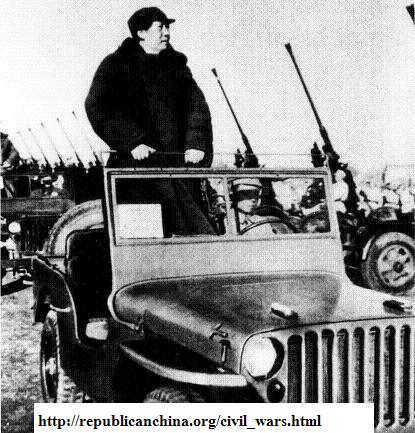
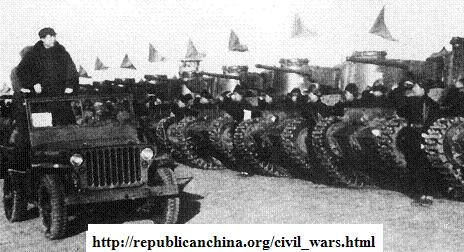
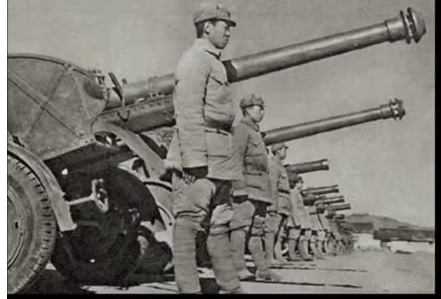
|
|
China's Enemies Being Ignorant of Republican China's Economy & Finance
The "four families" term was concocted by the communists as propaganda. The Chiang family had almost nil 'chiang' surnamed officials in the government or in businesses. (From Chiang's mother side was a former airforce official Mao Bangchu who colluded with his White-woman mistress-secretary in embezzlement - the public trial of which from 1951 to 1952 completely restored China's innocence from the corruption charges by the American State Department.)
The Chen brothers could be said to be so-called "liang xiu qing feng" people, i.e., winds blowing in two empty sleeves.
Among the KMT factions, the Chen brothers in charge of party affairs, the "politics studies" or "politics research" faction in charge of about 50% of government, academics and career officials another 50%, the Whampoa cadets in charge of about 40% of China's military, and provincial heads another 60%. All of them, the Chen brothers included, had no say in economy or finance.
It was not merely CCP who disliked the Chen brothers. George Marshall repeatedly pointed fingers at the Chen brothers as 'reactionaries'. -Don't be surprised that G Marshall could be an undercover Russian spy.
China's republican finance was what you should call by the "collective" economy and "planned economy". China's three people's principles were similar to socialism. The officers and officials of Republican China were deeply immersed in nationalism and planned economy. Pre-WWII, you have the numerous foreign advisers working inside of the Chinese government, including American Arthur Young and T.V. Soong's Polish attaché (possibly a Comintern agent). During WWII and after WWII, foreigners were worried about the dominance of China's governmental intervention and control over the economy. The point to make was that China's economy was not in favor of private enterprises, trusts and cartels. The only private businessmen who made success in profiteering would have to seek protection under the laws of the international settlements and concession territory.
Chiang Kai-shek had an interesting habit of using the talents through referral. The spy agency set up by Dai Li was a product of suggestion by a returnee student called Dong Xianguang. Economically, Chiang used somebody called QIAN CHANGZHAO, a graduate of the London economics school, as economic czar, not H.H. Kung or T V Soong.
At Qian's urging, China established a National Defense Design Committee in October 1932, which consisted of 39 technocrats, academics and entrepreneurs. In April 1934, the committee changed into the China Resource Committee [sounding similar to the communist-controlled China Resource Company in HK?]. Qian acted as deputy while having Wen Wenhao act as the chief throughout the operations. This committee was in control of China's heavy industries, munition plants, minerals, iron and steel, chemicals, cement, electricity and paper. By 1947, it had 33000 staff and 230,000 employees. During the WWII, it had a company registered in Washington D.C. [NY?] for dealing with purchases from the U.S.A.
-The Chen brothers failed to even set up the party branch committees or unions in the China Resource Committee enterprises.
So, you should say that Republican China's economy was directly controlled by the government through technocrats.
The Chen brothers had one economic success before 1946. In the 1930s, the Chen brothers tried to penetrate the economic field. Chen was a stockbroker in the 1920s. But Chiang repeatedly stopped Chen from engaging in the economic activities. So, the Chen brothers smartly launched a nationwide "agricultural cooperatives" movement. Sounds like the communist People's Communes? I will say better than the communes. The Chen brothers were definitely socialists by any definition.
After the Japanese surrender, the Chen brothers got a chance to accept part of the 'surrender' of the puppet-run and Japanese-run enterprises. Claiming that the ROC was to adopt the constitutional government and hence a cut-off of funds for the KMT party operations, the Chen brothers operated flour, wine, beer, ice, cigarettes, press and real estate in the name of the KMT party enterprises. This would snowball into the current KMT vault as existed in Taiwan and Taipei. The Chen brothers themselves had no financial corruption, though.
After reading Wellington Koo's memoirs, this webmaster obtained an alternative picture of the Soong family. The Soong simply had no time to take care of their own business during the WWII, and spent almost all his time shuttling on the globe; besides, any of their private businesses would have been lost to the Japanese occupation already. Ai-ling Soong was having influence over the matter of stipulating the diplomatic protocols for the foreign ministry, taking Stilwell's "bribe" in influencing Chiang Kai-shek's decision as to recall of Stilwell, and dominating sister Mei-ling Soong as to whether to make a visit to Britain or not. Mei-ling Soong was very much hijacked by David Kung, the son of Ai-ling Soong, throughout the visit to the U.S./Canada, which led to lots of bad decision-making regarding the relations with the U.S. and Britain.
Unlike the communist-China-published books, the Soong family members did not spend time on making money and profiteering as the propaganda went. They spent more time overseas than inside of China. Reading through the years of 1944-46, there was no trace to show that Chiang had lost confidence in H.H. Kung over the purported implication in Stilwell's assassination against Chiang Kai-shek. James Liley's alternative account had shown that the assassination, possibly suspended by Stilwell, had gone forward under the umbrella of the American collaboration with the Southwestern military generals like Long Yun.
On basis of the communist-China-published books, the vice of Ai-ling Soong could be said to be "insider trading", which Mei-ling Soong, during a news conference, had refuted by pointing to the practice by the American politicians.
Privately, H.H. Kung's wife was said [by the communists-published books] to have registered some companies which were involved in the insider trading as to bonds, foreign currency and gold. Kung's private business, so-called the Yuhua Bank of Shanxi Province had developed with injection of the government funds after the relocation of China's capital to wartime capital Chungking. Through some manipulation, the Kung family controlled some private businesses in Chungking, including a company called the Zhongxing Company. Kung's daughter, Jeanette Kung, was very much the operator of the company and companies. (The conflict in the communist records would be: Both Yuhua and Zhongxing were said to be in the forms of bureaucratic capital, meaning that after an injection of the government funds, the bank was no longer a wholly-owned private enterprise, and hence any acquisition and control by the said bank, such as the Zhongxing Company, should be deemed non-private company as well.)
The Kung Family's enterprises in Brazil: This is a tricky matter. Conflicting records, which dated from the Comintern-instigated Stilwell assassination against Chiang Kai-shek of 1943-1944, claimed that both Mms Chiang and Mme Kung were kicked out of China due to implication in the assassination. The truth was that
the Associated Press bureau in Chungking reported Mrs. Chiang has been under the care of Commander Frank Harrington, assistant U. S. naval attache there, for four months; Dr. harrington said that Mrs. Chiang's condition was aggravated by the intense, humid heat of Chungking and that she needed a change badly, i.e., a leave for treatment in Brazil; and that President Chiang and a group of close friends bade her farewell at the airport.
The Communist-published writings painted the assassination as something shrouded in mystery. The origin of all the rumors should still be ascribed to Stilwell and Dorn's scheme in assassinating Chiang Kai-shek, not something to do with the Kung family.
The Communist-records claimed that the Kung Family had transferred funds to Brazil on this occasion.
The big chunks of money could have been made by Kung family during the 1947-1948 time period when China underwent a currency reform and imposed the foreign exchange conversion restriction, two means by which the people with connection could easily have circumvented. Kong Lingkan (David Kung), who was spending his years in the U.S. after a kickout by the British from Hongkong over operating a secret telegraph transmitter, returned to China post-WWII, and set up a Yangzi (Yangtze) Company. During the stay in Hongkong as a radio station operator prior to the Pacific War, Kong Lingkan claimed to have made a chunk of profit in the foreign exchange market for the Republic of China. By 1947-8, Kung's son had to be kicked out of China for the dollar conversion scheme.
The Kung family had an instinct to take advantage of the insider trading benefits. The Kung daughter, at the initial years of WWII, had bragged about converting CNC to USD.
The vice seemed to rest on the guidance of Ai-ling Soong. (David Kung, i.e., Kong Ling-kan, once boasted of making a chunk of money for China in the currency operations in HK prior to the eruption of the Pacific War. That should be for sake of China, not for private profiteering.)
 H.H. Kung's younger son, Kong Lingjie (Louis Kung), who married Debra Paget, an American Hollywood star, bought a stake in a Texas oil company at the turn of 1950-60s. Wellington Koo's memoirs painted this son as someone who was forced to serve the ROC in the embassy. Reluctantly, he worked for the ROC government till the end of the 1950s. It was likely he made a fortune in Texas without much of the family help. His character was interesting as well. He built a bunker in the 1980s to counter the possible nuclear attacks by the Soviet Union.
(Wellington Koo himself reluctantly worked for the ROC and in the late 1950s quit the ambassador job to work as an "international court" judge at The Hague. A person who took himself as "international" and paid attention to the minute diplomatic etiquette such as the layout of wine cups, fork and spoon, and napkins, Wellington Koo did not join the KMT party till he was personally pressured by Chiang Kai-shek to submit an application. This webmaster believed that Wellington Koo's No. 1 blunder was to lobby on behalf of the British for delaying China's recovery of Hongkong till after the Japanese surrender, something that would give the British every reason to sell out the ROC at the Tehran and Yalta meetings to Stalin and the Soviet Union --something that could be tantamount to burying the fate of the Republican China.
Do not forget that the British, who damaged China enormously through the two opium wars of the 19th century, forged twenty years of military alliance with Japan, that enabled Japan to build the warships and warplanes used for invading China --knowing that the Republic of China, the beacon tower, represented the last bastion against the imperialists and colonialists.)
H.H. Kung's younger son, Kong Lingjie (Louis Kung), who married Debra Paget, an American Hollywood star, bought a stake in a Texas oil company at the turn of 1950-60s. Wellington Koo's memoirs painted this son as someone who was forced to serve the ROC in the embassy. Reluctantly, he worked for the ROC government till the end of the 1950s. It was likely he made a fortune in Texas without much of the family help. His character was interesting as well. He built a bunker in the 1980s to counter the possible nuclear attacks by the Soviet Union.
(Wellington Koo himself reluctantly worked for the ROC and in the late 1950s quit the ambassador job to work as an "international court" judge at The Hague. A person who took himself as "international" and paid attention to the minute diplomatic etiquette such as the layout of wine cups, fork and spoon, and napkins, Wellington Koo did not join the KMT party till he was personally pressured by Chiang Kai-shek to submit an application. This webmaster believed that Wellington Koo's No. 1 blunder was to lobby on behalf of the British for delaying China's recovery of Hongkong till after the Japanese surrender, something that would give the British every reason to sell out the ROC at the Tehran and Yalta meetings to Stalin and the Soviet Union --something that could be tantamount to burying the fate of the Republican China.
Do not forget that the British, who damaged China enormously through the two opium wars of the 19th century, forged twenty years of military alliance with Japan, that enabled Japan to build the warships and warplanes used for invading China --knowing that the Republic of China, the beacon tower, represented the last bastion against the imperialists and colonialists.)
The list of slanders against Chiang Kai-shek and the Republic of China were endless:
the U.S. media accused Mme Kong Xiangxi (HH Kung) of possessing the most deposits in the American banks in 1939;
in 1941, Comintern agents launched a concerted smear campaign in the HK and the American media to blast at the corruption of the Kong-Song families;
Li Ao cited Seagrave's "The Soong Dynasty" and the U.S. archives [originally authored by the Comintern agents and released by the U.S. through the Free Information Act] in stating that Soong Ziwen, with a personal fortune of US$1.5 billion, had embezzled the U.S. "Lend-Lease" funds by means of a claim that 60 purchased tanks had capsized with ship at the sea.
(See http://www.iun.edu/~hisdcl/g385_2001/seagrave3.htm - "T.V. Soong played a suspicious role in overseeing Lend-Lease goods to China,
probably pocketing the money meant to buy the goods by himself");
Seagrave claimed a total of 0.9B USD equivalent and 6M ounces of gold which were all "from American taxpayers"
[????? Chinese coolies' work for free, and Chinese war deaths in vain???].
Seagrave accused TV Soong of halving Chiang's 0.9 billion reserves aforementioned within two years of the 1945-1947 civil war;
Li Ao pointed out the Chiang cronies milked 0.75 billion out of 3.8 billion wartime U.S. military aid in goods and cash -
which did not base on the facts that the lend-lease amounts were merely
US$26 million (1941, mostly squandered in Burma in the aftermath of the Japanese invasion),
US$100 million (1942),
US$49 million (1943), and
US$53 million (1944);
In Nov 1947, the American media accused Soong of having 0.1 billion deposits in the U.S. and Switzerland,
and Kong Xiangxi (HH Kung) and his sons were accused of implication in supporting Tom Dewey's presidential candidacy against Truman;
the American media ridiculed the Kongs as tycoons with 0.5 billion U.S. dollars against Truman;
In May 1950, the American media accused Kong-Song families of having 0.5 billion U.S. dollars in the American banks.
In March 1951, the American media accused the two families of having as much as 0.85 billion U.S. dollars.
Outrageous claims included the reference that Truman had hinted that Song-Kong families could donate 0.3 billion U.S. dollars to Chiang Kai-shek.
(Seagrave's book was a slander. TV Soong's family had contacted the publisher for a clarification with Seagrave.
But Seagrave dared not to face the Soong family.
Go to the Hoover Library for the TV Soong Papers if you want to know more about China's finance.
It was claimed that as a result of slanders, the U.S. government conducted a survey of funds under Chinese names in the U.S.,
with the conclusion that Chinese deposits totaled no more than 50 million U.S. dollars,
with the holders of the maximum amounts at the level of around 1 million U.S. dollars.)
After reading through the memoirs by Chiang Kai-shek's attaché and secretaries, this webmaster could not explain the riddles about the fast fall of Chiang Kai-shek's regime. Blaming it on the corruption by the Kung-Soong families, on incompetency of the Whampoa lineage generals, on the communist espionage, and on the communist propaganda did not explain the whole issue.
Before this webmaster discovered the writing by Freda Utley, this webmaster, having read Seagrave's "The Soong Dynasty", thought that Chiang Kai-shek's loss of China to the communists had something to do with the corruption by the Kung-Soong families and the incompetency of the Whampoa lineage generals. After researching into the battles and campaigns one by one, as well as thoroughly researching into China's wartime finance, this webmaster was able to discard the corruption and incompetency themes, and go beyond the communist espionage and communist propaganda to understand what Hurley meant by accusation that "the US Government had been hijacked by the colonialists and communists" and why Wedemeyer constantly stated that the United States owed China for the loss to the communists. (What the Chinese side did not and does not understand about the Yalta Betrayal & Marshall Dupe Mission is that two factions of the Anglo-American interest groups, i.e., the ranks of innate cousins of the British colonialists and the ranks of the American doctrinists with advocacy for the "China containment", had joined hands with the Russian/Comintern agents in subverting China.)
The American propaganda started from beyond the Wuhan Gang and Chungking gangs of the 1930s and 1940s.
While all the Soviet Red Army military advisers sent to China were 100% German Jews, the Comintern agents sent to China were mostly American Jews.
The Wuhan Gang and Chungking gangs, who used to eulogize China's war efforts, like defending Wuhan like China's Madrid, and wrote the comprehensive coverage on the Chinese guerrilla fighters, like Zhao Tong and his mother Double-Gun Zhao, changed tune to attack China after the eruption of the Pacific War.
Who was Zhao Tong? He was the son of double-gun Mme Zhao, whom the same Wuhan and Chungking gangs, Theodore White and Annalee Jacoby's predecessors, had interviewed and talked about in the media both in China and over the world, a war hero fighting Japanese in Jehol since 1932-1933, and a Youth party member and later a statist member.
(Zhao Tong, and 200+ guerrillas, including his sister and dozens of female fighters, were run down by the communist cavalry, and killed to the last person while travelling towards Jehol.
Note that the Jehol area used to be the guerrilla army under Youth Party leader Zhao Tong who fought against the Japanese since 1931-1932. To prevent Zhao Tong's Jehol Vanguard Army, about 200-300 men and women, from returning to Jehol from Chungking, the communist armies, with advance information from communist leader Zhou Enlai who superficially participated in the farewell ceremony for the march of the vanguard army in Chungking, pooled resources all over the military districts including Heh Long's communist army from northwestern Shanxi and Suiyuan area, and ambushed and eliminated the vanguard army in the tri-provincial area of Shanxi-Henan-Hebei around the turn of 1939-1940.
The communists, in the Chahar-Suiyuan area and around Mt. Daqingshan [the great green mountain], had conducted similar horrifying campaign against the patriotic guerrilla forces, including the fire attack that killed a 90-year-old former Northeastern Cavalry Army corps commander and his guerrilla army, and furthermore attacked and eliminated KMT party operator Chen Jianzhong's party-directly-controlled guerrilla forces and all couriers who were sent through the communist-controlled territories of Shanxi-Shenxi, with Chen Jianzhong being the sole survivor to return to Chungking in disguise.)
After the Pearl Harbor, Stalin no longer cared about China's role in WWII. So the order changed, which was to say that the Comintern agents had the free hand to bad-mouth China, with no penalty as imposed before the Dec 1941 Japanese attack at the Pearl Harbor. Hence you see Theodore White and Annalee Jacoby, and the gangs, writing the venomous articles against China. Theodore White was one of the top 3-4 playboys in wartime Chungking, and like John Fairbank, enjoyed "stalking" communist mouthpiece Gong Peng, the little black widow and Zhou Enlai's secretary, on the streets of Chungking. And you have Martens, the German communist, who provided one-on-one sexual service to those wartime American bachelors. I read through the craps by Theodore White and Annalee Jacoby just to find out who those guys cohorted with, and how they went around Free China, etc. My findings are the Theodore White gang always lived near the whorehouses, or one storey above the whorehouse, and this guy Theodore White at one time had a rendezvous with some Chinese general's concubine in a vacated hotel while the Japanese planes were dropping bombs over the whole city and people were fleeing to the bunkers. And another gang member was notorious in using the Hostel, a place the KMT government subsidized the international press rascals with a maximum cost of $1 and $3 for meals and lodging daily, as a daily party room to have fun with Chinese women. What you had were passages after passages of writings about the gang's whoring, and that's probably why Miles said he had thousands of pages of details on the gangs' antics and all those materials were locked up in the U.S. Navy's underground confidential room. From Rand's book, you could tell how those guys flew back and forth, between the U.S. and China, had liaison with the Comintern and CPUSA/CCP agents, like Yang Gang and Yang Zao pseudo brother and sister, even inviting the CCP "guest" to their home in New England; and of course the gang was responsible for hiring the CCP agents as translators and interpreters to work on the OSS watch and listen posts along the southeastern Chinese coastline. What a deal.
(For example,
Larry Wu-tai Chin, i.e., the top CCP mole inside of the U.S. and the CIA since the 1940s, first worked for the American OWI in Fuzhou (i.e, John King Fairbanks' CPUSA-dominated Office of War Information) in 1944, infiltrated into the American consulate in Shanghai in 1949, relocated to Hongkong in 1950, worked as translator in the Korea POW camps in 1951, entered the CIA in Okinawa in 1952 and relocated to the CIA office in Santa Rosa, California in 1961.)
|
|
The Final Accusation
Chiang Kai-shek, for defeating Li Zongren's vice-presidency, had transported China's gold to Taiwan. The total amounts, per his attaché recollection, would be:
2,600,000 ounces - Taipei
900,000 ounces - Amoy
380,000 ounces - USA
200,000 ounces - Shanghai
[Another 400,000 ounces as the turnover funds in Shanghai].
The above gold was accumulated under the last-ditch currency reform effort called the Golden Yuan Certificate, with the victims being the faithful and loyal ROC government officials and citizens in the cities.
Why so?
Because Republican China, by 1948, had already lost control of the legal tender ('fa bi'), with no paper money in circulation in the small towns or the countryside.
The civilian life across the country was back to the primitive barter economy, without the usage of the paper money, and often resorting to the copper coins of the early Republican or the Manchu eras.
The faithful and loyal ROC government officials and citizens in the cities, who surrendered the gold, hence became the only victims.
What happened was that since the Japanese surrender, the Nationalist government "take-over" officials and officers often mechanically enforced the confiscation policies against the Japanese-robbed and the puppets' properties and assets, slapping 'feng [sealed] tiao [slips]', i.e., the rubber-stamped slip of paper, onto the doors of the properties and assets, with numerous memoirs talking about the status of the properties and assets in the sealed status years afterwards.
The economic blunders, i.e., in the form of freezing all assets (i.e., factories), had the effect of stopping production, which led to the economic stagflation and depression that was exacerbated by the raging civil wars.
Inflation surged after George Marshall ended the mediation in the Chinese civil wars.
The ROC government had to print the new currency with denomination like hundreds of thousands folds above the original legal tender ("fa bi"), with a mandatory decree ordering the people to surrender the gold for this 'gold yuan' currency.
Years ago, in 1945, the government, adopting a predatory policy of forcing the populace in Occupied China to convert the puppet currency to the ROC legal tender at an unfavorable rate, already robbed the people of wealth.
Chen Lifu's recollections pointed out that Finance Minister Song Ziwen (T.V. Soong)'s assistant was an undercover Communist who had Song Ziwen adopt several predatory currency, bond and security conversion policies.
After 4 years of civil wars, the Chinese government was in collapse economically. Once they arrived in Taiwan, they had to consume 280,000 ounces gold per month to take care of 2 million soldiers, government staff and refugees. This was a tragedy for Chinese on both sides of the Straits. With millions killed on the battlefield, still more people continued to suffer. -- The Taiwan government should pay back to the mainland Chinese for the GOLD, at least to the families of whoever got implicated, killed and persecuted by the communist government after 1949.
The Communist documents claimed that the U.S. government had ratified a "secret U.S.-China military agreement" in June 1946, agreeing to supply 1000 planes, 7000 guns; on July 16th, gave 271 warships to the KMT government; and on August 31st, sold 0.8 billion U.S. dollar equivalent of war surplus materials to China.
We would dispute the communist claim as to the U.S. offer. Why? Because Marshall was said to have gone into a rage when lobbying for a Europe-equivalent "Marshall Plan" for China inside of the U.S. Upon hearing of the renewed fighting between the KMT and CCP, Marshall flew back to China till he was recalled in January 1947 by Truman. George Marshall, who cursed to topple Chiang at any cost at one time in Chungking, had completely choked the Republic of China financially and militarily.
The August 1949, 1000-page The China White Paper published by D.G. Acheson claimed that the U.S. had given to China US$2 billion. This webmaster could not tell whether this included the UNRRA goods that was said to be 685M USD by Seagrave and 500M by Kerr. The American aid was more likely in the form of the Lend-Lease. It was in 1941 given to the British for defending Burma; It was in the form of commodities that were destroyed when the Japanese closed in to Rangoon; It was used by Stilwell for equipping the X-force and Y-force; It was MOSTLY used for paving the Ledo-Burma Highway that did not open till 1945; It was for funding the Hump Course airlift that went exclusively to Chennault's airforce but still failed to fuel the planes - because of Stilwell trickery against Chennault not because the American pilots' laziness or cowardice; and it was finally used for shipping 1-2 million Japanese home from 1945 to 1946.
The remnants of the Lend-Lease program were probably the only U.S. flow to China after the outbreak of 1945-1949 civil war. The outdated ships etc., were released. When KMT spy Gu Zhenglun fled Shanghai in 1949, he went to the Huangpu River on a sampan or boat to intercept such an American [liberty] transport ship.
Wellington Koo's Memoirs completely rebutted any American complicity in supporting Chiang Kai-shek at all. Throughout the years, Wellington Koo was in touch with the U.S. state department to lift the embargo.
We have to bear in mind that Marshall, and Truman, had an arms embargo against China from 1946 to 1947.
Acheson, for well over one year, refused to see Wellington Koo, till after the eruption of the Korean War, on which occasion Truman declared Taiwan a trustee island against the objection of Acheson, which led to Acheson's massaging words to explain the U.S. government's standground that the Yalta declaration in regards to Taiwan was only binding to the Four Powers and hence Taiwan's trustee status needed to be put on the United Nations' agenda.
(In contrast, the cunning British, breaking the embargo, gave Chiang a dozen of warships to put off China's demand for recovering Hongkong, something the British promised to return after the victory over Japan to avoid damage to the British wartime morale.
In the aftermath of the May 1947 Menglianggu Campaign debacle, Chiang Kai-shek, in deep remorse, renamed one of the British bribery warships by the name of Lingfu in commemoration of General Zhang Linfu.)
Marshall had pressured Chiang Kai-shek into separate truces with the communists by means of the "carrots and stick" policy, i.e., the 1st truce order on January 10th, 1946 [excluding Manchuria], and 2nd truce order on June 6th, 1946 [including Manchuria]. Here, we could tell whether George Marshall was a closet communist or not. Marshall gave the communists a respite when Sun Liren defeated Lin Biao in Manchuria by chasing across the Sungari River. Sun Liren left a battalion on the northern bank of Sungari, which held out with the R.O.C. national flag till well after Changchun's surrender.
Per Freda Utley, George Marshall's embargo on the sale of American arms and ammunition to the Nationalist forces in China was not lifted until July 1947, "when the State Department allowed the Chinese Government to purchase some three weeks' supply of 7.92 mm. ammunition -- 130 million rounds."
Namely, the ammunition that was ordered by China during the resistance war time period, "which could not be sold to anyone else because it had been made during World War II according to Chinese specifications."
More, "the 'surplus' ammunition made available to China in January 1948 consisted mainly of types useless to the Chinese Nationalist forces", and "Only 52,500 cartridges of the .30 caliber they required for their American rifles and machine guns were to be found, accounting for one-fortieth of one per cent of the total supplies made available to them."
KMT party official Chen Lifu, in an interview with the Americans, claimed that the American weapons, that were supplied to the X-force or the Y-force, were locked up for the apparent reason that there were no bullets available.
Freda Utley pointed out that "the standard Chinese Nationalist rifle ammunition was the same as the German 7.92 mm... The supply of German light arms and ammunition to China was urgently recommended by General Wedemeyer following V-E Day, and shipment was approved by the Joint Chiefs of Staff. A first consignment of twenty thousand rifles had actually left a German port for China, but was stopped en route by an order signed by Lauchlin Currie on White House stationery, forbidding any such aid to China."
The Soviet spies in the White House also ordered all the China-destined weapons, that were still in India, to be dumped to the Indian Ocean, namely, "Operation Destruction" that cost the lives of twenty-five Americans and one hundred and twenty-five Indians.
The communist ragtag army, to defeat the nationalist army [which was equipped with Chiang Kai-shek Model rifles using the German 7.92 mm bullets], resorted to the barbaric human wave attacks to exhaust the limited supply of bullets of the nationalist army, often throwing in the innocent civilians in the fire's path.
Freda cited Colonel L. B. Moody who stated that "the Chinese Communist admissions concerning their own casualties disproved the popular assumption that the Nationalist forces lost because of poor morale. For the Chinese Communist command reported that in the three years of civil war from July 1946 to July 1949, the number of their killed and wounded was 1,233,600. This is greater than the total of American casualties in World War II."
The communist human wave attack was exactly what the barbaric Mongols employed in the conquest of the world.
According to MENGDA SHILU (The Factual Notes on the Black Dadan), the Mongols, who were termed the black Dadan barbarians for the extremely uncivilized status versus the white Dadan barbarians, had a custom of having each horseman round up ten non-Mongol villagers as fodder to fill moats and sack forts.
Mme Soong Mei-ling spent 1-2 years in the U.S. in vain. Why? The full U.S. government was permeated with the Comintern spies. The U.S. vice president, presidential assistant and candidate, and et al. were all communists. Majority of the American academic don't believe it to be true till after the USSR archives were released. In another word, McCarthy was at least 95% correct about his roster of communist agents.
Alternatively, Li Dongfang mentioned something interesting by stating that there was a rumor that "Truman, under the pressure of the Congress, had agreed to give China 0.4 billion U.S. dollars, with 0.125 billion allowed on the military spending. But 16 million worthy of weapons, having arrived in Peking, were found to be unusable ... Hence, Fu Zuoyi decided to surrender to the communists with the Peking city".
Note that the American weapons and ammunition did not get shipped out till late into 1948, and while en route, Dean Acheson had ordered the ships to turn around at Guam and Saipan.
Fu Zuoyi did procrastinate with communist negotiators for close to one year. However, the claim that Fu Zuoyi delayed the surrender was about the expectation that the Americans would be involved in China could be wrong.
Fu Zuoyi refused to retreat over the seas to southern China as he was homesick with the Suiyuan Province where he spent eight years fighting the Japanese; Fu Zuoyi did not give a damn about the communists whom he repeatedly defeated in his life, till after the communist army's shattering the defense of Xinbao'an with the Soviet artilleries, on which occasion General Guo Jingyun committed suicide; and Fu Zuoyi was still unconvinced about the communist fire power till after the fall of the Tientsin city, on which occasion General Chen Changjie, a veteran general, was caught by the communists after the city was bombarded by the Soviet artilleries including the chemical artillery attacks.
Li Dongfang further mentioned another rumor that when Chiang Kai-shek declared a blockade of the Chinese coasts, hundreds of thousands of American-made mines lacked fuse, which was contrived to be a deliberate American action.
TEN TRAINS EQUIVALENT AMERICAN LEND-LEASE WEAPONS THAT STALIN & RUSSIANS GAVE TO MAO & CHINESE COMMUNISTS;
FORTY SHIPS EQUIVALENT QUANTITY OF TANKS & CANNONS, BOTH AMERICAN-MADE & JAPAN-MADE
3300 TONS OF PETROL FROM RUSSIANS IN 1947 ALONE; PLUS 2000 TONS OF DIESEL, 1000 TONS OF PLANE FUEL, 700 TONS OF EXPLOSIVES & 2000 TONS OF MACHINERY OIL
30000 TONS OF PETROL FROM RUSSIANS IN 1948; PLUS 1000 TONS OF PLANE FUEL, 5000 TONS OF KEROSINE, 3000 HEAVY WEIGHT TRUCKS & 150 ARTILLERY TRACTORS
DEATH OF MILLIONS OF YELLOW MEN, & POSSIBLY MORE IN THE FUTURE WAR AGAINST TAIWAN !!!!!
Reference: see the writing by James Perloff China Betrayed Into Communism on Friday, 24 July 2009 at
http://www.thenewamerican.com/index.php/history/world/1464
August Storm lend-lease weapons ended up in Mao's hands.
"At the Teheran and Yalta wartime conferences, however, Roosevelt asked Stalin if he would break his pact with Japan and enter the Far East war. Stalin agreed, but attached conditions. He demanded that America completely equip his Far Eastern Army for the expedition, with3,000 tanks, 5,000 planes, plus all the other munitions, food, and fuel required for a 1,250,000-man army. Roosevelt accepted this demand, and 600 shiploads of Lend-Lease material were convoyed to the USSR for the venture. Stalin’s Far Eastern Army swiftly received more than twice the supplies we gave Chiang Kai-shek during four years as our ally.
"General Douglas MacArthur protested after discovering that ships designated to supply his Pacific forces were being diverted to Russia. Major General Courtney Whitney wrote: 'One hundred of his transport ships were to be withdrawn immediately, to be used to carry munitions and supplies across the North Pacific to the Soviet forces in Vladivostok.... Later, of course, they were the basis of Soviet military support of North Korea and Red China.'
|
|
|
|
The communists had conquered China owning to the key battle success in Manchuria, which was the result of treacheries on the part of Wei Lihuang, i.e., the government troops' commander-in-chief in Manchuria, a treachery that was comparable to Soong Dynasty prime minister Jia Sidao's abandoning to the Mongol the Xiangyang city [which was under siege for 4-5 years] and Ming Dynasty general Wu Sangui's betrayal of the Mountain and Sea Pass to the Manchus.
Wei Lihuang, with the communist mole by his side from the days of the resistance war, overrode General Wang Tiehan's proposal and made the government army into the sitting ducks in the isolated pockets and cities of Manchuria, for the communist army to attack.
Namely, Wei Lihuang allowed the communist army to take the transcendental secret manoeuvre to ship thousands of artillery to the foot of the Jinzhou city wall under the assistance of the Soviet railway army corps.
General Wang Tiehan suggested that the Changchun garrison troops could break out towards Mukden to the south as intelligence had shown that the communist army had disappeared along the trunk line of Changchun-Jirin-Mukden.
Only the 52nd Corps, that was hoodwinked by Wei Lihuang into attacking towards Shenyang [i.e., Mukden] as the relief troops but impeded by the communist army halfway for lack of coordination between Wei Lihuang and the communist army, managed to return to wrestle back the Yingkou port to escape the Manchurian battleground via sea.
A part of the Youth Army division, which broke out of the Mukden siege, fought its way along the Liao-xi Corridor to arrive at the Mountain and Sea Pass.
We don't need to remind the readers that the communist army was a motley group of mercenaries including about 250,000 ethnic-Korean Japanese Kwantung Army diehards per Kim Il-sun plus the Japanese 8th Route Army (i.e., the Japanese medical staff, airforce staff, officer corps, and tank and artillery operators), the ethnic-Taiwan Japanese Kwantung Army, the Outer Mongolian cavalry army, not counting the Soviet railway army corps.
According to the Soviets, the 'railway' tag was a guise for intervening in the Chinese civil wars, namely, the cloak of secrecy under which the Soviets orchestrated the historical Soviet conquest of China to fulfill Stalin's mantle that pro-Soviet regimes must be established in all territories that the Soviet Red Army ever stepped on, no matter Europe or Asia.
That is, Soviet military staff, not merely Soviet military advisers, fought the Chinese civil wars in Manchuria as the railway staff.
Ivan V. Kovalev, as Stalin and All-Union Communist Party (Bolsheviks)'s plenipotentiary to the Chinese Communist Party (CCP), was sent to China for directing the civil war as a railway czar.

George Kennan's Fallacious Disclaim of Soviet Instigation and Bankrupt 'Long' Containment View:
George Kennan
naively discounted
the Chinese communist revolution as "part of the Soviet system" and asserted its victory to be an
exception to the Soviet "military intimidation or invasion" and not a result that could be ascribed
"primarily to Soviet propaganda or instigation" (American Diplomacy, p. 119. The U of Chi Press 1951,
expanded edition).
George Kennan's bankrupt 'long' view as to communism was "a long-term, patient but firm and vigilant containment", which was to seek solutions in the "historical"
context, namely,
the "Russian or the oriental mind" of the "Russian-Asiatic world", something the communist China twin shared, that was
seemingly perceived as an innate matter that could not be overcome.
|
|
|
|
|
* In Commemoration of China's Fall under the Alien Conquests in A.D. 1279,
A.D. 1644 & A.D. 1949 *
U.S.S.R./Comintern Alliance with the KMT & CCP (1923-1927)
Korean/Chinese Communists & the 1931 Japanese Invasion of Manchuria
American Involvement in China: Soviet Operation Snow, IPR Conspiracy, Dixie Mission, Stilwell
Incident, O.S.S. Scheme, Coalition Government Crap, Amerasia Case & The China White Paper
* Stay tuned for "Republican China 1911-1955: A Complete Untold History" *
|
|
Zou Rong's Revolutionary Army;
Shin Kyu Sik's
Shrine (Spirit, Kunitama) of Korea
|
This snippet is for sons and daughters of China:
Heed the sons & ministers' agony and sorrow of our ancestors who died or lived through the Mongol, Manchu and Soviet-Chicom conquest
and
the Yongjia, Jingkang and Jiashen cataclysms !
Jeanne d'Arc of China:
Teenager girl Xun Guan breaking out of the Wancheng city to borrow the relief troops in the late Western Jinn dynasty;
Liu-Shao-shi riding into the barbarian army to rescue her husband in the late Western Jinn dynasty;
teenager girl Shen Yunying breaking into Zhang Xianzhong's rebels on the horseback to avenge on father's death in the late Ming dynasty.
China's Solitary and Lone Heroes:
Nan Jiyun breaking out of the Suiyang siege and charging back into the city in the Tang dynasty;
Zhang Gui & Zhang Shun Brothers breaking through the Mongol siege of Xiangyang in the Southern Soong dynasty;
Liu Tiejun breaking through three communist field armies' siege of Kaifeng in the Republican China time period;
Zhang Jian's lone confrontation against the communist army during the June 3rd & 4th Massacre of 1989.
|
|
|
After half a century, Chiang Kai-shek never went well with the Americans. Wellington Koo's Memoirs extensively recorded the actions and words of the American State Department whose China policy, designed by the Russian agents, was to topple Chiang Kai-shek's government, to the extent of going all the way to India to find an Asian "anti-communist" leader and threatening other Asian nations not to follow Chiang Kai-shek's suit in establishing an Asian version of the Atlantic Charter.
There are many kinds of Americans, like those sharing the British colonial sentiments, like those who were Soviet spies, like those who unconsciously worked as the communist fellow travelers, and like those [Kerr] who despised Chiang Kai-shek's background and personality. There are last two categories, i.e., missionary Americans and true sympathizers for the Chinese cause, including Clair Chennault who was shouldered to the airport by the Chinese in a jeep, and John Birch who devoted his life to the missionary duty in China. [http://www.thenewamerican.com/tna/2000/04-24-2000/vo16no09_birch.htm] We Chinese need to discern the truth and know who are our friends and who are not. We need to bear the lesson from true and real history, not to be misled by the perjured or fake history.
Till we fully appreciate the help of good-hearted and sympathetic Americans such as
Anson Burlingame,
Paul Samuel Reinsch,
Patrick Jay Hurley,
Claire Lee Chennault, Milton Miles and Albert Wedemeyer,
Arthur Young, and John Birch,
and build the ever-lasting and eternal monuments in remembrance of them, there would not be another American who would follow their footsteps.
Note that Reinsch, after leaving the minister-to-China's post, continued to work on behalf of China and died of illness while working for China.
The Chinese should forever pay respect to Reinsch and his descendants.
(A good Hollywood movie could be shot in regards to Birch's behind-the-enemy-line work along the Southeast China coast, along the Yangtze, along the Peking-Hankow Railway, and along the Yellow River flood line. Another movie could be made for the behind-the-enemy-line collaboration efforts by Milton Miles and Dai Li.
Both Chennault's 14th Flight Group intelligence operations and Miles' navy intelligence operations were hijacked by the Soviet-agents-controlled O.S.S.)
The Soong Ziwen (T.V. Soong) family donated precious documents to Stanford University, which left an impression on some scholars that some of the accusations of "financial crimes" could be over-blown. This webmaster, after reviewing the balance sheets and ledgers in T.V. Soong Papers, from the 1940s, concurred with scholars who had reviewed the said documents and derived the conclusion that T.V. Soong was at most a millionaire, never a billionaire.
Here is a copy of Tse Vung Soong executor statement from the Hoover Library, showing assets of $1.125,986, which was the result of capital gain from investments in the U.S. per the executor William S. Youngman, a lifelong friend, and who served as President Roosevelt's representative to the "China Defense Supplies" during WWII.
William S. Youngman wrote a letter of rebuke to Seagrave who accused T.V. Soong of embezzling the lend-lease funds during WWII and halving Chiang's 0.9 billion reserve within two years of the civil war.
T.V. Soong's notoriety was related to 1) the financial storm of Shanghai in June and July 1946; and 2) selling gold in December 1946. Both times, T.V. Soong sought to quell the inflation. With George Marshall mediation declared a failure, China's inflation went out of control even with gold being sold continuously in the months after Marshall's departure. --This is what I said that the Americans were at fault for two incidents of the Chinese inflation, from 1942-1945, and from 1947 to 1949, both times sabotages by the undercover Russian and communist agents inside of the U.S. government, as well as communist spies working under T.V. Soong and H.H. Kung.
* In Commemoration of China's Fall under the Alien Conquests in A.D. 1279,
A.D. 1644 & A.D. 1949 *
U.S.S.R./Comintern Alliance with the KMT & CCP (1923-1927)
Korean/Chinese Communists & the 1931 Japanese Invasion of Manchuria
American Involvement in China: Soviet Operation Snow, IPR Conspiracy, Dixie Mission, Stilwell
Incident, O.S.S. Scheme, Coalition Government Crap, Amerasia Case & The China White Paper
* Stay tuned for "Republican China 1911-1955: A Complete Untold History" *
|
|
Zou Rong's Revolutionary Army;
Shin Kyu Sik's
Shrine (Spirit, Kunitama) of Korea
|
This snippet is for sons and daughters of China:
Heed the sons & ministers' agony and sorrow of our ancestors who died or lived through the Mongol, Manchu and Soviet-Chicom conquest
and
the Yongjia, Jingkang and Jiashen cataclysms !
Jeanne d'Arc of China:
Teenager girl Xun Guan breaking out of the Wancheng city to borrow the relief troops in the late Western Jinn dynasty;
Liu-Shao-shi riding into the barbarian army to rescue her husband in the late Western Jinn dynasty;
teenager girl Shen Yunying breaking into Zhang Xianzhong's rebels on the horseback to avenge on father's death in the late Ming dynasty.
China's Solitary and Lone Heroes:
Nan Jiyun breaking out of the Suiyang siege and charging back into the city in the Tang dynasty;
Zhang Gui & Zhang Shun Brothers breaking through the Mongol siege of Xiangyang in the Southern Soong dynasty;
Liu Tiejun breaking through three communist field armies' siege of Kaifeng in the Republican China time period;
Zhang Jian's lone confrontation against the communist army during the June 3rd & 4th Massacre of 1989.
|
|
|
|
|
Invasion Of Manchuria, Chaha'er & Jehol 1931-34
Mukden Incident - 9/18/1931 & Battle Of Jiangqiao
Shanghai Provocation - 1/28/1932
Battles of the Great Wall
China In Crises Of Internal Turmoil & Foreign Invasions
Japanese Invasion (1937-1945)
Marco Polo Bridge Incident & Battle of Tianjin-Peking
Campaign Of Nankou & Campaign of Xinkou
Air Battles Directed By Chennault & With Russian Pilots
Battles of Shanghai, Jiangyin, Si'an & Nanking Defence
Rape Of Nanking & The Great Rescue Of 1937
Eight Year Long Resistance War
Mingguang, Linyi-Tengxian, Tai-er-zhuang , & Xuzhou
Battles of Lanfeng, Wuhan, Nanchang, &
Sui-Zao,
1st Changsha Battle, Kunlunguan, Wuyuan, & Zao-Yi,
Fatigue Bombing of Chongqing by Japanese
Aggression Against Vietnam & Southeast Asia
Yu-nan & E-bei, Shanggao, & Mt Zhongtiaoshan
2nd Changsha Battle, & Pacific Wars
3rd Changsha Battle, Zhe-Gan, Changde, & E-xi
First, & Second Burma Campaign, & Phase II
|
| [ revolution.htm & tragedy.htm] |
Communist Armed Rebellions
Second Northern Expedition
War Of Chiang Kai-shek versus Gui-xi (March 1929)
War Of The Central Plains (May 1930)
Campaigns Against Communist Strongholds
The Long March
Xi'an Incident - Turning Point of Modern History
Demise Of Red Army Western Expedition
|
| [ campaign.htm & terror.htm ] |
[ default page: war.htm ] |
|
1945-1949 Civil War
Liao-Shen Campaign
Korean War
Vietnamese War
Written by Ah Xiang
|
|
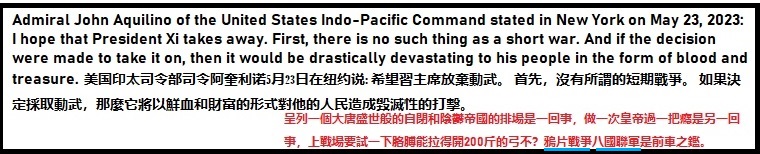
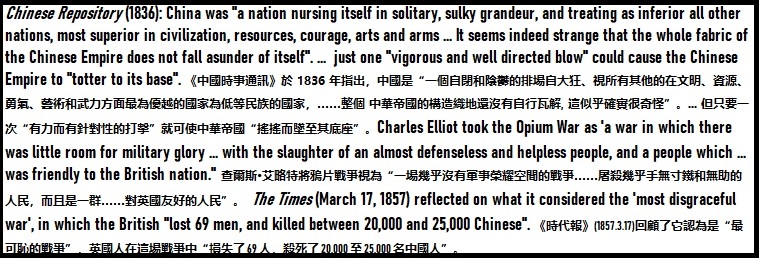
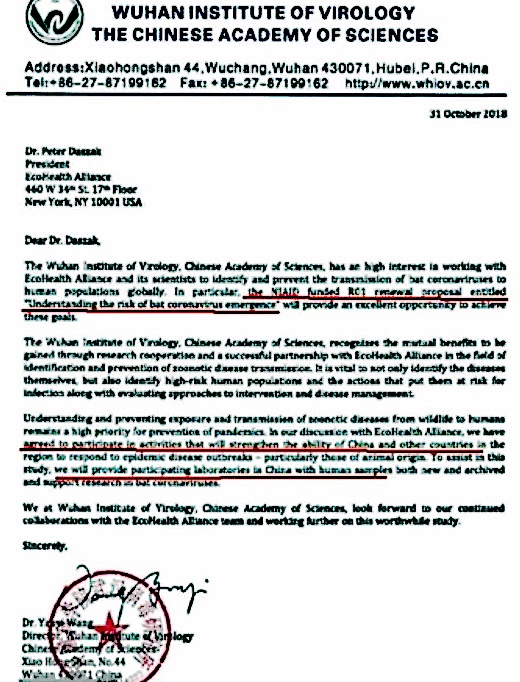

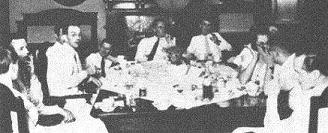
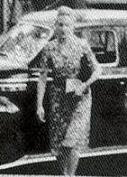
![Though, Anna Wang [Anneliese Martens], in her memoirs, expressed jealousy over Gong Peng by stating that the Anglo-American reporters had flattered the Chinese communists and the communist movement as a result of being entranced with the goldfish-eye'ed personal assistant of Zhou Enlai](GongPeng.jpg)